


Listen to the article
French Foreign Minister Urges Restraint from Iran-Backed Groups Amid Rising Tensions
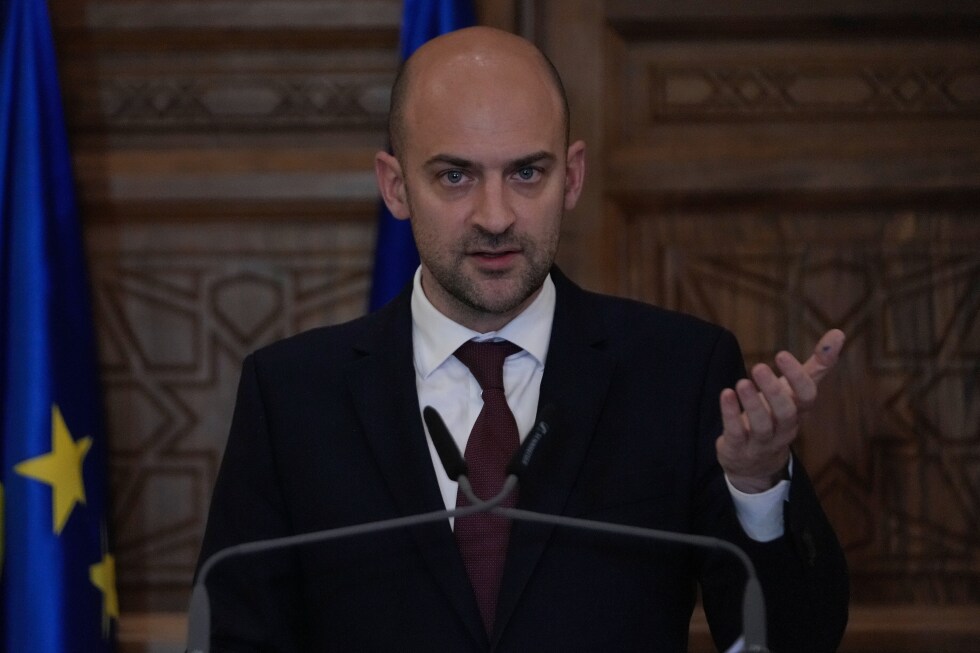
French Foreign Minister Jean-Noël Barrot called for “greatest restraint” from Iran-backed groups across the Middle East should tensions escalate between Iran and the United States. The diplomat made these remarks Friday during his visit to Beirut, the latest stop on a regional tour that included Syria and Iraq.
“If, however, we witness a regional escalation, it would be appropriate for groups supported by Iran to exercise the greatest restraint in the whole region so as not to worsen a situation,” Barrot stated after meetings with Lebanese officials. He emphasized that regional military escalation “would profoundly destabilize the Near and Middle East” and must be avoided “at all cost.”
The French minister’s comments come at a particularly sensitive moment in Middle Eastern geopolitics. The United States and Iran have recently engaged in indirect talks in Oman regarding Tehran’s controversial nuclear program, which has been a flashpoint in relations between the two countries for years.
Regional observers have expressed growing concern that any potential U.S. military action against Iran could trigger a coordinated response from Tehran’s network of allied groups across the region, including Hezbollah in Lebanon, Houthi rebels in Yemen, and various militias in Iraq. Such a scenario could rapidly transform localized conflicts into a wider regional war.
During his Beirut visit, Barrot also addressed the ongoing process to disarm Hezbollah, the powerful Iran-backed political and military organization in Lebanon. The group recently ended a 14-month conflict with Israel that significantly destabilized the region and caused extensive damage to southern Lebanon.
France is taking an active role in strengthening Lebanon’s institutions amid the country’s multifaceted crises. Barrot discussed an upcoming conference scheduled for next month in France aimed at supporting the Lebanese Armed Forces, which have been expanding their presence in southern Lebanon along the Israeli border following the ceasefire between Hezbollah and Israel.
“France is working in close coordination with the United States, Saudi Arabia, Qatar and Egypt, who will co-organize the conference with us to a targeted collective contribution, built with the Lebanese authorities,” Barrot explained.
This international support comes at a critical time for Lebanon’s military, which has been severely weakened by the country’s devastating economic crisis that began in late 2019. The Lebanese pound has lost more than 95 percent of its value, eroding military salaries and operational capabilities while plunging nearly 80 percent of the population below the poverty line.
Lebanon’s economic collapse, widely attributed to decades of corruption and mismanagement by the political elite, has undermined all state institutions. The international community has repeatedly called for comprehensive reforms as a prerequisite for unlocking billions in aid, but Lebanon’s political class has failed to implement meaningful changes.
France has historically maintained close ties with Lebanon, a former French mandate, and has played an active role in international efforts to stabilize the country. President Emmanuel Macron has personally visited Lebanon multiple times since the devastating Beirut port explosion in August 2020, which killed more than 200 people and caused billions in damage.
Barrot’s regional tour reflects France’s broader diplomatic engagement in the Middle East, where it seeks to position itself as a mediator capable of dialogue with various regional powers, including Iran and its allies, while maintaining strong relationships with the United States and Gulf states.
Fact Checker
Verify the accuracy of this article using The Disinformation Commission analysis and real-time sources.

8 Comments
It’s good to see France taking a proactive role in trying to defuse tensions in the region. The potential for a wider conflict is very real, so Iran-backed groups would be wise to heed this call for restraint.
This is a delicate geopolitical situation that requires nuanced diplomacy. France’s call for restraint from Iran-backed groups is a prudent step, as any further escalation could have catastrophic consequences for the entire region.
This is a tricky situation that requires careful diplomacy. Iran-backed groups wield significant influence in the region, so their restraint will be crucial if tensions escalate further. Avoiding military escalation is paramount to prevent destabilization across the Middle East.
Agreed, all sides need to exercise maximum caution and restraint to prevent an uncontrolled regional conflict. Diplomatic solutions should be the priority.
Avoiding military escalation is crucial, as the French minister rightly points out. The destabilizing effects of regional conflict would be devastating, so all parties must exercise maximum caution and restraint in the coming weeks and months.
Agreed. The stakes are simply too high for any reckless actions. Diplomacy and de-escalation should be the top priorities for all involved.
France’s call for restraint from Iran-backed groups is prudent, given the volatile nature of the US-Iran relationship. Escalating regional tensions could have devastating consequences, so these groups must carefully consider the implications of their actions.
Absolutely. The stakes are incredibly high, and even a minor miscalculation could spiral out of control. Responsible leadership from all parties is essential.