


Listen to the article
Surfer Escapes Fourth Shark Attack in Three Days Off Australian Coast
A 39-year-old surfer narrowly escaped serious injury Tuesday morning when a shark attacked him off Point Plomer, approximately 290 miles north of Sydney, marking the fourth shark attack along Australia’s New South Wales coast in just three days.
The attack occurred around 9 a.m., with the shark primarily damaging the man’s surfboard while inflicting only minor cuts on the surfer. According to Matt Worrall, captain of the Kempsey–Crescent Head Surf Life Saving Club, “The board seemed to take most of the impact. He made his own way into shore where he was assisted by locals.”
Bystanders drove the injured surfer to a hospital where he received treatment before being released.
This latest incident follows a troubling series of attacks that have authorities scrambling to implement safety measures. The most severe attack occurred Sunday when a 12-year-old boy was critically injured after jumping from a 20-foot ledge near Shark Beach in eastern Sydney. According to police, the boy survived only because friends jumped into the water and pulled him to shore. Local media reported he lost both legs in the attack.
“He is in for the fight of his life now, and the actions of emergency services yesterday gave him that chance,” said Superintendent Joseph McNulty of the New South Wales Police Marine Area Command.
The wave of attacks continued Monday when an 11-year-old boy escaped unharmed after a shark bit his surfboard at Dee Why Beach. Later that same evening, a surfer in his 20s was bitten on the leg at North Steyne Beach and hospitalized in critical condition.
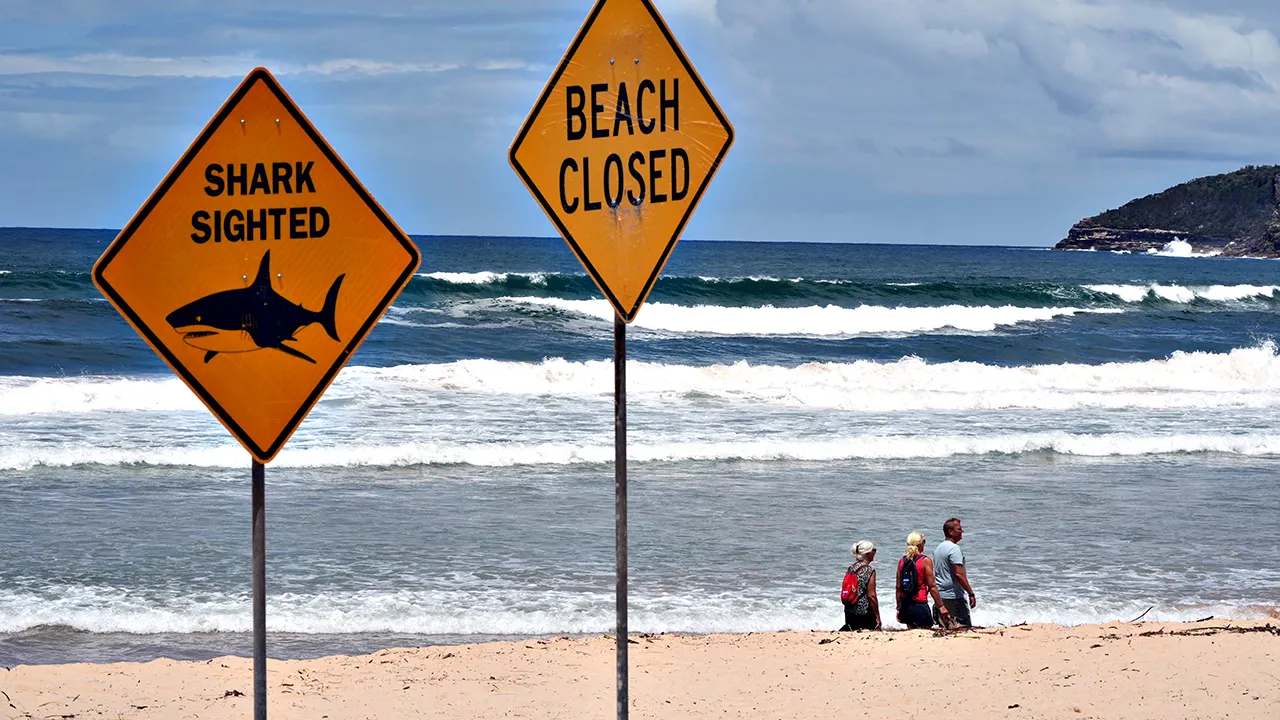
In response, authorities have closed beaches along New South Wales’ northern coast and in northern Sydney, with closures expected to remain in place for at least 48 hours. Electronic drumlines designed to detect large sharks have been deployed offshore as part of the emergency response.
Surf Life Saving NSW chief executive Steve Pearce strongly cautioned the public against entering the water. “If anyone’s thinking of heading into the surf this morning anywhere along the northern beaches, think again. We have such poor water quality that’s really conducive to some bull shark activity,” Pearce said.
“If you’re thinking about going for a swim, just go to a local pool because at this stage, we’re advising that beaches are unsafe,” he added.
Marine experts believe bull sharks are likely responsible for several of the attacks around Sydney, pointing to recent heavy rainfall as a contributing factor. The rainfall has increased murky freshwater runoff into Sydney Harbor, creating conditions that attract these predators closer to shore.
The string of attacks has rekindled concerns about shark safety measures along Australia’s popular coastline. Sydney’s northern beaches, including Dee Why and North Steyne, remain closed while officials assess whether existing shark netting systems are effective. Pearce noted that the Point Plomer area where Tuesday’s attack occurred is particularly isolated and does not have protective nets.
The current spate of attacks follows two fatal incidents in recent months. Last September, a 57-year-old surfer was killed by a suspected great white shark near Dee Why Beach. In November, a 25-year-old Swiss tourist was killed and her partner seriously injured in another attack north of Sydney.
Authorities continue to monitor coastal waters and have increased aerial surveillance using drones to scan for shark activity. The unusual cluster of incidents has prompted calls for a review of shark management strategies along the New South Wales coastline, particularly as Australia enters its peak summer beach season.
For now, officials continue to advise beachgoers to heed warning signs and avoid entering the water until authorities declare it safe.
Fact Checker
Verify the accuracy of this article using The Disinformation Commission analysis and real-time sources.

16 Comments
I’m curious to know if these attacks are linked to any particular environmental or ecological factors, like changes in water temperatures or prey patterns. Understanding the underlying causes could lead to more effective prevention strategies.
That’s a good point. Examining any environmental changes in the region could provide valuable insights. Shark behavior and migration patterns can be influenced by various factors, so a thorough scientific investigation would be important.
Wow, four shark attacks in just three days is incredibly concerning. I hope the authorities can quickly determine what’s behind this spike and take measures to protect beachgoers. It’s a sobering reminder of the risks we face when swimming in open waters.
Agreed, these attacks are very worrying. I hope the injured surfer and the young boy make full recoveries. The authorities will need to thoroughly investigate the situation to understand what’s causing this spike in incidents.
As an avid surfer myself, I find these reports deeply concerning. While shark attacks are relatively rare, they can have devastating consequences. I hope the authorities can quickly get to the bottom of what’s causing this spike and implement effective countermeasures.
While shark attacks are statistically very rare, this cluster of incidents is concerning. I hope the authorities can determine if there are any underlying environmental or behavioral factors that may be contributing to the increased risk. Public education and awareness will be key.
Agreed. Providing the public with accurate information about shark behavior and risks, as well as clear guidelines on staying safe in the water, could go a long way in helping beachgoers make informed decisions.
These incidents are a sobering reminder of the power and unpredictability of nature. My heart goes out to the victims and their families. I hope the authorities can find ways to enhance public safety without unnecessarily restricting access to the beaches.
Striking the right balance between public safety and preserving beach access will be crucial. Enhancing public awareness and education about shark behavior could also help beachgoers make more informed decisions about when and where to enter the water.
These attacks highlight the importance of having robust beach safety protocols and emergency response plans in place. I hope the authorities can swiftly identify the root causes and implement effective countermeasures to protect both beachgoers and the local marine ecosystem.
Well said. A comprehensive approach that balances public safety, environmental conservation, and community engagement will be crucial in addressing this challenge. Proactive planning and preparedness can make a big difference.
The loss of both legs for the 12-year-old boy is absolutely heartbreaking. I commend the quick actions of his friends in pulling him to safety. These attacks underscore the need for robust emergency response protocols and first aid training for beachgoers.
You’re right, the bravery of the boy’s friends likely saved his life. Having well-trained lifeguards and emergency teams positioned along the beaches could make a critical difference in such situations.
While shark attacks are extremely rare, the recent cluster of incidents in Australia is certainly concerning. I hope the authorities can quickly determine the underlying factors and implement measures to enhance beach safety without unduly disrupting coastal communities and tourism.
This is a troubling trend that highlights the need for better shark monitoring and warning systems along the Australian coast. With the summer season approaching, beach closures may become more common unless the situation can be brought under control.
Absolutely. Improved surveillance and alert systems could help minimize the risks. But it’s a delicate balance – we need to protect beachgoers without overly disrupting coastal communities and tourism.