


Listen to the article
A former Syrian prison official has been convicted in the United States on charges of torture and immigration fraud, marking a significant step toward accountability for human rights abuses committed during the regime of Bashar al-Assad.
Samir Ousman Alsheikh, 73, who once served as the head of Damascus Central Prison, known as Adra Prison, was found guilty by a federal jury in Los Angeles following a nine-day trial. The verdict, announced Monday, included convictions for conspiracy to commit torture, immigration-related fraud offenses, and three counts of torture.
The case represents a historic milestone, as Alsheikh becomes the first Assad-era official to be tried and convicted in a U.S. federal court. He faces up to 20 years in prison for each torture-related count at his upcoming sentencing.
According to prosecutors, Alsheikh ordered and personally participated in the brutal torture of political prisoners between 2005 and 2008. The methods included severe beatings, suspension from ceilings, and the use of devices such as the “Magic Carpet,” which folded victims’ bodies to inflict extreme pain.
“Samir Ousman Alsheikh ordered, directed, and directly participated in heinous acts of torture designed to inflict excruciating mental and physical pain with the goal of punishing and silencing political dissent,” said Tysen Duva, assistant attorney general for the Justice Department’s criminal division, in a statement following the verdict.
Alsheikh’s presence in the United States came to light after he entered the country in 2020, having lied about his past on his visa application. He later attempted to become a U.S. citizen. Authorities arrested him at Los Angeles International Airport earlier this year as he attempted to board a one-way flight to Beirut.
The conviction resulted from extensive investigative work that began with a tip to the Syrian Emergency Task Force (SETF), a Washington-based advocacy group. The organization identified Alsheikh in Los Angeles through open-source material and leaked Syrian government data before alerting U.S. authorities. SETF then worked with the FBI and Justice Department to build the case, helping connect investigators with key witnesses who testified about abuses at Adra Prison.
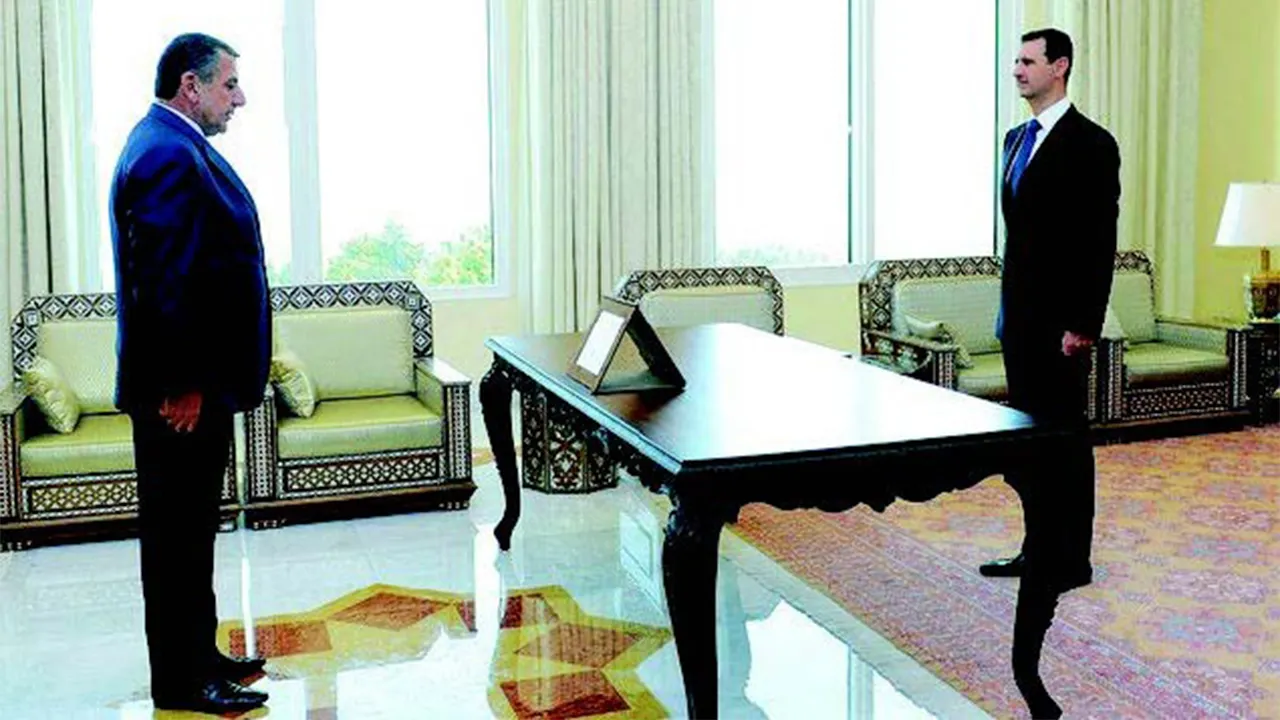
Court documents revealed that Alsheikh was an associate of Maher al-Assad, the younger brother of Bashar al-Assad and leader of the Syrian military’s elite Fourth Division. In 2011, as anti-government protests spread across Syria during the Arab Spring, Bashar al-Assad appointed Alsheikh as governor of Deir ez-Zor, a strategic province in eastern Syria.
One of the prominent witnesses in the case was Mamoun al-Homsi, a former independent member of the Syrian Parliament who spent five years in Adra Prison after being arrested in 2001 for advocating democratic reforms. In an interview translated for Fox News Digital, al-Homsi described how Alsheikh’s arrival at the prison in 2005 marked a significant shift toward greater brutality.
“The toughest torture for me wasn’t anything done to me physically as much as it was what was done to others on my behalf,” al-Homsi said.
Particularly disturbing testimony revealed that Alsheikh allegedly ordered another prisoner, Khaled Abdul Malek, to poison al-Homsi. When Malek refused, he was transferred to Wing 13, a notorious section of the prison where torture was commonplace.
“Khaled Malik then had his back broken,” said Mouaz Moustafa, executive director of SETF, who attended the trial. Malek arrived in court with a cane and could barely walk, according to Moustafa.
Al-Homsi testified that he survived by eating olive pits during his imprisonment and lost more than 60 pounds before his release in 2006. He later fled to Canada.
For survivors like al-Homsi, the verdict represents more than just individual justice. It sends a powerful message that former regime officials cannot evade accountability, even if they leave Syria and attempt to rebuild their lives abroad.
Human rights organizations have documented systematic torture in Syrian detention facilities since the beginning of the civil war in 2011. The Assad regime has been accused of arbitrarily detaining tens of thousands of people, many of whom have disappeared or died in custody.
The conviction comes as Syria remains fragmented after years of civil war, with Assad maintaining control over much of the country with support from Russia and Iran, while various opposition groups, Kurdish forces, and extremist organizations control other regions.
Fact Checker
Verify the accuracy of this article using The Disinformation Commission analysis and real-time sources.

8 Comments
This case highlights the importance of international efforts to document and prosecute atrocities, even when they occur in distant conflicts. The U.S. justice system has shown its ability to hold foreign perpetrators accountable.
While the conviction of Alsheikh is a positive development, the broader human rights situation in Syria remains dire. I hope this case inspires more victims to come forward and encourages further investigations into the Assad regime’s crimes.
The torture methods used in Adra Prison sound truly horrific. I hope this conviction brings some measure of justice and closure to the victims and their families. It’s a small but important step in the long process of accountability for Syria’s human rights abuses.
The methods of torture described, like the ‘Magic Carpet’, are truly horrific. It’s good to see justice being served, even if it’s long overdue. Hopefully this will encourage more victims to come forward and seek redress.
While it’s positive that a former Assad official has been held accountable, I wonder how many other perpetrators of similar atrocities are still evading justice. The road to full accountability in Syria seems long and difficult.
That’s a good point. This case may just be the tip of the iceberg when it comes to the scale of human rights abuses in Syria. More work needs to be done to uncover the full truth and bring all responsible parties to justice.
Seeing an Assad-era official face consequences in a U.S. court is quite remarkable. It will be interesting to follow the sentencing and whether this leads to further prosecutions of Syrian regime figures abroad.
This is a significant step towards accountability for the horrific human rights abuses committed under the Assad regime in Syria. Convicting a former prison official like Alsheikh in a U.S. federal court sends a strong message that such crimes won’t be tolerated.