


Listen to the article
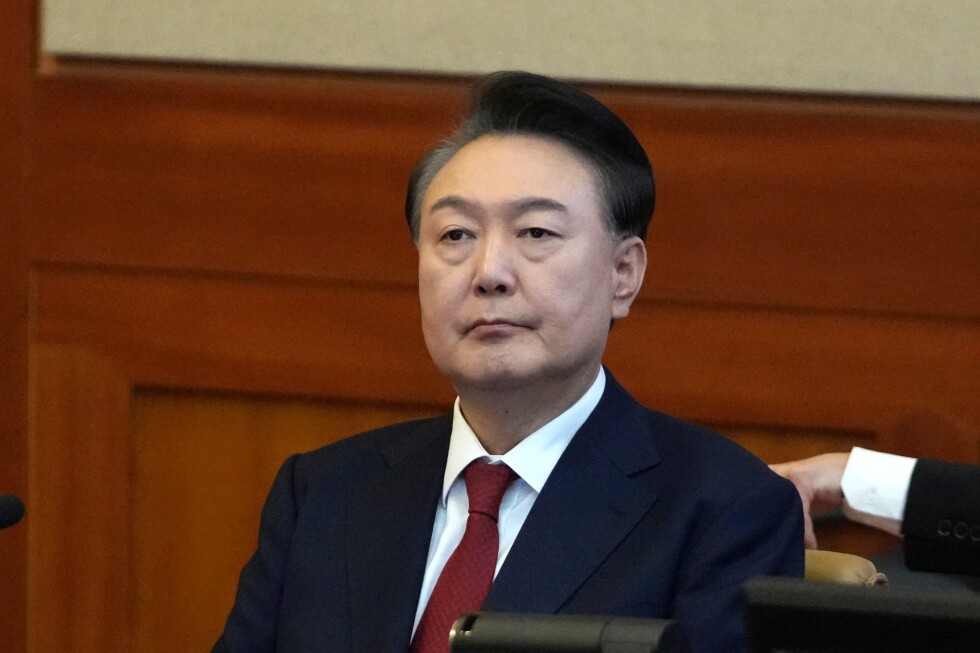
Former South Korean President Yoon Suk Yeol was sentenced to life imprisonment on Thursday after being convicted of leading an insurrection, concluding what analysts describe as the country’s most significant political crisis in decades.
The Seoul Central District Court found the 65-year-old former leader guilty of rebellion for his December 3, 2024 imposition of martial law, during which he deployed military and police forces to surround the National Assembly in what prosecutors called an illegal power grab.
Judge Jee Kui-youn ruled that Yoon’s actions constituted a deliberate attempt to seize the legislature, arrest political opponents, and establish unchecked authority for an indefinite period.
“This court finds that the purpose of Yoon’s actions was to send troops to the National Assembly, block the Assembly building and arrest key figures, including the National Assembly speaker and the leaders of both the ruling and opposition parties,” Judge Jee stated during the verdict. “It’s sufficiently established that he intended to obstruct or paralyze the Assembly’s activities.”
The martial law decree—South Korea’s first in more than four decades—evoked uncomfortable memories of the country’s authoritarian past when military-backed governments routinely used emergency powers to suppress opposition. Yoon’s decree granted sweeping powers, including the suspension of political activities, media censorship, and authorization for warrantless arrests.
The crisis was remarkably brief, lasting approximately six hours before lawmakers managed to break through the military blockade and unanimously vote to lift the measure. Despite its short duration, the attempted power grab had profound political consequences.
Lawmakers impeached Yoon on December 14, 2024, and he was formally removed from office by the Constitutional Court in April 2025. He has remained in custody since July 2025 while facing multiple criminal trials.
In court, Yoon maintained that the martial law declaration was merely intended to raise public awareness about liberal politicians allegedly paralyzing state affairs. His defense team argued that he would have respected a legislative vote against the measure. Prosecutors countered that his actions clearly demonstrated an intent to disable the legislature and prevent lawmakers from lifting martial law through constitutional means.
Following the verdict, Yoon’s attorney, Yoon Kap-keun, criticized the ruling as “predetermined” and based solely on the prosecution’s arguments. The legal team is considering an appeal.
The special prosecutor had sought the death penalty, arguing that the former president’s actions threatened South Korea’s democratic foundations. However, legal experts had anticipated a life sentence, particularly since the failed power grab resulted in no casualties. South Korea has maintained a de facto moratorium on capital punishment since 1997.
The court also handed down sentences to five former military and police officials involved in enforcing the martial law decree. Former Defense Minister Kim Yong Hyun received a 30-year prison term for his central role in planning the measure and mobilizing military forces to arrest 14 key politicians, including National Assembly Speaker Woo Won-shik and current President Lee Jae Myung.
Last month, Yoon was separately sentenced to five years in prison for resisting arrest, fabricating the martial law proclamation, and bypassing required Cabinet approval processes. Two other members of his Cabinet have already been convicted, including former Prime Minister Han Duck-soo, who received a 23-year sentence for attempting to legitimize the decree through falsified records.
Yoon becomes the first former South Korean president to receive a life sentence since military dictator Chun Doo-hwan, who was initially sentenced to death in 1996 for his 1979 coup and the violent suppression of pro-democracy protesters. Chun’s sentence was later reduced to life imprisonment before he received a presidential pardon in 1997.
Political reactions to the verdict fell along partisan lines. Jung Chung-rae, leader of the liberal Democratic Party that spearheaded Yoon’s impeachment, expressed disappointment that the court didn’t impose the death penalty. Meanwhile, Song Eon-seok, floor leader of Yoon’s former conservative People Power Party, issued a public apology for the national disruption caused by the crisis.
President Lee Jae Myung’s office has not yet commented on the ruling.
Fact Checker
Verify the accuracy of this article using The Disinformation Commission analysis and real-time sources.

9 Comments
It’s good to see the South Korean justice system holding the former president accountable for his authoritarian actions. Martial law should only be used in the most extreme emergencies, not as a power grab. This verdict sends a strong message that democratic institutions must be protected.
Agreed. The life sentence is an appropriately severe punishment given the gravity of the offenses. It’s crucial that leaders who attempt to subvert democracy face serious consequences.
The details of this case are quite alarming. Using the military to surround the National Assembly and arrest political opponents is a clear violation of democratic principles. I hope this ruling helps restore faith in South Korea’s democratic institutions and sets a strong precedent against such authoritarian tactics.
This is a serious and concerning development in South Korean politics. The former president’s actions to impose martial law and restrict the National Assembly’s activities seem like a clear abuse of power. I hope the legal process has been fair and the ruling sets an important precedent against such antidemocratic behavior.
The details of this case are quite alarming. Using the military to surround the National Assembly and arrest political opponents is a clear violation of democratic norms. I hope this ruling helps restore faith in South Korea’s democratic processes.
This is a significant political crisis in South Korea, with far-reaching implications. The former president’s attempt to seize power through martial law is a blatant attack on democratic values. I hope this ruling helps strengthen South Korea’s democratic institutions going forward.
It’s good to see the South Korean justice system upholding the rule of law and holding the former president accountable. Abuse of power and undermining democratic processes should never be tolerated, no matter the position of the perpetrator. This verdict is an important step in the right direction.
While the situation is concerning, I’m glad to see the South Korean judicial system upholding the rule of law. Abuse of power and attempts to undermine democratic institutions should never be tolerated, no matter the position of the perpetrator. This verdict is an important step.
Absolutely. The former president’s actions were a dangerous threat to South Korea’s hard-won democracy. This sentence sends a clear message that such authoritarian tactics will be severely punished.