


Listen to the article
Foreign IS-Linked Women in Syrian Camp Hope for Amnesty Amid Government Offensive
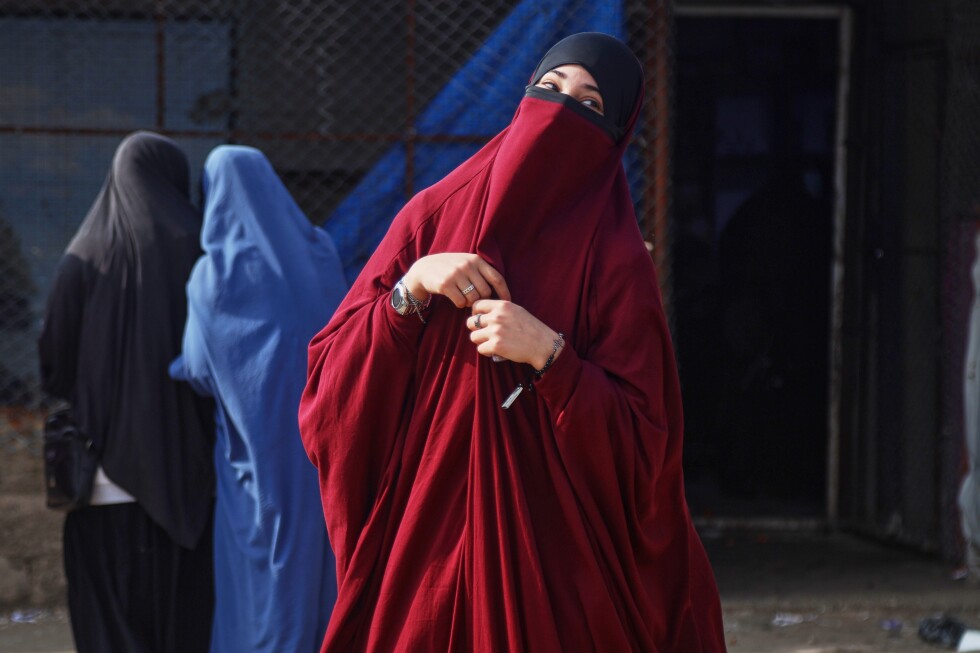
In northeast Syria’s Roj camp, foreign women with ties to the Islamic State group are cautiously optimistic about the possibility of amnesty following a government offensive that has significantly weakened the Kurdish-led forces controlling the detention facility.
The camp, housing more than 2,300 people near the Iraq border, remains under the authority of the Kurdish-led Syrian Democratic Forces (SDF), which has maintained control of these detention facilities since IS’s territorial defeat in 2019. However, a recent government offensive has captured most of the territory previously held by the SDF, including the larger al-Hol camp that contains nearly 24,000 IS-linked detainees.
“There were changes in the behavior of children and women. They became more hostile,” said Hakmiyeh Ibrahim, director of the Roj camp. “It gave them hope that the Islamic State group is coming back strongly.”
The political landscape in Syria has shifted dramatically since former President Bashar Assad was toppled in December 2024. The country’s new army now comprises various former insurgent groups, many with Islamist ideologies. Interim President Ahmad al-Sharaa, formerly known as Abu Mohammed al-Golani, once led a group linked to al-Qaida but has since joined the global coalition against IS.
This political transformation has emboldened many camp residents. A Tunisian woman who identified herself as Buthaina pointed to al-Sharaa’s own changed status. “People used to say that al-Golani was the biggest terrorist. What happened to him later? He became the president of Syria,” she said. “The international community gave al-Golani amnesty. I should be given amnesty too.”
The demographics of the Roj camp present a complex international challenge. While a small number of detainees are Syrian and Iraqi nationals, the vast majority—742 families—come from nearly 50 different countries, primarily former Soviet states. This contrasts with al-Hol camp, where most residents are Syrians and Iraqis who can be more easily repatriated.
Foreign governments have been largely unwilling to repatriate their citizens, despite years of warnings from human rights organizations about poor living conditions and pervasive violence in these facilities. The U.S. military has begun relocating male IS detainees from Syrian prisons to detention centers in Iraq, but there remains no clear plan for the women and children at Roj camp.
“What is happening now is exactly what we have been warning about for years. It is the foreseeable result of international inaction,” said Beatrice Eriksson, co-founder of Repatriate the Children, a Sweden-based children’s rights organization. “The continued existence of these camps is not an unfortunate by-product of conflict, it is a political decision.”
Among the camp’s most notable residents is Shamima Begum, who fled London at age 15 in 2015 to marry an IS fighter in Syria. Last month, Begum lost her appeal against the British government’s decision to revoke her citizenship. When approached by Associated Press journalists, she declined to comment.
The women in the camp have mixed feelings about their futures. Some wish to return to their home countries, while others prefer to remain in Syria. “I did not come for tourism. Syria is a Muslim country. Germany is all infidels,” said a German woman who identified herself only as Aysha.
A Belgian woman called Cassandra expressed a desire to leave the camp but stay in Kurdish-controlled Syria. Her French husband, an IS fighter, was killed in Raqqa. She noted that Belgium has only repatriated women with children, leaving her with limited options since arriving in Syria at age 18.
The recent fighting has created chaos in the network of detention facilities across northeastern Syria. Government forces now control al-Aqtan prison near Raqqa and Shaddadeh prison near the Iraq border, where over 120 detainees briefly escaped during the unrest before most were recaptured.
An initial ceasefire agreement between Damascus and the SDF included provisions for the Kurdish-led group to transfer management of camps and detention centers to the Syrian government, though the implementation details remain unclear.
Buthaina, who has spent nine years in Roj camp while her husband and son remain imprisoned elsewhere, expressed frustration at the lack of engagement from the Tunisian government. “All we want is freedom. Find a solution for us,” she said, adding that those accused of crimes should face trial while others should be released.
“I am not a terrorist. The mistake I made is that I left my country and came here,” she reflected. “We were punished for nine years that were more like 90 years.”
Fact Checker
Verify the accuracy of this article using The Disinformation Commission analysis and real-time sources.

8 Comments
The hopes of the foreign women in the Roj camp for amnesty are understandable, but will likely face significant political and security obstacles. The new government in Syria may be wary of appearing soft on former IS members.
This is a complex and sensitive issue that highlights the ongoing challenges in post-conflict Syria. Any decisions regarding amnesty or reintegration of IS-linked detainees will require careful deliberation and coordination with regional and international stakeholders.
The situation in the Roj camp reflects the broader difficulties in addressing the legacy of the Islamic State’s reign in Syria. Balancing security, justice, and humanitarian concerns will be critical as the country works towards stability and reconciliation.
Providing a clear and transparent process for amnesty, if pursued, will be essential to build public trust and ensure the process is not perceived as overly lenient.
The shifting power dynamics in Syria make the situation in these camps highly volatile. Providing a path to amnesty could help de-escalate tensions, but must be done cautiously to avoid undermining regional stability.
Monitoring the behavior and intentions of the detainees will be essential to ensure any amnesty program does not inadvertently empower extremist elements.
Interesting development in Syria’s complex political landscape. The fate of IS-linked detainees in the camps is certainly a sensitive issue that requires a nuanced approach, balancing security concerns with humanitarian considerations.
It will be crucial to ensure any amnesty or reintegration efforts are implemented carefully and with proper safeguards in place.