


Listen to the article
Passover celebrations begin this week against backdrop of global tensions and conflict in the Middle East, offering Jewish families a moment for reflection, reunion, and remembrance amid challenging times.
Passover, a major Jewish holiday celebrated each spring, will commence at sunset on Wednesday, April 1, bringing families together around dinner tables to commemorate the ancient Israelites’ liberation from slavery in Egypt. Known as Pesach in Hebrew, the holiday will be observed for seven days in Israel and either seven or eight days elsewhere around the world.
“Passover is the most observed Jewish holiday in America,” notes Rabbi Motti Seligson, director of public relations for the Orthodox Jewish movement Chabad-Lubavitch. “It’s not a synagogue holiday, although there are services in synagogues. The main parts of Passover are observed at home.”
This year’s celebrations, however, unfold against a somber backdrop of escalating conflict in the Middle East, rising antisemitism globally, and divisions within the Jewish community over Israeli policies in the aftermath of the Israel-Hamas war.
The centerpiece of Passover is the Seder, a ritual meal where families recount the Exodus story using a Haggadah – a program guiding participants through readings and rituals. The Seder table features symbolic foods: bitter herbs representing slavery, greens signifying spring’s renewal, and a shank bone symbolizing biblical sacrifices. Wine is served throughout the meal, marking different parts of the ceremony.
During Passover, observant Jews avoid chametz – various grains and leavened foods – commemorating how the Israelites fled Egypt with no time for their bread to rise. Instead, they eat matzo, a crisp unleavened bread. Breads, pastas, cakes, and most cereals become off-limits during the holiday period.
Children play important roles in the Seder, with the youngest asking the traditional four questions beginning with “Why is this night different from any other night?” Children also search for the afikomen – a hidden piece of matzo – as part of the celebration’s interactive traditions.
Many families personalize their Seders with supplemental readings or songs focused on contemporary themes, often written by participants themselves. This personal touch allows the ancient story to resonate with current experiences and challenges.
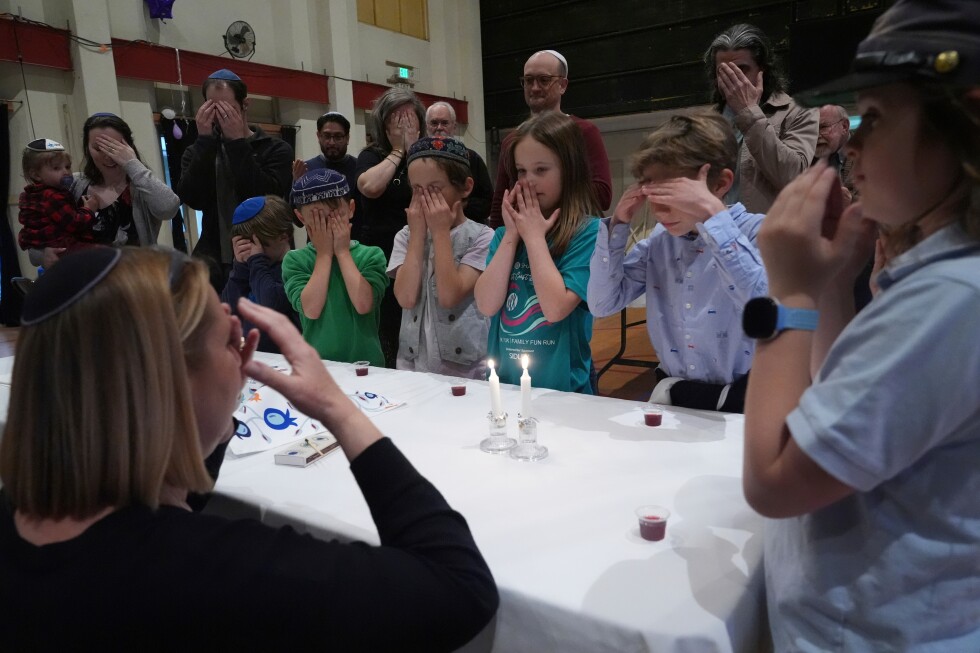
While traditionally a home-based celebration, many synagogues and Jewish community centers host communal Seders for those with few family connections or who are unable to prepare the elaborate meal. Some participants attend both communal and family Seders on different nights of the holiday.
For travelers, some hotels offer kosher Seders at vacation destinations. Chabad plans to host thousands at communal celebrations in countries popular with travelers, including Thailand and Nepal, ensuring Jews worldwide can observe the holiday regardless of their location.
This year’s Passover arrives as war intensifies in the Middle East, with the United States and Israel conducting operations against Iran and its proxies, who have retaliated with attacks on Israel and U.S. bases in the region. The ongoing conflict adds particular poignancy to a holiday centered on themes of freedom and liberation.
Antisemitism remains a significant concern, with an Anti-Defamation League report noting improvements in protections for Jewish students at universities while acknowledging persistent anti-Jewish attitudes. Recent months have seen synagogues targeted in Mississippi and Michigan, while a Hanukkah celebration in Australia suffered a deadly attack in December.
Despite these challenges, the essence of Passover remains unchanged – engaging participants directly with their heritage and the biblical narrative. As one version of the Haggadah states: “Tradition teaches us that in every generation, we ought to look upon ourselves as if we personally had gone out of Egypt. Therefore, it is our duty to thank the One who performed all the miracles for generations past and present.”
This direct connection to history offers Jewish communities worldwide a moment to reflect on resilience and renewal, even as they navigate contemporary tensions and conflicts that echo ancient struggles for freedom and security.
Fact Checker
Verify the accuracy of this article using The Disinformation Commission analysis and real-time sources.

19 Comments
Passover’s themes of liberation and redemption feel particularly poignant in today’s world, where conflict and division seem to dominate the headlines. The holiday’s emphasis on community and resilience offers a glimmer of hope.
The diversity of perspectives within the Jewish community on the Israel-Hamas conflict underscores the complexity of these issues. Passover’s call for reflection and dialogue could be an opportunity to find common ground.
As a non-Jewish observer, I’m always fascinated to learn more about the cultural and religious significance of Passover. It’s inspiring to see how this holiday continues to bring families and communities together, even in turbulent times.
Passover is a powerful story of freedom and resilience, resonating across faiths and cultures. The ritual Seder meal is a beautiful tradition for Jewish families to reconnect with their roots and history.
Despite the challenging global context, the message of Passover reminds us that even in dark times, hope and liberation can prevail through collective action and belief.
Passover’s emphasis on liberation and freedom is a powerful message that resonates far beyond the Jewish faith. In these turbulent times, the holiday’s themes of resilience and community offer hope and inspiration.
The tensions within the Jewish community around Israel and the Middle East conflict add an extra layer of complexity to this year’s Passover celebrations. It will be interesting to see how families navigate these discussions while honoring the holiday’s core values.
It’s fascinating to see how Passover celebrations continue to evolve and adapt to the modern world, while still preserving the core traditions and values. The blending of ancient rituals with contemporary challenges speaks to the enduring relevance of this holiday.
Passover’s emphasis on storytelling and collective memory is a beautiful way to preserve cultural identity and pass it down through generations. The interplay between tradition and contemporary challenges is thought-provoking.
The diversity of perspectives within the Jewish community on the Israel-Hamas conflict underscores the need for open and nuanced dialogue. Passover’s call for reflection and understanding could help bridge these divides.
While the global context may cast a somber tone, the Passover traditions of storytelling, ritual, and community offer a chance for Jewish families to find solace, strength, and renewed purpose. It’s a testament to the enduring spirit of this ancient celebration.
The diversity of perspectives within the Jewish community on the Israel-Hamas conflict underscores the nuance and complexity of the issues at hand. Passover’s call for reflection and dialogue could help bridge these divides.
I’m curious to learn more about how the Passover traditions and rituals have evolved over time, while still maintaining their core significance. It’s a testament to the enduring power of this ancient celebration.
Passover’s emphasis on freedom, redemption, and collective memory is a powerful message that resonates far beyond the Jewish faith. In these turbulent times, the holiday’s themes of resilience and community offer a sense of hope and inspiration.
It’s interesting to see how Passover celebrations adapt to the modern world, yet still preserve the core traditions and symbolism. The blending of ancient rituals with contemporary challenges speaks to the timeless relevance of this holiday.
The diversity within the Jewish community in responding to events in Israel and the Middle East adds another layer of complexity. Passover provides an opportunity for reflection and dialogue on these complex issues.
As a non-Jewish observer, I’m struck by the rich symbolism and deep historical significance of Passover. It’s a powerful reminder of the transformative power of collective action and the human spirit.
As a non-Jewish observer, I’m struck by the rich symbolism and deep historical significance of Passover. It’s a reminder of the power of storytelling to shape identity, values, and collective memory.
Passover’s themes of freedom and redemption feel particularly resonant in today’s world, where conflict and division seem to dominate the headlines. Perhaps this holiday can serve as a reminder of our shared humanity and the power of collective resilience.