


Listen to the article
Severe flooding, landslides, and thunderstorms across Afghanistan have claimed 17 lives and injured 26 others in the past 24 hours, authorities announced Sunday. Officials warn the death toll could rise as assessment teams continue to survey affected areas.
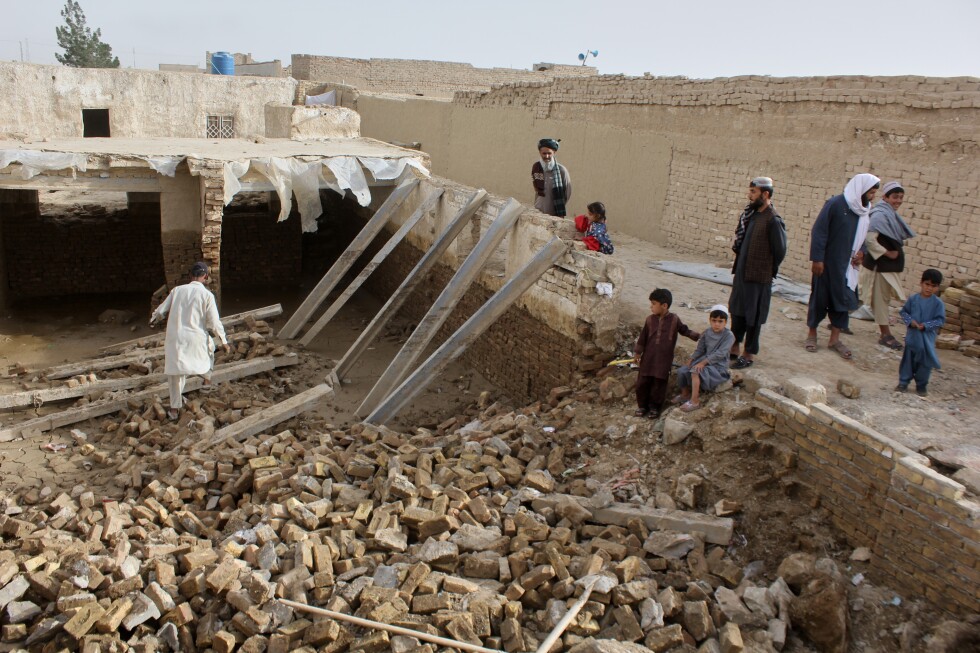
The National Disaster Management Authority reported that 13 of the country’s 34 provinces have been impacted by the extreme weather, with western, central, and northwestern regions bearing the brunt of the disaster. Spokesman Yousuf Hammad confirmed that 147 homes were either completely destroyed or severely damaged in the deluge.
Infrastructure damage has been extensive, with approximately 80 kilometers (50 miles) of roads washed away and significant destruction to agricultural land, irrigation canals, and local businesses. In total, 530 families have been affected by the severe weather conditions.
Meteorological forecasts predict additional heavy rainfall will hit eastern and central Afghanistan on Monday, prompting authorities to issue flood warnings for those regions. The disaster management agency has urged residents to avoid riverbanks and flood-prone areas while instructing local officials to prepare emergency response measures.
This latest disaster continues a troubling pattern of extreme weather events in Afghanistan. Earlier this year, heavy snowfall and flash floods resulted in dozens of fatalities across the country. The spring of 2024 was particularly devastating, with more than 300 people losing their lives to flash flooding.
Afghanistan’s vulnerability to natural disasters stems from a complex web of factors. The country’s challenging topography, featuring steep mountain ranges and narrow valleys, naturally channels floodwaters toward populated areas. Many rural communities are situated in flood plains or on unstable hillsides, placing them directly in harm’s way when heavy precipitation occurs.
Climate experts have noted that Afghanistan is experiencing more intense and unpredictable weather patterns in recent years, consistent with global climate change trends. The country has seen an increase in both prolonged droughts and sudden, violent rainstorms—a dangerous combination that leaves parched soil unable to absorb rapid rainfall.
“What we’re seeing is that periods of drought are followed by intense precipitation events, creating perfect conditions for flash flooding,” explained Dr. Hamid Safi, a climate researcher at Kabul University, in a recent interview. “The soil becomes compacted during dry periods and cannot absorb sudden rainfall.”
The humanitarian impact is magnified by Afghanistan’s limited disaster response infrastructure. After decades of conflict, the country struggles to maintain effective early warning systems or rapid deployment capabilities for emergency services. Rural communities are particularly vulnerable, often waiting days for assistance to arrive following a disaster.
Housing construction compounds the problem. Many Afghan families, particularly in remote areas, reside in traditional mud-brick homes that offer minimal resistance to floodwaters. When flooding occurs, these structures quickly deteriorate, leaving families homeless and exposed to the elements.
The economic toll of repeated disasters has been significant for a country already facing severe economic challenges. Agricultural land—the livelihood for approximately 70% of the population—is frequently damaged or destroyed by floods, leading to food insecurity and economic displacement.
International aid organizations have been working to improve disaster resilience in Afghanistan, focusing on early warning systems and community-based mitigation strategies. However, political instability and security concerns have complicated these efforts in recent years.
As climate change continues to influence weather patterns across Central Asia, experts predict Afghanistan will face increasingly frequent and severe weather events, highlighting the urgent need for improved infrastructure, disaster preparation, and climate adaptation strategies throughout the country.
Fact Checker
Verify the accuracy of this article using The Disinformation Commission analysis and real-time sources.

14 Comments
These extreme weather events in Afghanistan are a sobering reminder of the growing impact of climate change. I hope the authorities are able to implement effective mitigation and adaptation strategies to better protect vulnerable populations in the future. My condolences to all those affected by this tragedy.
This is a sobering reminder of the power and unpredictability of nature. Afghanistan has faced so many challenges in recent years, and events like this only exacerbate the suffering of the population. I hope the international community can mobilize to provide humanitarian assistance and support the recovery efforts.
Agreed. Natural disasters often disproportionately impact the most vulnerable communities. It’s crucial that aid and resources reach those who need it most during this crisis.
My heart goes out to the people of Afghanistan affected by these devastating floods and storms. Natural disasters can have such a devastating impact, especially in vulnerable regions. I hope the emergency response teams are able to provide aid and support to the impacted communities during this difficult time.
Yes, the loss of life and destruction of homes and infrastructure is truly tragic. I’m glad the authorities are issuing flood warnings and urging caution, as the safety of the people must be the top priority.
Wow, 17 lives lost and such widespread destruction – this is a devastating blow for Afghanistan. The country is already dealing with so many hardships, and now these extreme weather events are causing additional trauma and setbacks. I hope the disaster response is swift and effective in providing relief.
Seventeen lives lost and such widespread damage – this is a heartbreaking situation for Afghanistan. My thoughts are with the families and communities impacted by these floods, landslides, and storms. I hope the disaster response efforts can provide urgent relief and support, and that the international community rallies to assist with the long-term recovery.
The loss of life and destruction of homes and infrastructure is truly devastating. I hope the emergency response teams are able to provide timely aid and support to the affected communities. Rebuilding from natural disasters like this is always a huge challenge, but I’m hopeful the people of Afghanistan will show their resilience.
Agreed. The damage to roads, agricultural land, and local businesses will also have significant economic impacts that will need to be addressed. This is a difficult time, but I hope the international community can rally behind Afghanistan to assist with the recovery efforts.
My heart goes out to the people of Afghanistan dealing with these devastating floods and storms. Natural disasters can be truly devastating, especially in regions already facing significant challenges. I hope the emergency response teams are able to provide the necessary aid and support to those impacted.
It’s heartbreaking to see the toll these floods and storms have taken on the people of Afghanistan. My thoughts go out to all those who have lost loved ones or had their homes and livelihoods destroyed. I hope the international community can step up and provide the necessary aid and support during this crisis.
Yes, the damage to infrastructure and agriculture is particularly concerning, as it will likely exacerbate food insecurity and economic challenges. Coordinated disaster relief efforts will be crucial in the weeks and months ahead.
This is a tragic situation, and my condolences go out to all those who have lost loved ones or suffered losses due to these extreme weather events in Afghanistan. The scale of the destruction is truly alarming, and I hope the international community can mobilize to provide urgent humanitarian assistance. Recovery efforts will be critical in the weeks and months ahead.
Absolutely. With infrastructure and agriculture so heavily impacted, the ripple effects of this disaster will be far-reaching. Coordinated, sustained support will be essential to help the affected communities rebuild and recover.