


Listen to the article
In a stark turn of irony, Native Americans across the United States are increasingly carrying tribal identification cards to avoid being mistakenly detained during immigration raids. This growing practice reflects a troubling reality for the country’s first inhabitants, who now find themselves needing to prove their right to remain in their ancestral homeland.
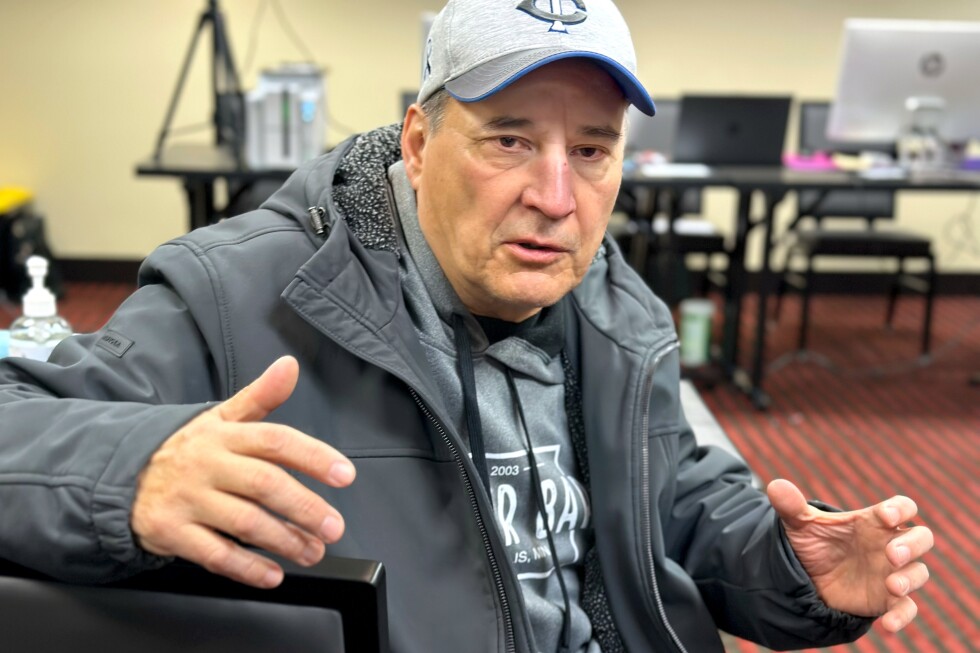
In Minneapolis, where Immigration and Customs Enforcement (ICE) recently launched what officials called the “largest immigration operation ever,” Shane Mantz, a Choctaw Nation citizen, keeps his tribal citizenship card in his wallet. Mantz, who manages a pest-control company and is sometimes mistaken for being Latino, fears being caught up in immigration enforcement actions.
“It gives me some peace of mind. But at the same time, why do we have to carry these documents?” Mantz questioned. “Who are you to ask us to prove who we are?”
The large-scale ICE operation in the Twin Cities has resulted in more than 3,400 arrests as of this week, with approximately 2,000 ICE officers and 1,000 Border Patrol agents deployed to the area. Masked, heavily armed agents traveling in convoys of unmarked SUVs have become a common sight in certain neighborhoods, creating an atmosphere of fear and uncertainty.
In response to this heightened enforcement environment, dozens of the 575 federally recognized Native nations are making it easier for their citizens to obtain tribal IDs. Tribes are waiving fees, lowering age requirements, and expediting the printing process. According to David Wilkins, an expert on Native politics and governance at the University of Richmond, this represents the first time tribal IDs have been widely used as proof of U.S. citizenship and protection against federal law enforcement.
“I don’t think there’s anything historically comparable,” Wilkins noted. “I find it terribly frustrating and disheartening.”
The Twin Cities area, home to one of the largest urban Native populations in the country, has become a focal point for this phenomenon. Representatives from at least ten tribes have traveled hundreds of miles to Minneapolis to process ID applications for their members living there. These tribes include the Lac Courte Oreilles Band of Ojibwe from Wisconsin, the Sisseton Wahpeton Oyate from South Dakota, and the Turtle Mountain Band of Chippewa from North Dakota.
Turtle Mountain citizen Faron Houle recently renewed his tribal ID and obtained first-time cards for his young adult children. “You just get nervous,” Houle explained. “I think ICE agents are more or less racial profiling people, including me.”
Christine Yellow Bird, who directs the Mandan, Hidatsa and Arikara Nation’s satellite office in Fargo, North Dakota, has made four trips to Minneapolis in recent weeks, traveling nearly 2,000 miles to assist tribal citizens who cannot make the journey to their reservation.
“I’m proud of who I am,” Yellow Bird said. “I never thought I would have to carry it for my own safety.”
Reports of Native Americans being harassed by immigration authorities extend beyond Minneapolis. Navajo Nation President Buu Nygren stated last year that several tribal citizens reported being stopped and detained by ICE officers in Arizona and New Mexico, prompting tribal leaders to advise members to carry tribal IDs at all times.
In a recent incident, Peter Yazzie, a Navajo construction worker, reported being arrested and detained by ICE in Phoenix for several hours despite having his driver’s license, birth certificate, and federal Certificate of Degree of Indian Blood available.
“It’s an ugly feeling. It makes you feel less human. To know that people see your features and think so little of you,” Yazzie said.
Some tribal governments are taking more assertive measures. The Oglala Sioux Tribe recently banned ICE from its reservation in southwestern South Dakota and northwestern Nebraska, one of the largest reservations in the country.
When questioned about these incidents, the U.S. Department of Homeland Security stated that “our agents are properly trained to determine alienage and removability.” The agency cited the Supreme Court’s September ruling, which allows ICE agents to use a person’s apparent race and ethnicity as factors in deciding whether to detain them.
For many Native Americans, the situation represents a profound injustice. As Jaqueline De León, a senior staff attorney with the nonprofit Native American Rights Fund and member of Isleta Pueblo, put it: “As the first people of this land, there’s no reason why Native Americans should have their citizenship questioned.”
Fact Checker
Verify the accuracy of this article using The Disinformation Commission analysis and real-time sources.

8 Comments
This is a concerning development that highlights the need for greater understanding and respect for Native American sovereignty and identity. Aggressive immigration enforcement should not come at the expense of indigenous peoples’ basic rights.
This is a truly unsettling situation. Native Americans shouldn’t have to prove their belonging in their own ancestral lands. The aggressive ICE tactics are troubling and seem to target vulnerable populations unfairly.
I agree, the irony of Native Americans being forced to carry identification cards to avoid detention in their own country is deeply disturbing.
The article raises important questions about the treatment of Native Americans in the context of immigration enforcement. It’s troubling that they feel compelled to carry tribal IDs to avoid being mistaken for undocumented immigrants in their own homeland.
Agreed. This situation reflects the ongoing marginalization and lack of recognition that Native Americans continue to face, even in their ancestral territories.
This is a deeply troubling situation that speaks to the persistent challenges faced by Native American communities in the United States. They should not have to prove their right to belong in their own lands.
It’s tragic that Native Americans, who have lived in these lands for centuries, now feel compelled to carry tribal IDs to avoid being mistaken for undocumented immigrants. This speaks to the systemic injustices they continue to face.
Absolutely. The fact that they have to take these measures is a sobering reminder of the ongoing challenges the Native American community faces in asserting their rightful place in this country.