


Listen to the article
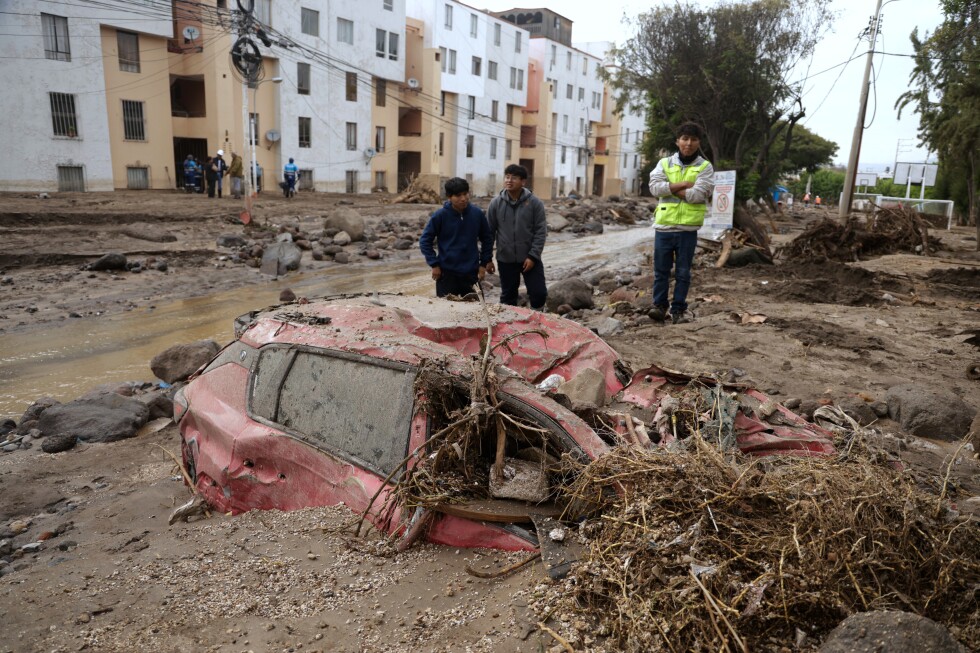
Peruvian authorities have recovered the bodies of a father and son who were killed in devastating mudslides triggered by intense rainfall in the country’s southern region. The disaster has damaged approximately 5,500 homes and forced numerous residents to evacuate, officials reported Monday.
The victims were swept away by a landslide in Arequipa, Peru’s second-largest city located about 1,000 kilometers south of Lima. According to local experts, the neighborhood where the tragedy occurred was constructed directly over an ancient natural watercourse—a path that has channeled water during heavy rainfall periods for centuries.
“These informal settlements often develop in high-risk zones without proper urban planning,” explained Carlos Tavera, a geologist with Peru’s Geophysical Institute, in a separate statement. “When extreme weather events occur, these areas are the most vulnerable.”
The disaster has prompted authorities in Arequipa to request that the country’s interim president declare a state of emergency for the region. Such a declaration would free up additional resources and expedite aid to affected communities.
Dr. Rohel Sánchez Sánchez, the regional governor of Arequipa, announced the opening of multiple refugee centers throughout the affected area. The National Institute of Civil Defense, in coordination with the regional government, has begun distributing essential supplies including food, water, and temporary shelter materials to displaced residents.
“Our priority is ensuring the safety and basic needs of those affected by these devastating mudslides,” Governor Sánchez said. “We are working around the clock to provide assistance to all impacted communities.”
Meteorologists attribute the weeks of heavy rainfall to El Niño Costero, a climate phenomenon characterized by abnormal warming of Pacific Ocean waters near the South American coast. Unlike the broader El Niño pattern, El Niño Costero specifically affects the coastal regions of Peru and Ecuador with localized but intense effects.
According to Peru’s National Meteorological and Hydrological Service (SENAMHI), Pacific waters continue to warm, and El Niño Costero is expected to intensify slightly in March. This warming leads to increased evaporation, creating conditions for extreme rainfall and elevated river flows throughout the region.
“The warming ocean creates a feedback loop of atmospheric moisture that can result in catastrophic precipitation events,” explained Juber Ruiz, a SENAMHI meteorologist. “When this rain falls in mountainous terrain like Arequipa’s, the results can be devastating.”
Peru has a history of destructive mudslides and flooding linked to El Niño events. In 2017, a particularly severe El Niño Costero killed over 100 people and caused billions in damage across the country. The current event, while not yet as severe, has already caused significant infrastructure damage in multiple southern regions.
The disaster highlights ongoing challenges with urban development in Peru, where informal settlements often expand into hazardous areas without adequate infrastructure or disaster mitigation measures. According to the Ministry of Housing, approximately 70 percent of housing in Peru is built without proper permits or engineering oversight, significantly increasing vulnerability to natural disasters.
Arequipa, with its location at the foot of the Andes Mountains and near active volcanoes, faces particular challenges with flash flooding during heavy rain events. The city’s rapid growth in recent decades has pushed development into increasingly marginal and hazardous zones.
As rescue and recovery efforts continue, authorities have urged residents in high-risk areas to remain vigilant and follow evacuation orders. SENAMHI forecasts indicate the potential for additional heavy rainfall in the coming weeks as the El Niño Costero phenomenon persists.
The Peruvian government has allocated emergency funds for disaster response but faces significant challenges in addressing both immediate humanitarian needs and longer-term reconstruction requirements across the affected regions.
Fact Checker
Verify the accuracy of this article using The Disinformation Commission analysis and real-time sources.

5 Comments
It’s good to see that the authorities have requested a state of emergency declaration to expedite aid and resources for the affected communities. Timely response and support are essential in such situations.
The geologist’s comments about the informal settlements being constructed over ancient watercourses are concerning. Proper urban planning and infrastructure are crucial to mitigate the risks of natural disasters in these regions.
This is a tragic incident that highlights the need for better urban planning and disaster preparedness in vulnerable communities. My condolences to the family of the victims.
Extreme weather events like these mudslides can have devastating impacts, especially on informal settlements built in high-risk areas. I hope the authorities can provide the necessary aid and resources to support the affected residents.
The loss of life is always tragic, and my heart goes out to the family and community affected by this disaster. I hope the authorities can take steps to prevent such incidents in the future.