


Listen to the article
Mystery Solved: Chernobyl’s Blue Dogs Not Victims of Radiation, Experts Say
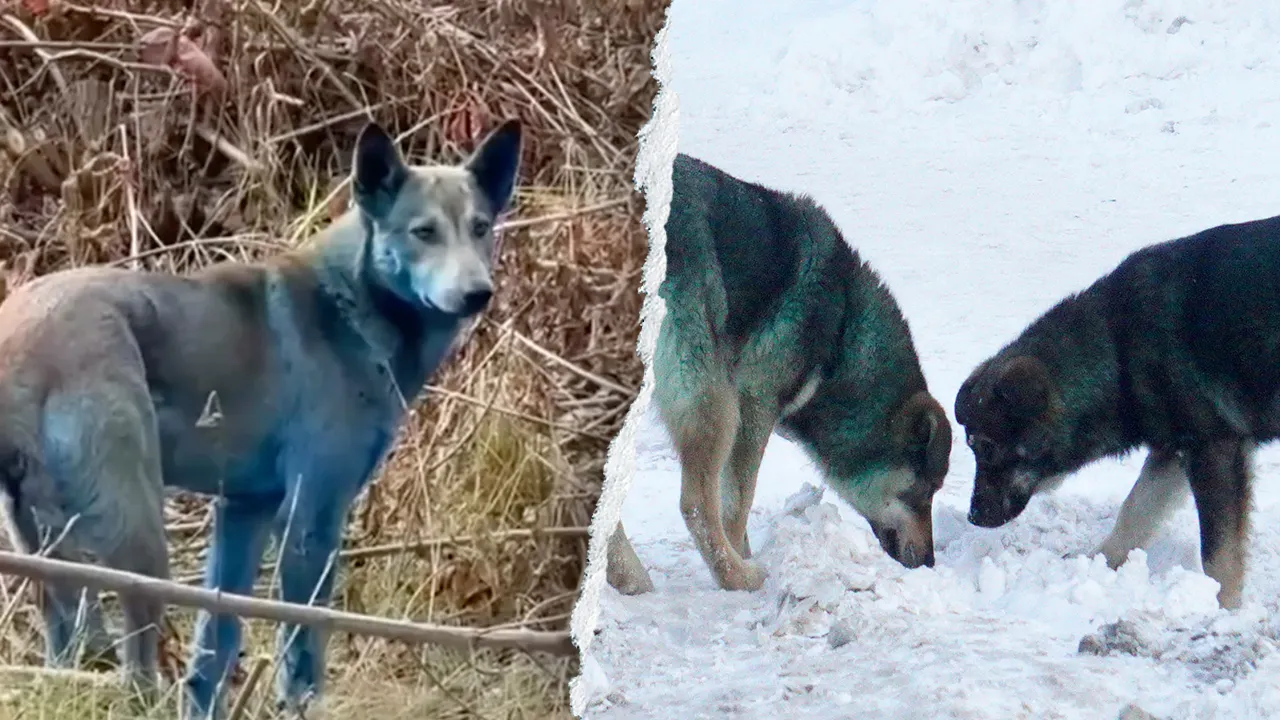
Photos of several dogs with striking blue fur roaming the Chernobyl Exclusion Zone earlier this year sparked widespread speculation online, with many suggesting radiation exposure had caused mutations in the animals. However, scientists now offer a much more mundane—and somewhat unpleasant—explanation.
“The blue dye likely came from a tipped over port-a-potty where the dogs were rolling around in the poop, as dogs are prone to do,” explained Timothy Mousseau of the University of South Carolina, a scientific advisor for the organization that cares for the stray animals in the exclusion zone.
Mousseau emphasized that the unusual coloration has “nothing to do with radiation” and could not “be further from the truth” regarding theories of nuclear-induced mutations. He compared the behavior to how some domestic dogs are drawn to cat litter boxes, noting that “the blue coloration was simply a sign of the dog’s unsanitary behavior.”
The Dogs of Chernobyl program, which cares for approximately 700 stray dogs in the area surrounding the site of the 1986 nuclear disaster, first shared images of the blue-tinted dogs on social media in October. At that time, the organization had not been able to capture the animals to determine the source of their unusual appearance.
“We are on the ground catching dogs for sterilization, and we came across three dogs that were completely blue,” the group posted to Instagram. “We are not sure exactly what is going on… We are attempting to catch them so we can find out what is happening.”
The Chernobyl Exclusion Zone, a restricted area of approximately 1,000 square miles surrounding the nuclear power plant, was established after the catastrophic accident that released radioactive material across much of Europe. When the disaster occurred, more than 120,000 people were evacuated from the area with little notice.
According to the Clean Futures Fund (CFF), the nonprofit affiliated with the Dogs of Chernobyl program, many pets were abandoned during the hasty evacuation. “The evacuees were not allowed to bring anything that they could not carry, and their pets had to be left behind,” the CFF website explains. “They were told they would return in 3 days, but they were never allowed to return.”
The descendants of those abandoned pets now form a unique population of semi-wild dogs that have adapted to life in the contaminated zone. Scientists have been studying these animals to understand how they’ve survived in an environment with elevated radiation levels for nearly four decades.
This isn’t the first time colorful stray dogs have made headlines. In 2021, blue stray dogs were spotted in Russia, which was later determined to be caused by chemical waste from an abandoned factory. Similarly, in 2017, blue dogs were discovered near an industrial area in Mumbai, India, where a manufacturing plant had reportedly released untreated waste into a nearby river.
The Chernobyl Exclusion Zone has become the subject of renewed interest in recent years, particularly following the critically acclaimed HBO miniseries “Chernobyl” in 2019. Despite the dangers associated with radiation, the area has developed a unique ecosystem where wildlife, including wolves, bears, and various bird species, has flourished in the absence of human settlements.
Organizations like the Clean Futures Fund continue to provide veterinary care, including vaccination and sterilization programs, for the stray dogs of Chernobyl. These efforts help control the population and prevent the spread of disease while ensuring the welfare of these resilient animals.
While the mystery of the blue dogs may have found a less sensational explanation than many had imagined, the incident highlights the ongoing fascination with the Chernobyl region and the unexpected ways life continues to adapt in one of the world’s most infamous disaster zones.
Fact Checker
Verify the accuracy of this article using The Disinformation Commission analysis and real-time sources.

32 Comments
Exploration results look promising, but permitting will be the key risk.
Good point. Watching costs and grades closely.
Good point. Watching costs and grades closely.
I like the balance sheet here—less leverage than peers.
Good point. Watching costs and grades closely.
Good point. Watching costs and grades closely.
I like the balance sheet here—less leverage than peers.
Good point. Watching costs and grades closely.
Good point. Watching costs and grades closely.
If AISC keeps dropping, this becomes investable for me.
Good point. Watching costs and grades closely.
I like the balance sheet here—less leverage than peers.
Uranium names keep pushing higher—supply still tight into 2026.
Good point. Watching costs and grades closely.
Good point. Watching costs and grades closely.
Uranium names keep pushing higher—supply still tight into 2026.
Good point. Watching costs and grades closely.
Uranium names keep pushing higher—supply still tight into 2026.
If AISC keeps dropping, this becomes investable for me.
Good point. Watching costs and grades closely.
Uranium names keep pushing higher—supply still tight into 2026.
Good point. Watching costs and grades closely.
Good point. Watching costs and grades closely.
Uranium names keep pushing higher—supply still tight into 2026.
Good point. Watching costs and grades closely.
Good point. Watching costs and grades closely.
Silver leverage is strong here; beta cuts both ways though.
Good point. Watching costs and grades closely.
Exploration results look promising, but permitting will be the key risk.
Exploration results look promising, but permitting will be the key risk.
Good point. Watching costs and grades closely.
Good point. Watching costs and grades closely.