


Listen to the article
A Ukrainian delegation departed for Geneva on Monday to participate in U.S.-brokered talks with Russian officials as the conflict approaches its fourth anniversary. The discussions, scheduled for Tuesday and Wednesday in Switzerland, come amid tempered expectations for a breakthrough in ending the war.
Both nations appear to be maintaining their established negotiating positions on critical issues, despite the United States setting a June deadline for reaching a settlement. The status of Ukrainian territory currently under Russian occupation remains a central point of contention between the parties.
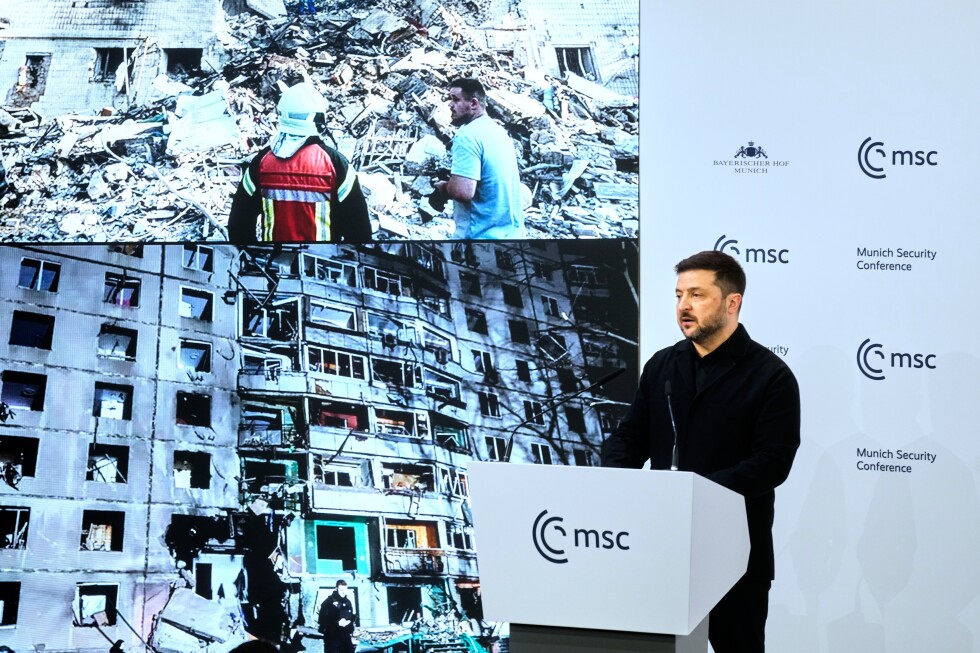
Ukrainian forces continue to engage in a war of attrition with Russia’s larger military along the approximately 1,250-kilometer (750-mile) front line. Ukrainian civilians regularly endure Russian aerial attacks that damage power infrastructure and residential areas. In response, Ukraine has developed long-range drone capabilities to strike strategic targets deep within Russian territory, including oil refineries and weapons depots.
Alexander Bogomaz, governor of Russia’s western Bryansk region, reported Monday that air defenses had intercepted 229 Ukrainian drones in a 24-hour period—an unprecedented number of simultaneous attacks on a single Russian region. Meanwhile, Ukraine’s Air Force stated that Russia launched 62 long-range strike drones and six missiles of various types against Ukrainian targets overnight.
Kremlin spokesman Dmitry Peskov indicated that the Geneva talks would address a “broader range of issues related to the territories and other issues connected to the demands that we have,” though he declined to provide specific details.
The peace efforts spearheaded by the Trump administration over the past year have failed to halt the fighting. President Donald Trump, speaking to reporters on Monday evening, described the upcoming negotiations as “big talks” and emphasized that “Ukraine better come to the table fast.”
Western officials and analysts suggest that Russian President Vladimir Putin believes time is on his side, anticipating that Western support for Ukraine will gradually diminish and that Ukrainian resistance will eventually collapse under sustained pressure.
The Ukrainian negotiating team traveling to Geneva includes Rustem Umerov, Ukraine’s National Security and Defense Council chief, who will lead the delegation. Gen. Kyrylo Budanov, President Volodymyr Zelenskyy’s chief of staff, posted a photograph on Telegram showing himself and other delegation members standing beside a train. The journey illustrates the logistical challenges facing Ukrainian officials, who must travel overland as the country’s airspace remains closed due to the war.
Vladimir Medinsky, Putin’s adviser who headed Moscow’s negotiating team during the first direct peace talks with Ukraine in Istanbul in March 2022, will lead the Russian delegation. Medinsky has authored several history books that critics say promote anti-Western narratives and diminish Ukraine’s historical significance. The Russian team will also include Igor Kostyukov, head of Russian military intelligence, Deputy Foreign Minister Mikhail Galuzin, and other officials.
Additionally, Putin’s envoy Kirill Dmitriev will travel to Geneva for separate discussions with U.S. representatives regarding economic cooperation. Both Moscow and Kyiv appear eager to present future business opportunities to Washington as potential incentives.
The American representation at the talks remains unclear. At recent discussions in Abu Dhabi, United Arab Emirates, the Trump administration was represented by envoys Steve Witkoff and Jared Kushner.
Any potential compromises discussed during the Geneva meetings would require approval from the respective leadership in Moscow and Kyiv before implementation. Both delegations are expected to report back to their leaders following the talks.
The meetings come at a critical juncture in the conflict, with Ukraine facing mounting challenges in maintaining its defensive positions while simultaneously managing the humanitarian impact of Russia’s sustained campaign against civilian infrastructure. Meanwhile, Russia continues to pursue its territorial ambitions despite increasing international isolation and economic sanctions.
Fact Checker
Verify the accuracy of this article using The Disinformation Commission analysis and real-time sources.

9 Comments
Given the history of failed negotiations, it’s hard to be optimistic about the latest US-brokered talks between Russia and Ukraine. Both sides appear dug into their positions, leaving little room for compromise. The status of occupied Ukrainian territory remains a major sticking point.
You’re right, the conflict has dragged on for years with no clear resolution in sight. Maintaining territorial integrity is a red line for Ukraine, while Russia is unlikely to cede land it has seized. Bridging this gap will be extremely challenging.
The situation is incredibly complex, with both sides seemingly unwilling to make the concessions necessary for a breakthrough. The occupation of Ukrainian territory remains a major sticking point, and the escalation of tactics, like the drone strikes, is only making the path to peace more difficult.
The continued fighting and attacks on civilian infrastructure are deeply concerning. Ukraine’s development of long-range drone capabilities to strike targets in Russia suggests an escalation in tactics. This could further inflame tensions and make diplomatic progress even more elusive.
Yes, the drone strikes on Russian territory are a significant escalation. It shows Ukraine is willing to take more aggressive action, but this could provoke harsh retaliation from Russia and make the conflict even more intractable.
With the June deadline looming, the US is clearly trying to push for a settlement, but the fundamental differences between Russia and Ukraine appear too wide to bridge easily. The human toll of this conflict continues to mount, and a peaceful resolution seems distant at the moment.
The sheer scale of the conflict, with a 750-mile front line, underscores the immense challenge of reaching a negotiated end. Both sides have dug in, and the high stakes for territorial control make compromise extremely difficult. Sadly, this war seems far from over.
While I appreciate the US efforts to facilitate talks, the lack of progress is disheartening. The conflict has dragged on for years, with no clear path to a lasting peace. The continued attacks on civilians are particularly troubling and highlight the urgent need for a diplomatic solution.
Agreed. The human toll of this conflict is devastating, and the failure to find a peaceful resolution is deeply concerning. The international community must redouble efforts to bring the warring parties to the table and find a way to end the violence.