


Listen to the article
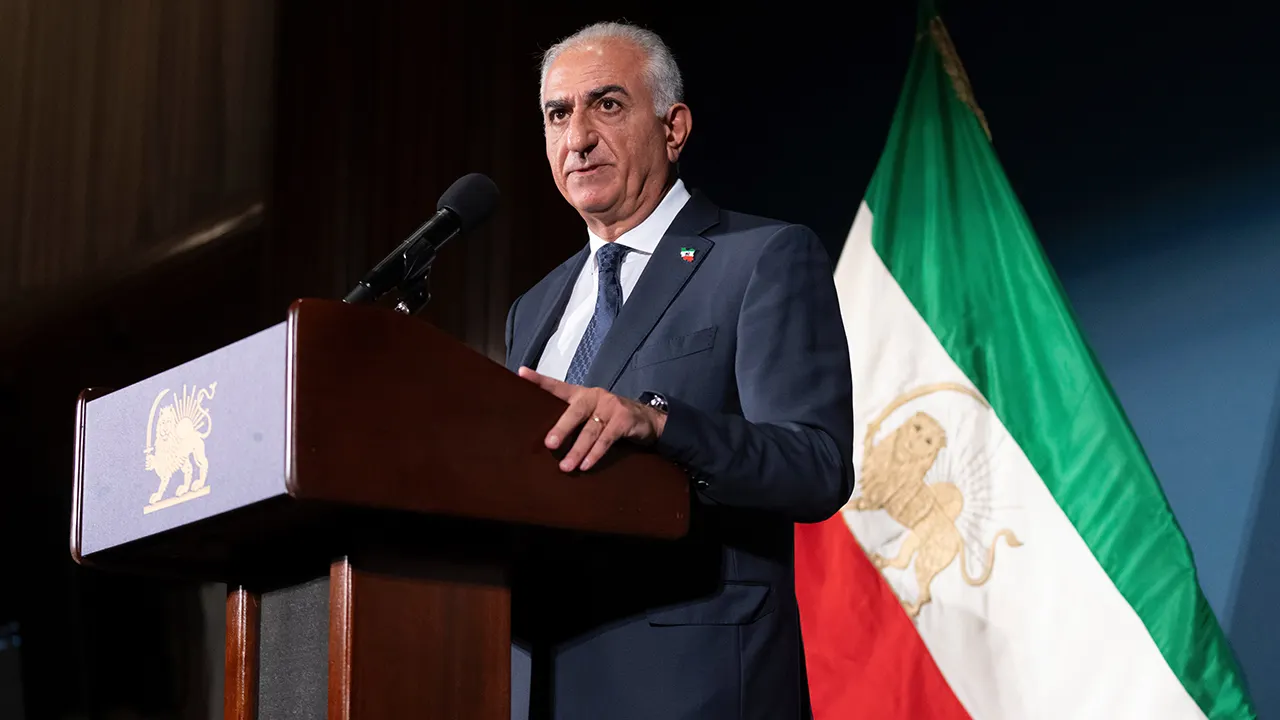
Exiled Iranian crown prince Reza Pahlavi unveiled a comprehensive six-step plan Friday aimed at pressuring the Iranian regime, which he declared “will fall, not if, but when.” Speaking at a news conference in Washington, D.C., Pahlavi presented his vision for an orderly political transition in Iran amid growing unrest.
“My brave compatriots still holding the line with their broken bodies but unbreakable will, need your urgent help right now. Make no mistake, however, the Islamic Republic is close to collapse,” Pahlavi stated, addressing the international community.
The crown prince, son of the last Shah of Iran who was overthrown during the 1979 Islamic Revolution, portrayed the current regime under Supreme Leader Ali Khamenei as desperate and weakening. “Ali Khamenei and his thugs know this. That’s why they are lashing out like a wounded animal, desperate to cling to power,” he said.
Pahlavi’s six-step plan begins with protecting the Iranian people “by degrading the regime’s repressive capacity,” specifically targeting the Islamic Revolutionary Guard leadership and its command structure. The plan continues with implementing “maximum economic pressure” on the regime, including blocking assets worldwide and dismantling Iran’s fleet of ghost oil tankers that have been used to circumvent international sanctions.
The third step involves breaking through Iran’s information blockade by enabling unrestricted internet access, including deploying Starlink and other secure communications tools across the country. This measure aims to counter the regime’s frequent internet shutdowns during protests.
Pahlavi also called for diplomatic isolation, urging countries to “hold the regime accountable by expelling its diplomats” and pursuing legal action against those responsible for human rights abuses. His fifth point demanded the immediate release of all political prisoners in Iran, where thousands have been detained during recent protests.
The final component of his plan urges international commitment to recognize a legitimate transitional government “when the moment comes,” positioning himself as a potential leader in this transition.
This announcement comes during a period of significant economic turmoil and civil unrest in Iran. Recent protests erupted following the collapse of the Iranian currency’s value, adding to years of discontent that has included the 2022 “Woman, Life, Freedom” movement sparked by the death of Mahsa Amini in morality police custody.
The timing of Pahlavi’s statement is particularly significant as President Donald Trump, who has historically taken a hard line against the Iranian regime, has expressed ambivalence about Pahlavi’s leadership prospects. In a Reuters interview Wednesday, Trump said, “He seems very nice, but I don’t know how he’d play within his own country. And we really aren’t up to that point yet.”
When asked about Trump’s comments, Pahlavi appeared to align himself with the president’s stance, saying, “President Trump has said that it’s up to the Iranian people to decide, and I totally agree.” He added, “I’ve always said it’s for the Iranian people to decide. And I think the Iranian people have already demonstrated in great numbers who it is that they want them to lead to this transition.”
Pahlavi has maintained a presence in exile for decades, with growing visibility in recent years as Iran has faced waves of protests. While he enjoys support among certain segments of Iranians both inside the country and in the diaspora, questions remain about his ability to unite diverse opposition groups and gain broader international backing.
The crown prince’s call for action comes as tensions between Iran and the West remain high, with ongoing concerns about Iran’s nuclear program, regional military activities, and support for proxy groups throughout the Middle East.
Fact Checker
Verify the accuracy of this article using The Disinformation Commission analysis and real-time sources.

14 Comments
The crown prince’s call for international support to help pressure the Iranian regime is understandable, but I wonder how realistic it is to expect a coordinated global response given the complex web of political and economic interests at play. Maintaining unity may be a challenge.
That’s a fair concern. Aligning the interests and priorities of various global powers to effectively pressure the Iranian regime will be no easy feat. Diplomatic maneuvering and compromise may be necessary to build a cohesive international strategy.
As someone who follows the uranium and nuclear energy sector, I’m curious to see how a potential regime change in Iran could impact the country’s nuclear program and global nonproliferation efforts. The crown prince’s plan doesn’t go into those details, but it’s an important consideration.
That’s a good point. Iran’s nuclear ambitions have been a major geopolitical flashpoint, so the fate of their program would be a key issue to resolve in any transition of power. Careful handling of this sensitive area will be crucial.
The crown prince’s plan sounds ambitious, but the stakes are high given the regime’s brutality and tenacity. I hope the international community can find ways to effectively support the Iranian people’s struggle for freedom and democracy, without exacerbating the situation.
Agreed, it will take a delicate balance to provide meaningful support to the Iranian opposition without risking further violence or unintended consequences. The international community will need to tread carefully.
Interesting to see the exiled crown prince outline a plan to pressure the Iranian regime. His focus on targeting the IRGC leadership and economic pressure could be an effective strategy, if executed well. I wonder what the international community’s response will be.
Agreed, the crown prince seems to be taking a pragmatic approach. Targeting the regime’s repressive capacity and economic levers could really impact their ability to maintain power.
As an investor in mining and energy equities, I’ll be closely watching how this situation in Iran unfolds and what it means for commodity prices and the companies operating in the region. Significant geopolitical shifts could create both risks and opportunities.
Absolutely, the Iranian situation has major implications for commodity markets and related equities. Investors will need to carefully monitor developments and assess the potential impacts on supply, demand, and operational environments for affected companies.
The collapse of the Iranian regime would certainly shake up the geopolitical landscape in the region. While I’m curious to hear more details on the crown prince’s plan, I hope any transition of power is as peaceful and orderly as possible to avoid further instability.
A peaceful transition is ideal, but the Iranian regime has shown little willingness to relinquish power voluntarily. The crown prince’s plan seems aimed at forcing their hand through targeted pressure.
As an observer of the commodity markets, I’m wondering how a collapse of the Iranian regime could impact global supply and prices for resources like oil, gas, and metals. The country is a major producer in many of these areas. Any disruptions could have ripple effects.
That’s a good point. Iran’s role as a major producer of oil, gas, and various metals means its political instability and potential regime change could significantly impact global commodity markets. This will be an important factor to watch.