


Listen to the article
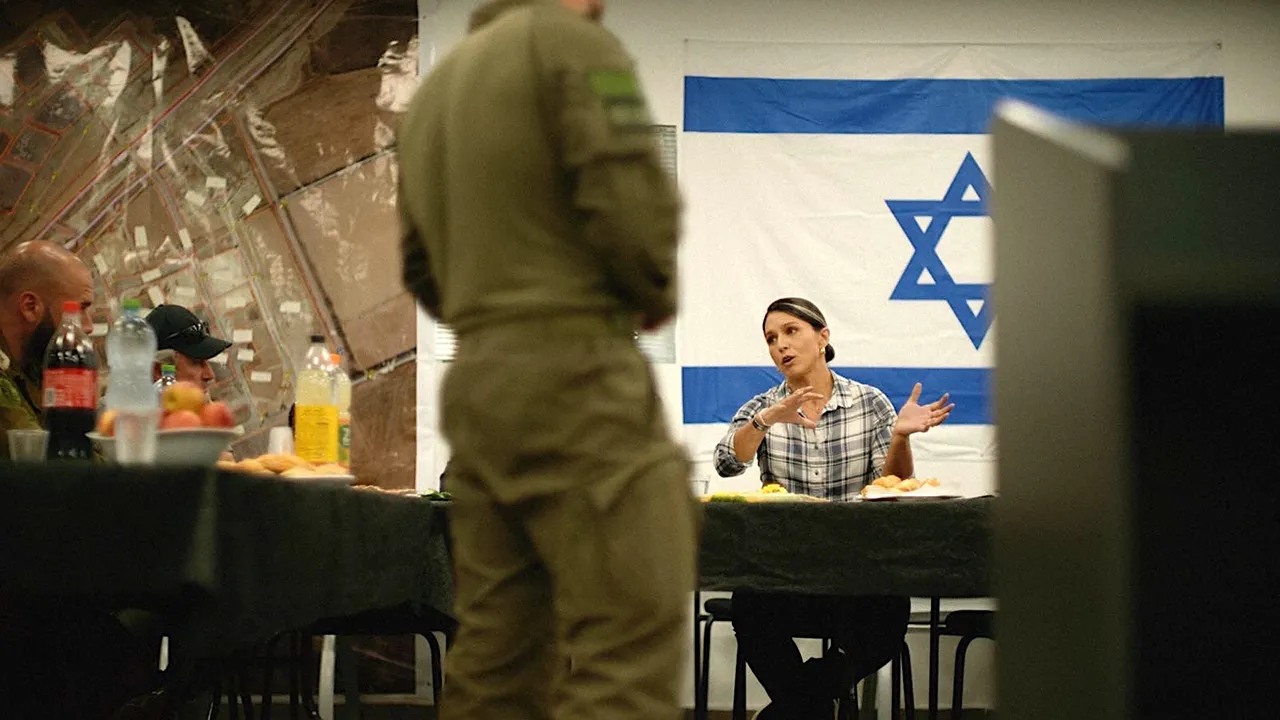
Director of National Intelligence Tulsi Gabbard made an unannounced visit to the U.S.-operated Civil-Military Coordination Center (CMCC) in Israel this week, observing firsthand the multinational effort behind phase two of the Trump-brokered ceasefire agreement.
“It’s a living example of what can happen when nations unite for common interests with the potential impact of lasting peace that benefits generations to come,” Gabbard told Fox News during her November 3rd visit. The DNI’s trip underscores the administration’s commitment to ensuring intelligence coordination remains a cornerstone of the ceasefire implementation.
The CMCC serves as the operational hub for stabilization efforts inside Gaza and will coordinate the humanitarian and security assistance that forms a critical component of the broader Trump administration peace plan. According to Gabbard, 16 countries and 20 non-governmental organizations are currently collaborating as part of this civilian-military initiative.
“For the first time in a generation, there’s a genuine sense of hope and optimism, not just in Israel, but across the Middle East,” said Gabbard, attributing this momentum to “President Trump’s leadership and the groundwork he laid through his historic peace deal.”
Intelligence sharing has emerged as a vital element in maintaining the ceasefire, which explains Gabbard’s decision to assess operations personally. Approximately 200 U.S. service members are currently stationed at the CMCC, though American forces will not enter Gaza itself. Instead, a coalition of forces from Arab countries will deploy stabilization personnel into the enclave to implement the administration’s peace framework.
“The American people should know that the U.S. presence at the CMCC is about leadership, coordination, and service,” Gabbard emphasized.
During her regional tour, Gabbard also visited the Kerem Shalom Crossing along the Gaza border, a crucial entry point for humanitarian aid. Her diplomatic engagements extended beyond Israel, as she met with officials in Bahrain’s capital, Manama.
“In conversations I had with leaders from across the region, including in Manama, people spoke openly and hopefully about a future defined not by conflict, but by cooperation and stability,” she said. “Progress is possible with strong leadership and a shared vision for peace.”
The DNI’s visit follows similar high-profile diplomatic missions to Israel by Vice President JD Vance, Secretary of State Marco Rubio, and U.S. Special Envoy Steve Witkoff. This coordinated diplomatic effort reflects the administration’s all-hands-on-deck approach to ensuring the ceasefire’s success.
The peace plan represents a significant diplomatic achievement for the Trump administration, which has prioritized Middle East stability since returning to office. Regional experts note that securing buy-in from Arab nations has been particularly crucial to the plan’s initial success. Their willingness to provide stabilization forces marks a new chapter in regional security cooperation.
Humanitarian organizations have cautiously welcomed the ceasefire and coordination center, emphasizing the urgent need for sustained aid delivery to Gaza’s civilian population, which has endured severe hardships throughout the conflict.
“This is a challenging mission which requires clear communication, coordination and transparency,” Gabbard concluded. “Intelligence supports not only security, and achieving lasting peace and stability for both Israelis and Palestinians.”
The CMCC’s work comes at a pivotal moment for the region, as implementation of the ceasefire’s second phase will determine whether the fragile peace can evolve into a more durable arrangement. The unprecedented level of international coordination through the center represents one of the most significant multinational peace-building efforts in the Middle East in decades.
As stabilization efforts progress, officials acknowledge that maintaining momentum will require ongoing diplomatic engagement and intelligence cooperation among the diverse coalition of nations now committed to supporting peace in the region.
Fact Checker
Verify the accuracy of this article using The Disinformation Commission analysis and real-time sources.

11 Comments
Interesting visit by Director Gabbard to the US-Israel military coordination center. It’s encouraging to see progress on the Trump peace initiative, though details on the implementation will be crucial.
Coordinating humanitarian and security assistance through a civilian-military effort could help stabilize the situation in Gaza. Hopefully this leads to lasting peace in the region.
It’s encouraging to hear that there is a sense of hope and optimism in Israel and the broader Middle East region. Effective implementation of the Trump peace plan will be critical going forward.
Maintaining that momentum and positive outlook will require tangible progress on the ground. I hope the coordination center can deliver meaningful results for the people of the region.
Bringing together so many diverse stakeholders for this civilian-military initiative is an ambitious undertaking. Careful management and clear communication will be essential to its success.
Ensuring effective intelligence coordination and security cooperation between the US and its allies is crucial for any successful peace effort. Gabbard’s visit underscores the importance of this aspect.
The Trump administration seems determined to make progress on Middle East peace. Bringing together 16 countries and 20 NGOs for this coordination center is an ambitious undertaking.
I’m curious to learn more about the specific programs and initiatives being implemented through this civilian-military coordination effort. Transparency will be key to building trust.
Tulsi Gabbard’s visit highlights the importance of intelligence sharing and coordination between the US and its allies. Ensuring stable security and humanitarian conditions is vital for any lasting peace agreement.
While I’m skeptical of the Trump administration’s approach to foreign policy, if this coordination center can genuinely contribute to lasting peace in the Middle East, that would be a positive development.
The devil will be in the details. I’ll be closely watching how this initiative plays out on the ground and its impact on the lives of ordinary people in the region.