


Listen to the article
Former South Korean President Defiant After Life Sentence for Rebellion
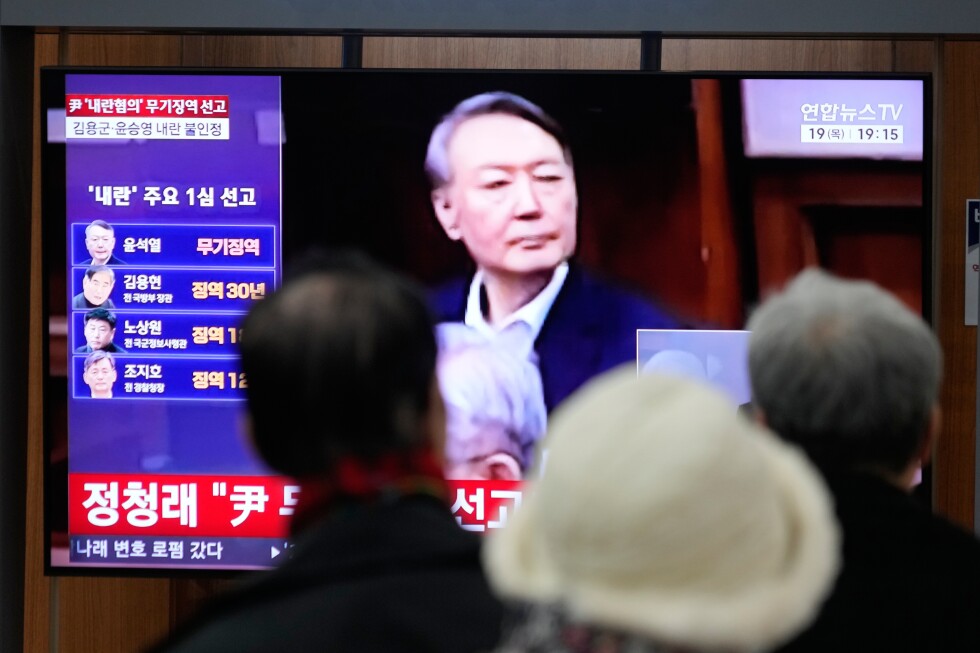
Former South Korean President Yoon Suk Yeol remained defiant Friday following his life sentence for rebellion, insisting his short-lived declaration of martial law in December 2024 was enacted “solely for the sake of the nation and our people.”
In a statement released through his lawyers, Yoon dismissed the Seoul Central District Court as biased against him, casting doubt on the legitimacy of Thursday’s verdict that found him guilty of orchestrating a coup attempt.
“In a situation where the independence of the judiciary cannot be guaranteed and a verdict based on law and conscience is difficult to expect, I feel deep skepticism whether it would be meaningful to continue a legal battle through an appeal,” said the 65-year-old former leader, who has been imprisoned since July last year.
Despite this statement, Yoon’s legal representative, Yoo Jeong-hwa, clarified that the former president was “merely expressing his current state of mind” rather than indicating an intention to waive his right to appeal. Yoon has seven days to challenge the court’s decision.
The court found Yoon guilty of mobilizing military and police forces in an illegal bid to seize control of the liberal-led legislature, arrest political opponents, and establish unchecked rule for an indefinite period. Judge Jee Kui-youn highlighted Yoon’s lack of remorse, noting the former president has shown “no sign of apology for the staggering social costs incurred by the emergency martial law.”
Throughout the legal proceedings, Yoon consistently rejected the eight criminal cases brought against him. He barricaded himself in the presidential residence for weeks after his initial arrest, stonewalled investigators, skipped court dates, and clashed with witnesses when he did appear.
The unprecedented political crisis began when Yoon declared martial law late on December 3, 2024, a measure that lasted only about six hours. The decree was overturned when lawmakers broke through a military blockade and unanimously voted to end it, forcing Yoon’s Cabinet to lift the measure. While brief, the attempted power grab paralyzed politics and high-level diplomacy while rattling South Korea’s financial markets.
Yoon was suspended from office on December 14, 2024, after being impeached by lawmakers, and was formally removed by the Constitutional Court in April 2025. Current liberal President Lee Jae Myung won the subsequent early election in June last year, resolving the power vacuum that had engulfed the nation.
In his statement Friday, Yoon expressed sympathy for soldiers, police officials, and public servants facing investigations or indictments related to his martial law decree, saying he feels responsible for their suffering. Nevertheless, he assured his supporters that “our fight is not over.”
The court also convicted five former military and police officials involved in enforcing Yoon’s decree. Former Defense Minister Kim Yong Hyun received a 30-year jail term for his central role in planning the measure, mobilizing the military, and instructing counterintelligence officials to arrest key politicians, including current President Lee. Kim has already filed an appeal.
The verdict has sharply divided South Korean society. Conservative supporters rallied near the court for hours before the announcement, expressing anger and disappointment afterward. Meanwhile, Yoon’s opponents celebrated in nearby streets, with hundreds of police officers separating the two groups to prevent clashes.
Jang Dong-hyuk, leader of the conservative People Power Party, criticized the court on Friday, claiming it failed to present a convincing case that Yoon’s martial law decree constituted rebellion. He emphasized that “the right to be presumed innocent applies to everyone without exception.”
The independent counsel that prosecuted Yoon had sought the death penalty. Jang Woo-sung, a member of the investigation team, told reporters they have “reservations” about the court’s factual findings and the severity of the sentence, suggesting prosecutors might seek a harsher punishment through their own appeal.
The case represents one of the most significant political upheavals in South Korea’s modern democratic history, testing the nation’s constitutional safeguards against authoritarian overreach.
Fact Checker
Verify the accuracy of this article using The Disinformation Commission analysis and real-time sources.

9 Comments
This is a complex and concerning development. While I can understand Yoon’s skepticism about the judiciary, declaring martial law is an extreme measure that undermines democratic principles. I hope the appeals process can bring more clarity to the situation.
You raise a fair point. The details around the declaration of martial law will be crucial in determining if it was truly for the nation’s benefit or a power grab. A thorough and impartial review is needed.
It’s concerning to see a former president sentenced to life in prison, even if the charges are serious. I hope the appeals process can shed more light on the specifics of the case and ensure that due process is followed. Maintaining the integrity of democratic institutions is crucial, but it must be done fairly and transparently.
This case highlights the fragility of democratic institutions, even in developed nations. I’m curious to learn more about the specific allegations and evidence against Yoon. Maintaining the rule of law is critical, but the process must also be seen as fair and legitimate.
I agree, the integrity of the judicial system is paramount. Hopefully the appeals process can shed light on whether proper procedures were followed, and whether Yoon’s actions were truly a threat to democracy or a misguided attempt to serve the public.
This case underscores the importance of an independent and impartial judiciary, even in established democracies. While the allegations against Yoon are serious, the appeals process must be allowed to play out without political interference. The outcome will have significant implications for South Korea’s democratic institutions.
Coups and power grabs are always concerning, but the details here seem murky. I’m curious to learn more about the specific evidence against Yoon and whether his actions were truly a threat to South Korea’s democracy or a misguided attempt to serve the public. A thorough and impartial review is needed.
While I’m troubled by the allegations of a coup attempt, I’m also concerned about the potential for political retaliation. It’s important that the legal process plays out objectively, without undue influence from either side. The implications for South Korea’s democracy are significant.
This is a delicate situation that requires a careful balancing act. On one hand, we must uphold the rule of law and protect democratic institutions. On the other, the judiciary must be seen as impartial and fair, even for high-profile defendants. I hope the appeals process provides more clarity.