


Listen to the article
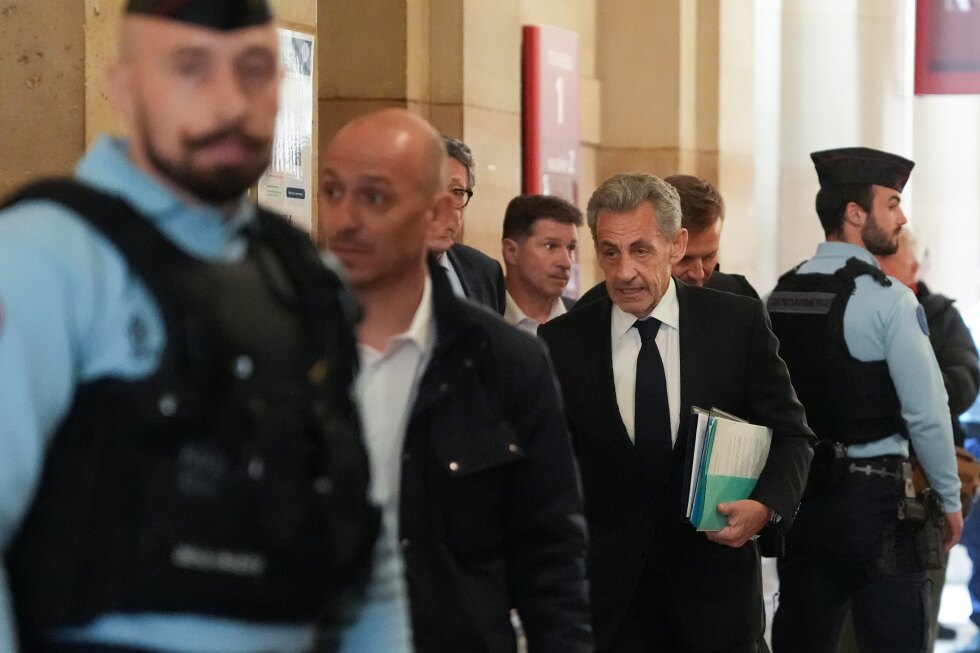
Former French President Nicolas Sarkozy returned to a Paris courtroom Monday to appeal his conviction in a case alleging illegal campaign financing from Libya, a legal battle that previously led to his brief imprisonment.
The 71-year-old former leader is contesting a September ruling that found him guilty of “criminal conspiracy” and sentenced him to five years in prison. The court determined Sarkozy played a role in a scheme to secure funds from the regime of former Libyan leader Moammar Gadhafi in exchange for political favors.
The conviction marked an unprecedented moment in modern French politics as Sarkozy became the first former president to receive actual prison time. He began serving his sentence but was subsequently released under judicial supervision after an appeals court intervened pending this new trial.
The appeal hearing, scheduled to continue until June 3, will thoroughly reexamine evidence and testimony involving Sarkozy and nine co-defendants, including three former ministers from his administration. The proceedings represent a crucial opportunity for the former president to clear his name in one of several legal cases that have dogged him since leaving office.
During the initial trial, judges concluded that Sarkozy and associates formed a criminal enterprise between 2005 and 2007 specifically designed to channel Libyan money into his successful presidential campaign. The case centers on allegations that Sarkozy’s team sought financial support from the Gadhafi regime in return for diplomatic access and influence.
Sarkozy, who served as France’s president from 2007 to 2012, has consistently denied any wrongdoing in the matter, suggesting the accusations against him are politically motivated. Despite his legal troubles, he remains an influential figure within French conservative politics, with many supporters viewing the cases against him as judicial overreach.
The Libyan financing case represents just one part of Sarkozy’s ongoing legal challenges. In November, France’s highest court, the Court of Cassation, upheld a separate conviction for illegal campaign financing related to his unsuccessful 2012 reelection bid. That verdict carries a six-month house arrest sentence requiring an electronic monitoring bracelet, though implementation has been delayed amid his other legal proceedings.
Political analysts note that Sarkozy’s legal woes come during a period of significant political realignment in France, with traditional parties facing challenges from both far-right and far-left movements. While no longer holding office, Sarkozy’s continuing legal saga has implications for public trust in France’s political establishment.
The case has also spotlighted France’s complex relationships with North African nations, particularly during the period before the 2011 NATO-backed uprising that toppled Gadhafi’s regime. Prosecutors have alleged that Sarkozy’s willingness to accept Libyan funds compromised France’s diplomatic independence.
Legal experts point out that the high-profile nature of the case presents significant challenges for both prosecution and defense. Obtaining reliable evidence from Libya during the post-Gadhafi period of instability has complicated matters, with some witnesses coming from a country now divided by ongoing conflict.
Should Sarkozy’s appeal fail, it would cement a remarkable downfall for a politician who once enjoyed considerable popularity and international prominence. The former president, known for his energetic style and center-right policies, has maintained a loyal base of supporters who believe the judicial system has treated him unfairly.
The appeal hearing will likely scrutinize financial transfers, witness testimony, and communications that prosecutors claim demonstrate the existence of a financing arrangement between Sarkozy’s team and Libyan officials during the period in question.
Fact Checker
Verify the accuracy of this article using The Disinformation Commission analysis and real-time sources.

16 Comments
The mining and energy industries can be susceptible to corruption and undue influence, so cases like this are important for ensuring integrity in the political process. I hope the appeals court reaches a well-reasoned decision.
Given the high-profile nature of this case, the public will be closely watching the appeals process. It’s important that the proceedings are fair and that the final outcome is seen as just.
The mining and energy sectors are closely intertwined with geopolitics, so this case has potential ramifications beyond just French politics. I’ll be following the developments with interest.
Allegations of illicit campaign financing linked to a foreign regime like Libya could raise national security concerns. The appeals process should examine these angles carefully.
Allegations of improper campaign financing are always concerning, as they can undermine public trust in the political system. I hope the appeals process is thorough and transparent, allowing the facts to come to light.
It’s crucial that the rule of law is upheld, regardless of one’s political affiliation or status. A fair and impartial justice system is essential for a healthy democracy.
This case seems to be a complex legal battle involving alleged campaign finance irregularities during Sarkozy’s presidency. It will be interesting to see how the appeal unfolds and whether new evidence emerges to shed more light on the situation.
Given Sarkozy’s prominent political status, this case has significant implications for French politics and governance. The outcome could set an important precedent.
This case touches on some of the key issues facing the mining and energy industries, such as the intersection of politics, business, and international relations. The appeals process will be an important test of the rule of law in France.
Regardless of one’s personal views on Sarkozy, it’s crucial that the appeals court examines the evidence objectively and reaches a decision that upholds the principles of justice and accountability.
Allegations of improper campaign financing, especially those linked to foreign regimes, can have significant geopolitical implications. The mining and energy sectors are often at the heart of such controversies.
The appeals process will be an opportunity for Sarkozy to challenge the earlier conviction and provide a more comprehensive defense. The outcome could have lasting impacts on French politics and governance.
This case highlights the complex web of relationships between politics, business, and international affairs. The mining and energy sectors are often at the center of such controversies.
It’s crucial that the appeals process examines all relevant evidence and testimony thoroughly. Transparency and accountability are essential for maintaining public trust in the political system.
As a former head of state, Sarkozy likely has significant legal resources at his disposal to mount a robust defense. It will be important to see if he can effectively challenge the earlier conviction.
Regardless of one’s political leanings, the principles of due process and the presumption of innocence should be upheld. The appeals court must weigh the evidence objectively.