


Listen to the article
The European Central Bank maintained its benchmark deposit rate at 2% on Thursday, reflecting confidence in the eurozone’s economic resilience despite global trade tensions following U.S. President Donald Trump’s tariff policies.
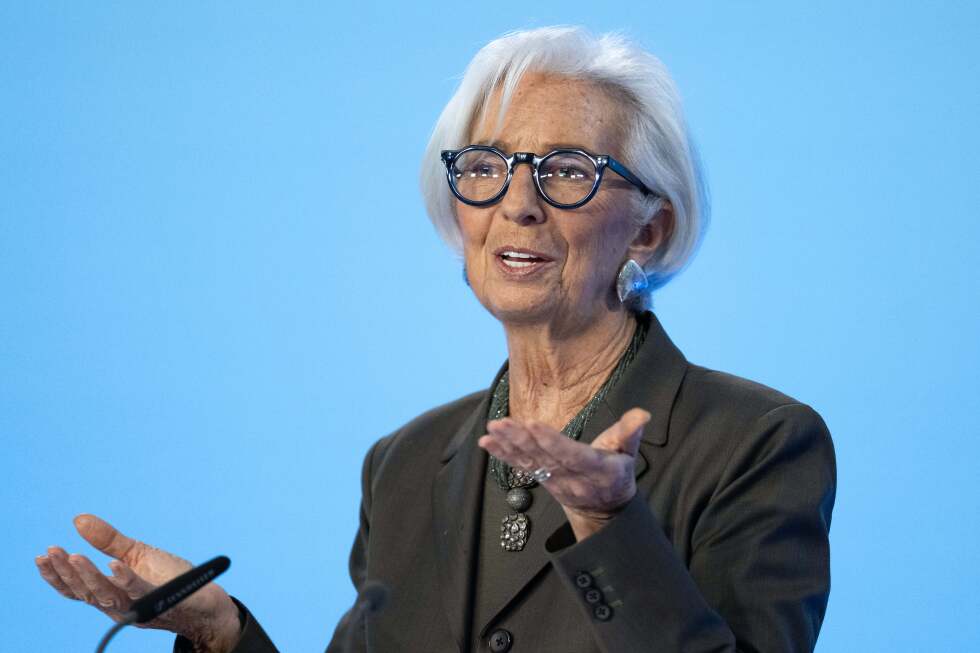
“The economy remains resilient in a challenging global environment,” ECB President Christine Lagarde stated during her post-meeting news conference. She highlighted several factors supporting growth, including low unemployment rates, increased government spending on defense and infrastructure, and the positive effects of previous rate cuts.
The current rate, unchanged since June after a series of reductions from a peak of 4% in mid-2024, has successfully stimulated the housing market by reducing borrowing costs for mortgages and construction loans. This has contributed to economic momentum without requiring further monetary easing.
“At the same time, the external environment remains challenging owing to higher tariffs and a stronger euro,” Lagarde noted, acknowledging ongoing trade pressures. She offered no signals about future rate movements, emphasizing the ECB’s meeting-by-meeting approach “in this world of significant uncertainty.”
The eurozone demonstrated unexpected strength in the final quarter of 2025, posting 0.3% growth. Berenberg bank projects annual growth could reach 1.3% for the year, indicating modest but steady economic expansion across the 21-country bloc.
Growth prospects have improved particularly in Germany, the eurozone’s largest economy, where anticipated increases in infrastructure and defense spending are expected to provide fiscal stimulus. Meanwhile, France overcame a significant political hurdle when Prime Minister Sebastien Lecornu finally secured passage of the 2026 budget, using special powers to bypass parliamentary deadlock—removing a major source of uncertainty for the bloc’s second-largest economy.
Energy costs have also stabilized significantly since the dramatic price surges that followed Russia’s 2022 invasion of Ukraine, further supporting economic activity.
The eurozone navigated months of uncertainty as President Trump threatened punitive tariffs that could have severely disrupted U.S.-European trade relations. The eventual agreement with the European Commission capped tariff rates at 15%—a substantial increase from the previous 4.8%, but far less severe than initially feared. This compromise allowed businesses to plan with greater certainty, despite Trump’s brief threat to impose additional tariffs on EU nations that opposed his proposed acquisition of Greenland.
Inflation has fallen below the ECB’s 2% target, registering 1.7% in January. This favorable inflation environment, combined with steady but unspectacular growth, has led economists at Berenberg to predict the central bank will maintain current rates until mid-2027, when strengthening economic conditions might warrant tightening monetary policy.
The ECB’s decision aligns with its dual mandate of price stability and supporting economic growth. By keeping rates steady, the bank aims to maintain the delicate balance between controlling inflation and nurturing economic expansion across a diverse monetary union still recovering from multiple shocks—including the pandemic, energy crisis, and ongoing trade tensions.
As the eurozone continues to navigate these complex economic waters, the ECB’s cautious approach reflects its assessment that current monetary policy provides appropriate support without risking inflationary pressures or further dampening growth in an uncertain global environment.
Fact Checker
Verify the accuracy of this article using The Disinformation Commission analysis and real-time sources.

11 Comments
Glad to see the ECB taking a pragmatic, data-driven approach to monetary policy. Keeping rates steady while closely watching external factors is a sensible strategy in these volatile times. It should provide some stability for miners and commodity producers in Europe.
The ECB’s decision to hold rates steady despite external pressures demonstrates its confidence in the eurozone’s domestic economic strength. This should provide a measure of stability for mining and energy companies operating in the region.
Absolutely, a steady policy environment is crucial for capital-intensive industries like mining that require long-term planning and investment. The ECB’s pragmatic approach is reassuring.
The ECB’s decision reflects confidence in the eurozone’s economic fundamentals, which is good news for mining and commodity-related industries in the region. However, external trade risks remain a wild card that will require careful monitoring.
Absolutely, the global trade environment is a significant source of uncertainty that the ECB will have to factor into its future policy decisions. Navigating this landscape will be critical for sustaining the eurozone’s growth momentum.
The ECB’s steady hand on monetary policy is a positive sign for miners and commodity producers in Europe. While global trade tensions remain a concern, the eurozone’s economic resilience suggests a relatively stable operating environment for these industries.
While the ECB’s caution is understandable given the uncertain global environment, I hope they remain vigilant about the potential risks of inflation and act decisively if needed to support the mining and commodity sectors.
The ECB’s decision to hold rates steady is a reassuring sign of the eurozone’s economic resilience, despite global headwinds. This should help maintain a stable environment for mining and energy investments in the region.
Agreed, stability in monetary policy is crucial for capital-intensive industries like mining. The ECB’s meeting-by-meeting approach allows it to respond nimbly to changing conditions while avoiding overly disruptive rate adjustments.
Interesting to see the ECB maintaining its deposit rate despite global trade tensions. The eurozone’s resilience is encouraging, though the stronger euro and trade pressures are a concern. Curious to see how the ECB navigates this delicate balance going forward.
Agreed, the ECB seems to be taking a measured approach, focused on domestic factors like employment and infrastructure spending. Maintaining stability in uncertain times is prudent.