


Listen to the article
European Nations Consider Weakening Migrant Protections Amid Political Pressures
European nations reached a consensus Wednesday to consider changes to migrant protection laws that have been foundational to European human rights since World War II, sparking concern among rights advocates who fear a significant weakening of protections.
The agreement emerged during discussions in Strasbourg, France, where representatives from the 46 countries of the Council of Europe acknowledged the “challenges” posed by migration while simultaneously claiming to uphold their respect for the European Convention on Human Rights and the European Court of Human Rights.
“The convention is a living instrument,” said Alain Berset, Secretary General of the Council of Europe, while emphasizing that nations recognized their responsibility to “safeguard national vital interests such as security.” Ministers will now begin drafting a political declaration on migration to be adopted in May, along with new recommendations to deter human smuggling.
This shift reflects a broader European trend where mainstream political parties have adopted increasingly restrictive migration policies to counter the rising popularity of far-right politicians who have capitalized on anti-immigrant sentiment. Ironically, these policy shifts come at a time when illegal border crossings into Europe are actually decreasing.
The Council of Europe, established after World War II to promote peace and democracy across the continent, is separate from the European Union and includes nations like the United Kingdom that are not EU members.
The push to reinterpret the convention regarding migrants gained momentum last year when nine nations signed a letter seeking to limit the power of the European Court of Human Rights. These countries argued that the court’s interpretation prevented them from expelling migrants who commit crimes and from effectively safeguarding their national security.
While Berset attempted to minimize the divisions among member states, 27 nations—nearly two-thirds of the council’s membership—signed a separate statement Wednesday calling for a less restrictive interpretation of the law. “A right balance has to be found between the migrants’ individual rights and interests and the weighty public interests of defending freedom and security in our societies,” the statement read.
Andrew Forde, co-founder of the AGORA group of academics, researchers, and lawyers, and a former council employee, expressed concern about the development. “For the first time in the history of the Council of Europe, member states have pinpointed a specific group of people that they want to afford fewer rights protection to,” he noted, highlighting the unprecedented nature of targeting a particular demographic for reduced legal protections.
The shift in European migration politics was further underscored when UK Prime Minister Keir Starmer and Danish Prime Minister Mette Frederiksen published a joint op-ed in The Guardian newspaper advocating for tighter migration controls. They specifically called for denying entry to economic migrants while maintaining protections for those fleeing conflict. “The best way of fighting against the forces of hate and division is to show that mainstream, progressive politics can fix this problem,” they wrote, revealing how center-left politicians are also adopting more restrictive migration stances.
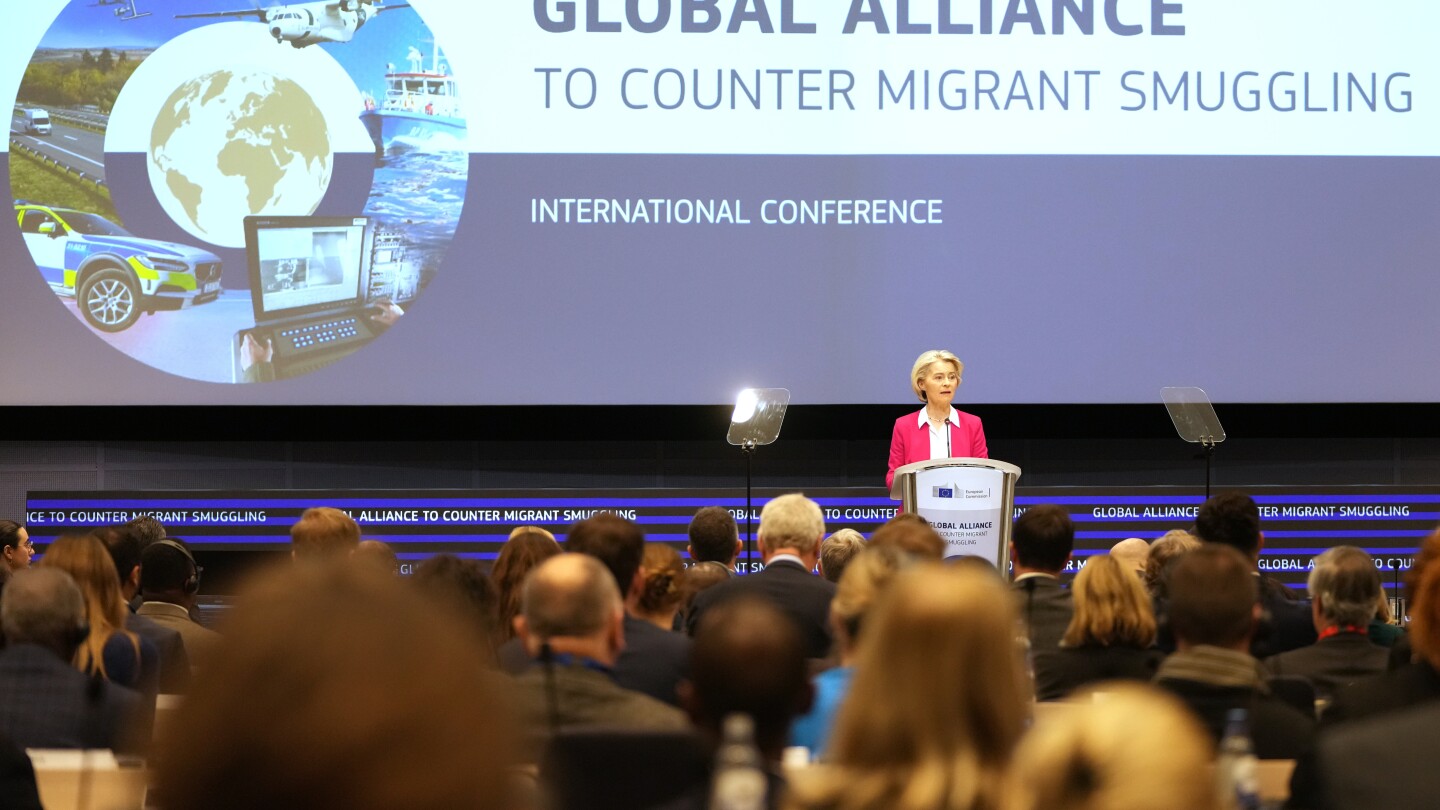
Meanwhile, in Brussels, European Commission President Ursula von der Leyen addressed EU ministers, pledging aggressive action against smuggling networks that facilitate illegal migration. “Our goal is simple. We want to bankrupt their businesses through all means available,” she declared at an event marking the second anniversary of the EU-led Global Alliance to Counter Migrant Smuggling.
Despite the political focus on illegal migration, Frontex, the EU’s border and coast guard agency, reported that irregular border crossings into the EU decreased by 22% from January to October compared to the same period last year. The agency recorded 152,000 unauthorized crossings in the first ten months of 2023.
Migration experts note that most migration to Europe occurs through legal channels, with many migrants initially entering on valid visas that they subsequently overstay. Simultaneously, the EU has invested billions of euros in deterrence programs, paying countries in Africa and the Middle East to intercept migrants attempting to cross the Mediterranean and Atlantic.
The situation presents a paradox for European nations, as many face aging populations and labor shortages, prompting investments in programs designed to attract and train foreign workers while simultaneously restricting migration pathways.
Fact Checker
Verify the accuracy of this article using The Disinformation Commission analysis and real-time sources.

18 Comments
Production mix shifting toward World might help margins if metals stay firm.
If AISC keeps dropping, this becomes investable for me.
Good point. Watching costs and grades closely.
Good point. Watching costs and grades closely.
If AISC keeps dropping, this becomes investable for me.
Good point. Watching costs and grades closely.
Good point. Watching costs and grades closely.
Production mix shifting toward World might help margins if metals stay firm.
Production mix shifting toward World might help margins if metals stay firm.
Good point. Watching costs and grades closely.
Good point. Watching costs and grades closely.
The cost guidance is better than expected. If they deliver, the stock could rerate.
Good point. Watching costs and grades closely.
Good point. Watching costs and grades closely.
Interesting update on European nations agree to consider weakening protections for migrants dating to WWII. Curious how the grades will trend next quarter.
Good point. Watching costs and grades closely.
Exploration results look promising, but permitting will be the key risk.
If AISC keeps dropping, this becomes investable for me.