


Listen to the article
European leaders are navigating a delicate diplomatic path as they attempt to influence the fragile ceasefire between the United States, Israel, and Iran while maintaining a careful distance from direct military involvement in the conflict.
The ongoing war has placed Europe in an uncomfortable position, struggling to balance support for the U.S. as a key NATO ally while facing occasional criticism from President Donald Trump for limited military participation and restricted base access. Some European leaders have been more vocal than others in establishing their independence from U.S. military decisions.
French President Emmanuel Macron notably remarked last week that the U.S. cannot reasonably “complain about a lack of support” for military operations it chose to undertake unilaterally without consulting allies. This statement highlights growing tensions within the transatlantic alliance over the handling of Middle East conflicts.
The precarious ceasefire, negotiated by Pakistan and agreed to by Trump mere hours before potential escalation, was designed to halt hostilities and reopen the strategically vital Strait of Hormuz. However, complications arose almost immediately when Iran reclosed the crucial shipping channel after Israel conducted airstrikes targeting Hezbollah positions in Lebanon. The scope of the ceasefire agreement itself became contentious, with Iran claiming Lebanon was included in the deal while U.S. and Israeli officials disputed this interpretation.
Further complicating matters, Iran has drawn sharp criticism for demanding the right to collect tolls as a condition for reopening the Strait of Hormuz, a move that could have significant implications for global energy markets and shipping costs.
European diplomatic efforts have intensified in response to these developments. The leaders of France, Germany, the UK, Italy, Canada, Denmark, the Netherlands, Spain, and the European Union issued a joint statement on Wednesday urging “quick progress towards a substantive negotiated settlement.” They emphasized that diplomatic resolution “will be crucial to protect the civilian population of Iran and ensure security in the region” while averting “a severe global energy crisis.”
Macron, who held separate conversations with both Iranian President Masoud Pezeshkian and Trump on Wednesday, called for all parties to fully respect the ceasefire and engage in comprehensive negotiations.
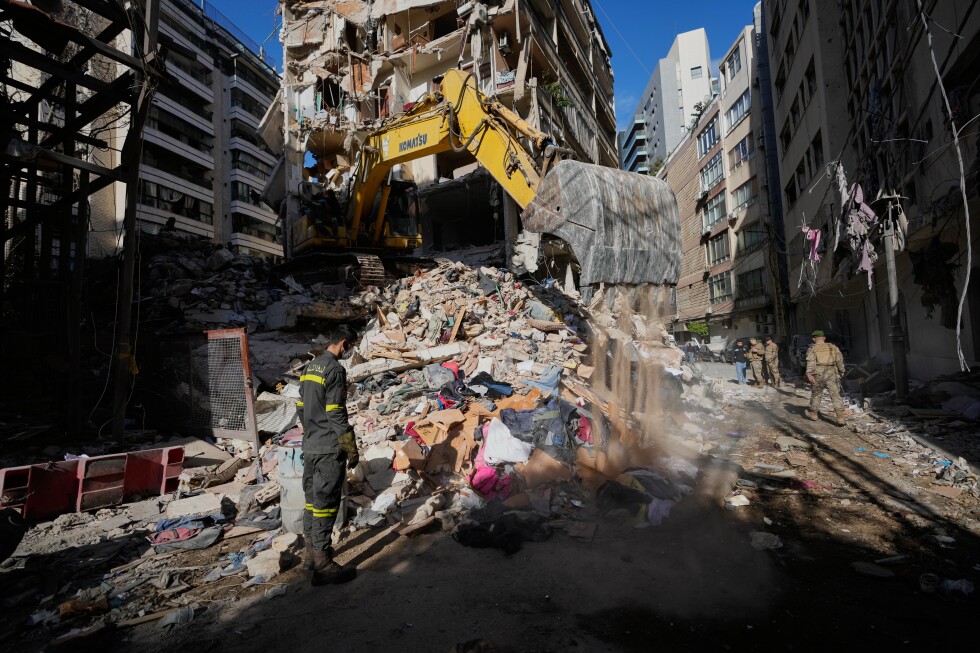
The situation in Lebanon has emerged as a particular concern for European leaders after Wednesday became the deadliest day of fighting there, with over 200 casualties reported. European leaders jointly called for the ceasefire to extend to Lebanon as well.
German Chancellor Friedrich Merz warned that “the severity with which Israel is waging war there could cause the failure of the peace process as a whole, and that must not happen.” British Prime Minister Keir Starmer, visiting the Middle East to build support for the ceasefire, was unequivocal in condemning Israel’s strikes on Lebanon, stating, “That shouldn’t be happening. That should stop.”
Spain’s Prime Minister Pedro Sánchez, who has consistently been Europe’s most vocal critic of U.S. and Israeli military actions in the region, went further by calling for the European Union to suspend its association agreement with Israel, claiming that Israeli Prime Minister Benjamin Netanyahu’s “contempt for life and international law is intolerable.”
Regarding the strategically critical Strait of Hormuz, French Foreign Minister Jean-Noël Barrot announced Thursday that European and other international partners are finalizing plans for naval vessels to escort commercial ships through the strait once fighting effectively ceases. Macron indicated approximately 15 nations are prepared to participate in such a mission.
Italian Premier Giorgia Meloni warned her parliament that any Iranian-imposed duties in the Strait would have “unpredictable economic consequences,” while British Foreign Secretary Yvette Cooper emphasized it’s “crucial” that Iran not be allowed to apply tolls in the strait.
The conflict has also intensified existing tensions within NATO, with Trump unsettling alliance members by suggesting the U.S. might withdraw from the transatlantic security pact. He described allies as “cowards” and NATO as “a paper tiger,” claiming the alliance had failed to support America.
Chancellor Merz acknowledged Thursday that the war had become a “trans-Atlantic stress test” but emphasized the importance of preserving unity, stating, “We don’t want, I don’t want a split in NATO. NATO is a guarantor of our security, also and above all in Europe. We must continue to keep a cool head here.”
As the situation continues to evolve, European leaders are attempting to balance diplomatic support for peace efforts while maintaining strategic distance from direct military engagement, hoping to influence events without becoming entangled in a widening regional conflict.
Fact Checker
Verify the accuracy of this article using The Disinformation Commission analysis and real-time sources.

19 Comments
The cost guidance is better than expected. If they deliver, the stock could rerate.
Good point. Watching costs and grades closely.
Production mix shifting toward World might help margins if metals stay firm.
Good point. Watching costs and grades closely.
Silver leverage is strong here; beta cuts both ways though.
Production mix shifting toward World might help margins if metals stay firm.
Good point. Watching costs and grades closely.
Good point. Watching costs and grades closely.
Interesting update on European leaders seek to stabilize US-Israel ceasefire with Iran. Curious how the grades will trend next quarter.
Good point. Watching costs and grades closely.
Good point. Watching costs and grades closely.
If AISC keeps dropping, this becomes investable for me.
Good point. Watching costs and grades closely.
Good point. Watching costs and grades closely.
Uranium names keep pushing higher—supply still tight into 2026.
Nice to see insider buying—usually a good signal in this space.
Good point. Watching costs and grades closely.
Good point. Watching costs and grades closely.
Production mix shifting toward World might help margins if metals stay firm.