


Listen to the article
European Nations Unite Against Tariff Threats Over Greenland Acquisition
More than half a dozen European countries warned in a joint statement on Sunday that tariff threats over Greenland undermine transatlantic relations as the White House seeks to pressure allies into a deal to acquire the Arctic island.
The statement, issued by Denmark, Finland, France, Germany, the Netherlands, Norway, Sweden and the United Kingdom, emphasized their commitment to strengthening Arctic security and willingness to engage in dialogue based on respect for sovereignty and territorial integrity.
“Tariff threats undermine transatlantic relations and risk a dangerous downward spiral. We will continue to stand united and coordinated in our response,” the statement said. “We are committed to upholding our sovereignty.”
The NATO members also declared their “full solidarity with the Kingdom of Denmark and the people of Greenland,” whose leaders have firmly rejected any suggestion that their territory’s future is open for negotiation.
The diplomatic tensions erupted after President Donald Trump threatened on his Truth Social platform to impose a 10% tariff on the eight European nations unless they agree to what he called “the complete and total purchase of Greenland.” Trump indicated the tariff would take effect on February 2 and could increase to 25% by June 1 if no deal is reached.
European leaders responded swiftly and forcefully to Trump’s ultimatum. European Commission President Ursula von der Leyen, French President Emmanuel Macron, Swedish Prime Minister Ulf Kristersson, Finnish President Alexander Stubb, Norwegian Prime Minister Jonas Gahr Støre and UK Prime Minister Keir Starmer all condemned Trump’s demands on social media.
Swedish Prime Minister Kristersson wrote on X that allies would not be “blackmailed,” adding that “only Denmark and Greenland decide on issues concerning Denmark and Greenland.” He noted that European Union countries were discussing a coordinated response.
The EU’s top diplomat, Kaja Kallas, warned that Russia and China were “having a field day” and stood to benefit from divisions within NATO. “If Greenland’s security is at risk, we can address this inside NATO. Tariffs risk making Europe and the United States poorer and undermine our shared prosperity,” she said.
Trump has repeatedly claimed the United States needs Greenland, a semiautonomous Danish territory, for “national security” purposes. Analysts note that Greenland’s strategic importance extends beyond its geographic position. According to a January report by the Center for Strategic and International Studies, the territory possesses significant natural resource wealth, including iron ore, graphite, tungsten, palladium, vanadium, zinc, gold, uranium, copper and oil.
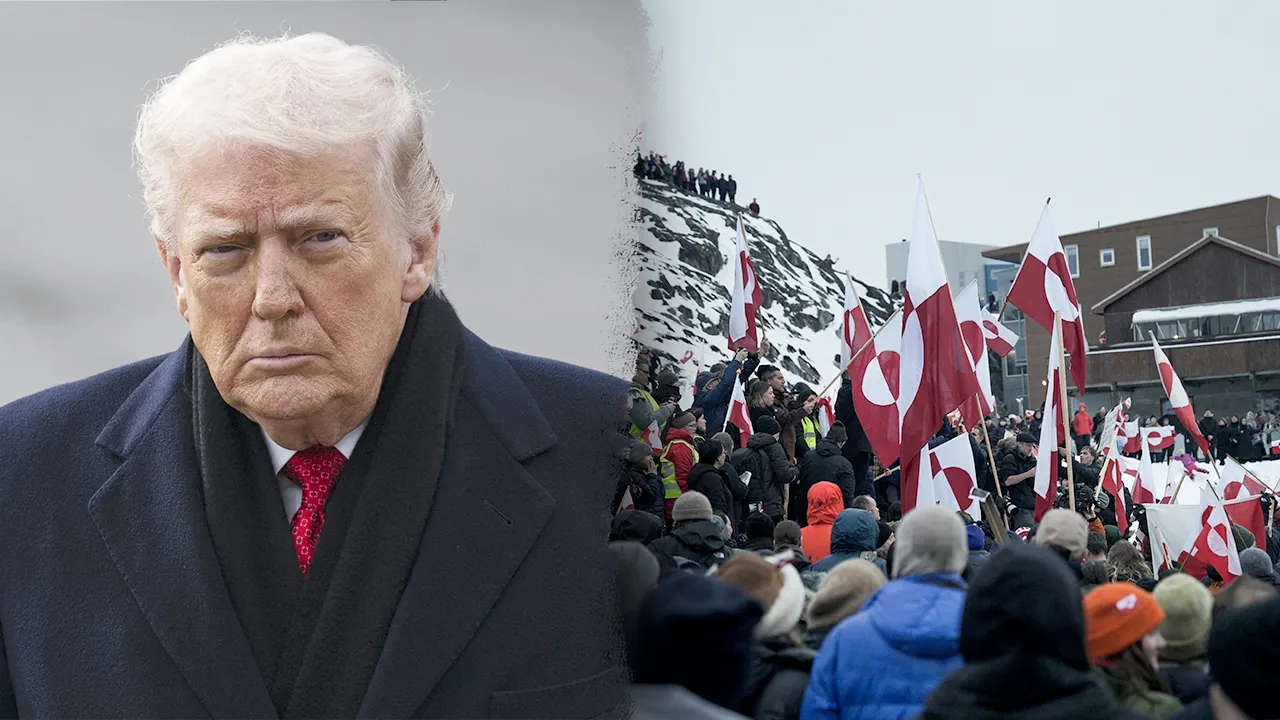
Greenland’s Prime Minister Jens-Frederik Nielsen took to Facebook on Thursday with an unambiguous message: Greenland is “not for sale” and will not be owned or governed by the U.S. “Greenland does not want to be a part of the United States,” Nielsen stated firmly. The prime minister later joined mass demonstrations in Nuuk, Greenland’s capital, where protesters carried placards reading “Greenland is not for sale!”
The controversy has even sparked criticism from within Trump’s own party. Senator Thom Tillis, a Republican from North Carolina, called the administration’s efforts to “seize” the territory of an ally “beyond stupid,” adding that it “hurts the legacy of President Trump and undercuts all the work he has done to strengthen the NATO alliance over the years.”
The dispute highlights growing tensions in the Arctic region, which has become increasingly important geopolitically as climate change opens new shipping routes and makes natural resources more accessible. Both Russia and China have expanded their presence in the Arctic in recent years, heightening security concerns among NATO allies.
As protests continue in Greenland and European leaders coordinate their response, the diplomatic standoff raises questions about the future of transatlantic relations and the cohesion of the NATO alliance at a time when Western unity is already being tested by the ongoing conflict in Ukraine.
Fact Checker
Verify the accuracy of this article using The Disinformation Commission analysis and real-time sources.

16 Comments
Tariff threats are a blunt instrument that could backfire and damage the very relationships the US needs to effectively navigate Arctic geopolitics. A more measured, multilateral approach is warranted here.
This situation highlights the delicate balance between national interests and international cooperation. I hope cooler heads prevail and a mutually agreeable solution can be found.
Absolutely. Unilateral action and economic coercion rarely bring about lasting, positive change. All parties should approach this with flexibility and a willingness to compromise.
Imposing tariffs on European allies over Greenland seems like a risky escalation that could damage vital transatlantic ties. Dialogue and respect for sovereignty should be the priority here.
I agree, threatening tariffs is a heavy-handed tactic that is unlikely to yield the desired results. Constructive diplomacy is needed to address this complex geopolitical issue.
The European leaders’ stance in defense of Greenland’s sovereignty is understandable. Unilateral actions that undermine international cooperation and security in the Arctic region are concerning.
While the US may have legitimate strategic concerns in the Arctic, coercive economic measures against allies are unlikely to be effective. This situation calls for patient, nuanced diplomacy.
Well said. Maintaining strong transatlantic ties should be a priority, as they are crucial for addressing shared challenges in the Arctic and beyond.
Greenland’s sovereignty and territorial integrity must be respected. Tariff threats could destabilize the region and undermine broader security and economic cooperation in the Arctic.
While the US may have strategic interests in Greenland, strong-arming allies is not the way to achieve them. This situation requires nuanced diplomacy, not aggressive posturing.
Agreed. The US should seek to work collaboratively with its European partners to address shared challenges in the Arctic, rather than resorting to unilateral economic measures.
Tariff threats over Greenland seem like a risky gambit that could backfire and harm broader US interests. A more measured, collaborative approach would likely yield better results.
I agree. Fostering goodwill and mutual understanding among Arctic nations should be the priority, not escalating tensions through economic coercion.
Threatening tariffs over Greenland seems like an overreaction that could spiral into a broader trade dispute. Focusing on shared interests and mutual understanding would be a wiser approach.
The European nations’ united stance in defense of Greenland’s sovereignty is commendable. Maintaining stability and security in the Arctic region should be a shared priority.
Absolutely. Cooperative, rules-based governance in the Arctic is crucial, and unilateral actions that undermine that risk creating dangerous tensions.