


Listen to the article
The European Union suspended visa-free travel privileges for Georgian officials and diplomats for at least a year on Friday, citing democratic backsliding and the violent suppression of anti-government protests in the Caucasus nation.
“If a government attacks its own people, silences journalists, and curtails freedom, there are consequences,” said EU foreign policy chief Kaja Kallas in a statement announcing the decision.
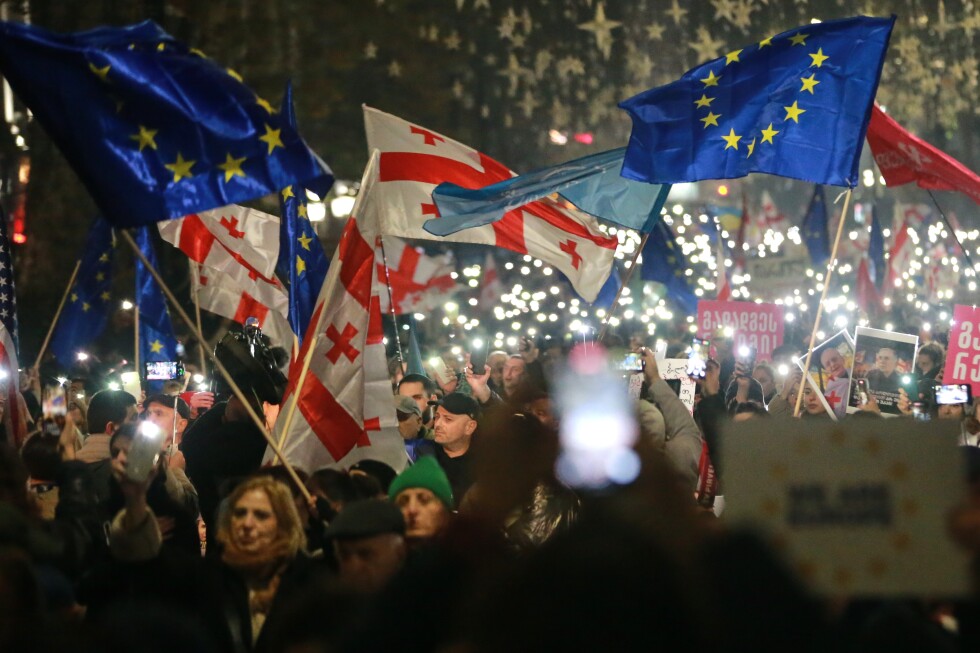
The suspension comes amid escalating political tensions in Georgia, where protests have erupted since the ruling Georgian Dream party abruptly halted the country’s EU accession process in November 2024. The move shocked many Georgians, as EU membership has been a longstanding national aspiration formally enshrined in Georgia’s constitution.
In its official statement, the European Commission said the suspension was implemented “in response to Georgia’s deliberate and persisting violation of the commitments taken under its visa-free regime in key areas of democracy and fundamental rights.” The Commission specifically cited the “crackdown on protesters, opposition politicians, and independent media,” which it said has “resulted in breaches of several fundamental rights and international legal standards.”
The political crisis in Georgia intensified after the ruling Georgian Dream party, which has held power since 2012, declared victory in recent parliamentary elections that opposition parties and international observers claim were marred by irregularities. These contested election results triggered widespread demonstrations across the country, particularly in the capital Tbilisi.
Georgian authorities have responded to these protests with increasingly harsh measures, including mass arrests and what human rights organizations have described as excessive police force against peaceful demonstrators. International watchdogs have documented numerous cases of journalists being detained while covering protests and opposition leaders facing legal harassment.
Under the terms of the EU’s decision, the visa privileges for Georgian officials will remain suspended until at least March 6, 2027. The Commission warned that the suspension could be extended for an additional two years if Georgian authorities fail to address concerns regarding governance, rule of law, and human rights violations.
The practical implications are significant. Georgian officials and diplomats, who previously enjoyed visa-free access to the Schengen zone, will now need to apply for visas before traveling to EU member states. Additionally, the Commission advised EU governments to increase scrutiny of all Georgian nationals entering Europe and warned that officials attempting to circumvent the restrictions by using personal rather than official passports could face entry bans.
“The people of Georgia have our full support but there is no place for those representing repression in our union,” Kallas emphasized, drawing a clear distinction between the Georgian government’s actions and the aspirations of Georgian citizens.
This suspension represents a significant diplomatic setback for Georgia, which had been making progress toward closer EU integration over the past decade. In 2017, Georgian citizens gained visa-free travel to the Schengen zone, a development that was celebrated as a milestone on the country’s path toward European integration.
The EU’s move comes as Georgia finds itself at a geopolitical crossroads. While public opinion polls consistently show strong support for EU and NATO membership among Georgian citizens, the Georgian Dream party has increasingly pivoted toward Russia in recent years, raising concerns about the country’s democratic trajectory and geopolitical orientation.
Regional experts note that the suspension sends a strong message about the EU’s commitment to democratic values while still maintaining channels for engagement with Georgian civil society. The EU has emphasized that ordinary Georgian citizens are not targeted by these measures, which are specifically aimed at government officials responsible for democratic backsliding.
Fact Checker
Verify the accuracy of this article using The Disinformation Commission analysis and real-time sources.

6 Comments
This is a concerning development for Georgia’s democratic progress. The EU’s decision to suspend visa-free travel privileges highlights the importance of upholding democratic norms and human rights, even for officials and diplomats. It will be interesting to see how the Georgian government responds and whether they can address the EU’s concerns.
This is a disappointing development for Georgia, which had made progress in strengthening its democratic institutions. The EU’s decision is a reflection of its concerns about the erosion of democratic norms and the suppression of dissent. It will be crucial for Georgia to engage constructively and implement reforms to regain the trust of its European partners.
The backsliding of democracy in Georgia is troubling, especially given the country’s aspirations to closer EU integration. Cracking down on protesters, opposition, and media seems to be a worrying trend. The EU’s response is understandable, though I hope dialogue and reforms can resolve this issue constructively.
I agree, it’s crucial that Georgia finds a way to recommit to democratic principles and engage constructively with the EU. Maintaining visa-free travel is an important privilege that should come with accountability.
The EU’s decision to suspend visa-free travel for Georgian officials is a serious measure, but one that seems warranted given the concerning reports of democratic backsliding. It will be important for Georgia to address the underlying issues and demonstrate a renewed commitment to human rights and the rule of law.
This is a complex situation that highlights the delicate balance between national sovereignty and international commitments to democratic values. The EU’s decision is a strong signal, but I hope dialogue and reforms can help Georgia get back on a positive track.