


Listen to the article
The European Union is actively seeking diplomatic solutions to de-escalate tensions between Iran, Israel, and the United States, according to statements made Tuesday by the EU’s foreign policy chief.
Kaja Kallas, the EU High Representative for Foreign Affairs and Security Policy, revealed that the bloc is consulting with Gulf countries to develop proposals that would allow all parties involved in the ongoing conflict to “save face” while bringing hostilities to an end.
“We have been consulting with regional countries like the Gulf countries, Jordan, Egypt, about whether we could also bring forward proposals for Iran, Israel, and the U.S. to get out of this situation so that everybody saves face,” Kallas told Reuters in an interview.
The EU diplomat emphasized the urgent need for peace, noting that “it would be in the interest of everybody if this war stops.” She highlighted a fundamental challenge of armed conflicts, stating that “the problem with wars is that it’s easier to start than to stop them, and it always gets out of hand.”
Kallas’s comments come amid escalating tensions in the strategically crucial Strait of Hormuz, a vital maritime passage through which approximately 20% of the world’s oil supply passes. Any disruption to shipping in this narrow waterway could trigger global economic consequences, including energy price spikes and supply chain disruptions.
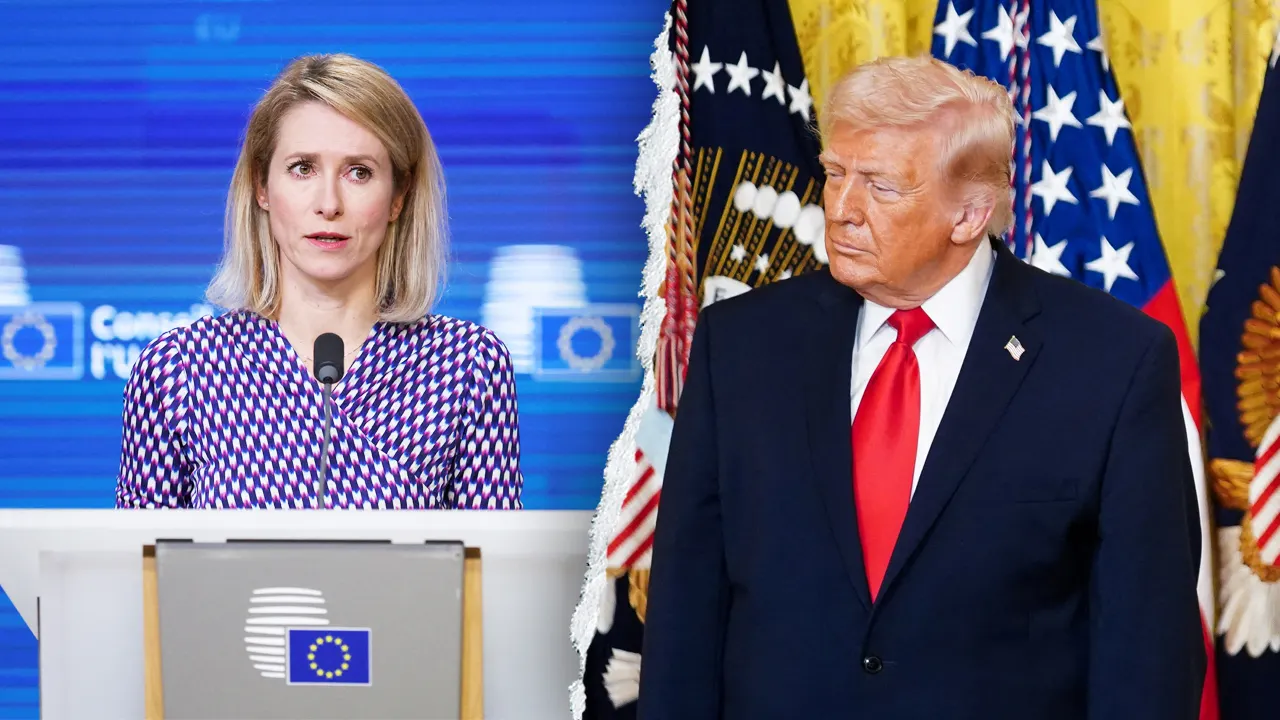
The EU representative specifically pushed back against recent statements by President Donald Trump, who called for an international naval coalition to secure the Strait of Hormuz. Trump had declared on Saturday that “Many Countries, especially those who are affected by Iran’s attempted closure of the Hormuz Strait, will be sending War Ships, in conjunction with the United States of America, to keep the Strait open and safe.”
Kallas firmly rejected this military-focused approach, telling Reuters that “Nobody is ready to put their people in harm’s way in the Strait of Hormuz.” Instead, she advocated for finding “diplomatic ways to keep this open so that we don’t have a food crisis, fertilizers crisis, energy crisis as well.”
The EU’s diplomatic initiative comes at a particularly sensitive moment in the region’s geopolitics, following significant U.S. military strikes against Iranian targets and the recent leadership transition in Iran following the death of Ayatollah Ali Khamenei. His son, Mojtaba Khamenei, has assumed leadership amid the ongoing crisis.
President Trump has maintained that the United States has “already destroyed 100% of Iran’s Military capability,” but acknowledged that Iran could still deploy smaller-scale threats like drones, mines, or close-range missiles in the strategic waterway. He stated on Truth Social that the U.S. “will be bombing the hell out of the shoreline, and continually shooting Iranian Boats and Ships out of the water.”
The stark contrast between the EU’s diplomatic approach and the U.S. military posture highlights different strategies for addressing the crisis. While the Trump administration has pursued overwhelming military force, the European Union is positioning itself as a potential mediator seeking a negotiated solution that addresses the concerns of all parties.
Regional stability in the Middle East has profound implications for global energy markets, shipping routes, and international security. The EU’s initiative recognizes that a purely military solution may not resolve the underlying tensions and could potentially trigger wider regional instability.
As diplomatic efforts continue, the international community watches closely to see whether the EU can successfully broker discussions that might lead to a de-escalation between these major powers in one of the world’s most volatile regions.
Fact Checker
Verify the accuracy of this article using The Disinformation Commission analysis and real-time sources.

8 Comments
Diplomacy is key to resolving conflicts like this. It’s good to see the EU taking a proactive role in trying to find a solution that preserves dignity for all parties involved. De-escalation and open dialogue are essential to avoiding further escalation.
Agreed. Preserving face and face-saving measures can be crucial in diplomacy, especially in sensitive geopolitical conflicts. The EU seems to be taking a thoughtful, nuanced approach here.
Extracting oneself from an armed conflict is always challenging, as the EU rep noted. Kudos to the EU for engaging with key regional players to develop proposals that could help all sides save face. That kind of nuanced diplomacy is crucial for de-escalating these types of tensions.
Absolutely. The EU’s regional engagement and focus on face-saving measures demonstrate a thoughtful, pragmatic approach. Navigating the complexities of this situation will require that kind of diplomatic finesse.
It’s refreshing to see the EU taking such a proactive stance on this issue. Diplomatic solutions that preserve dignity are often the most durable. I’m hopeful the EU can leverage its relationships in the region to help facilitate a peaceful resolution.
This is a delicate situation that demands careful, patient diplomacy. I’m glad to see the EU taking the lead and consulting with key regional actors. Finding a solution that preserves dignity for all parties will be critical to establishing a lasting peace in the Strait of Hormuz.
This conflict in the Strait of Hormuz is incredibly complex, with high stakes for the global economy and security. I’m curious to see what specific proposals the EU comes up with to try to broker a diplomatic solution. Maintaining open communication channels will be vital.
You raise a good point. The Strait of Hormuz is a critical chokepoint, so any disruptions there could have widespread ramifications. The EU will need to be very strategic and creative in its diplomacy to try to find a path forward that works for all sides.