


Listen to the article
EU Pushes Ukraine’s Membership Process Despite War and Hungarian Opposition
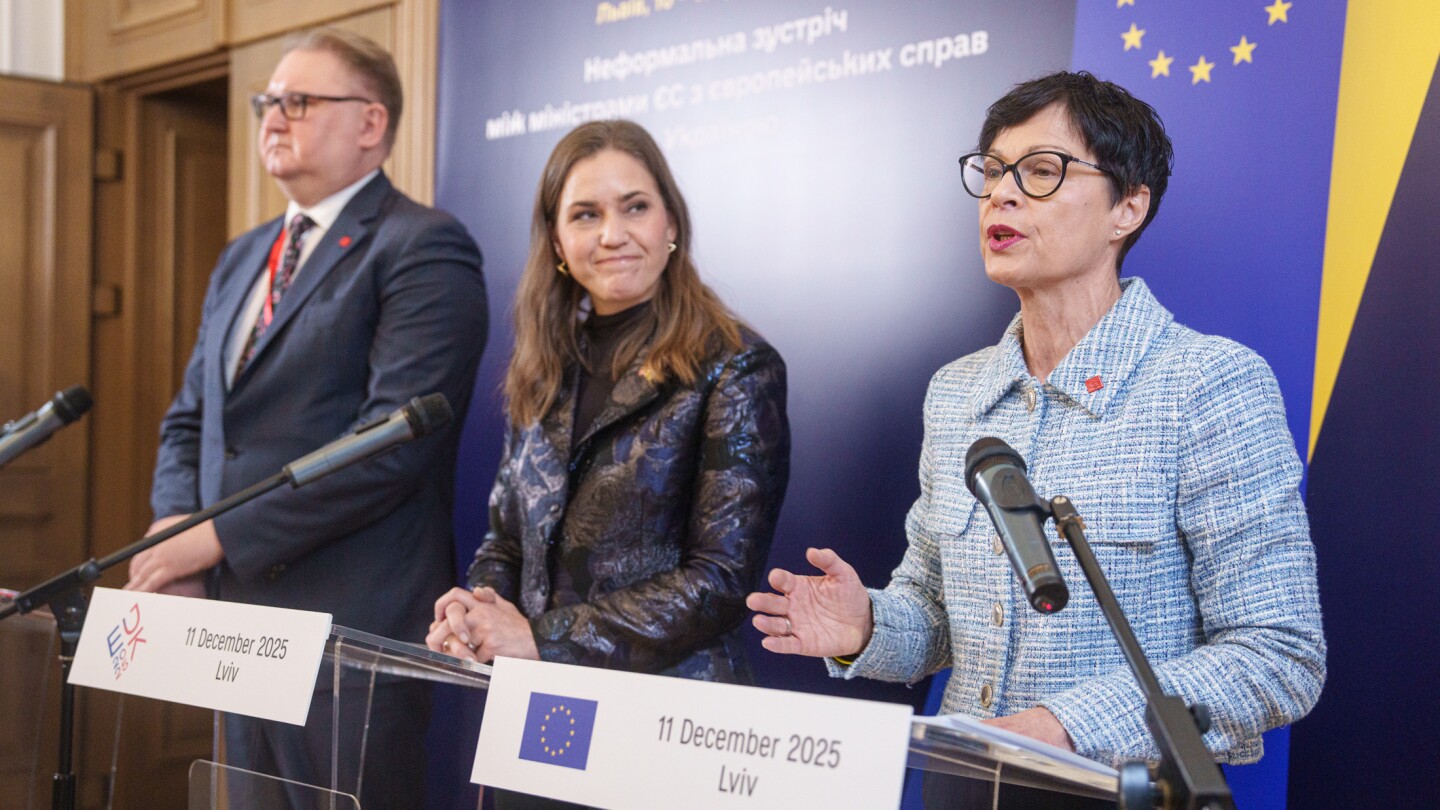
The European Union has presented Ukraine with a comprehensive list of reforms necessary for joining the bloc, demonstrating its commitment to advancing the process despite the ongoing war with Russia and objections from Hungary. Senior EU officials and diplomats gathered in Lviv, western Ukraine, on Thursday to outline requirements covering approximately half of the needed reforms, enabling progress while formal negotiations remain obstructed by Budapest.
EU membership has emerged as a cornerstone of Ukraine’s strategy to integrate with Western institutions, particularly as its NATO aspirations have stalled. The membership process represents not just a political alliance but a fundamental realignment of Ukraine’s future away from Russian influence.
Hungary’s Prime Minister Viktor Orbán continues to pose a significant obstacle to Ukraine’s EU ambitions. Orbán maintains that accession talks should not proceed during wartime and has cited concerns about the Hungarian minority in Ukraine and potential economic risks. In a notable break from the unified EU position, Hungary declined to send representatives to the Lviv meeting and has maintained relatively close ties with Moscow throughout the conflict.
“It is very clear that we are 26 member countries that see a future with Ukraine in the EU. It is not a matter of if, it is a matter of when,” stated Marie Bjerre, Denmark’s minister for European affairs, emphasizing the overwhelming support for Ukraine’s membership despite Hungary’s resistance.
Cyprus, which joined the EU in 2004 while still a divided island, could provide Ukraine with a valuable blueprint for accession. The Mediterranean nation will assume the EU’s rotating presidency from Denmark on January 1 and has pledged to maintain momentum on Ukraine’s bid.
Marilena Raouna, Cyprus’ deputy minister for European affairs, praised Ukraine’s “extraordinary political will” to implement key reforms. “Despite Russia’s ongoing war of aggression, the Ukrainian people continue to defend not only their sovereignty but also the very principles on which our union stands: democracy, freedom, human dignity and respect for fundamental rights,” she told The Associated Press.
The reform process facing Ukraine is extensive, organized into six “clusters” that require alignment with EU systems, practices, and regulations. Thursday’s meeting established detailed requirements for three of these clusters, covering rule of law and democratic institutions, internal market operations, and external relations. The entire process is expected to take at least two years to complete.
Ukraine’s deputy prime minister, Taras Kachka, acknowledged that recent corruption scandals within the government have elevated rule-of-law reforms to a priority status. “We found a way to ensure that the enlargement process continues with the same tempo, despite the fact that we still lack formal unanimity,” Kachka explained. “We have a very clear understanding of the benchmarks, what’s on the to-do list and everything else.”
Ukraine’s potential membership would significantly reshape the EU. Including territory currently occupied by Russia, Ukraine would become the bloc’s largest member by land area, surpassing France. As an agricultural powerhouse strategically positioned for energy transit, Ukraine’s inclusion would extend EU values eastward and counterbalance Russian influence in Eastern Europe.
Currently, Ukraine shares the EU accession queue with eight other aspiring members—Albania, Bosnia, Georgia, Moldova, Montenegro, North Macedonia, Serbia, and Turkey—though negotiations are proceeding at varying paces, with some effectively dormant.
Marta Kos, the EU enlargement commissioner who headed the Lviv talks, emphasized that providing Kyiv with a clear roadmap would accelerate necessary reforms. “Reforms are at the center of this process, and nobody can veto Ukraine from doing these reforms,” she stated. “Ukraine will become a member of the EU, and nobody can block it.”
The EU’s determination to move forward despite Hungary’s opposition demonstrates the bloc’s strategic interest in securing Ukraine’s Western integration, viewing it as essential for regional stability and as a powerful statement against Russian aggression. While the path to membership remains complex and lengthy, the political will to incorporate Ukraine into the European family appears stronger than the procedural obstacles it currently faces.
Fact Checker
Verify the accuracy of this article using The Disinformation Commission analysis and real-time sources.

8 Comments
This is an important development, but the reforms required will be challenging for Ukraine to implement amid the ongoing conflict. I hope the EU can provide robust support to help accelerate the process.
Good point. Ukraine will likely need significant financial and technical assistance from the EU to meet the reform targets while managing the war efforts.
Interesting to see the EU pushing forward with Ukraine’s membership bid despite the ongoing war and Hungarian opposition. This reflects the bloc’s strong commitment to Ukraine’s Euro-Atlantic integration.
Agreed, Ukraine’s EU membership has become a key strategic priority. The reforms outlined will be crucial for aligning Ukraine with EU standards and values.
Hungary’s objections are puzzling, as Ukraine’s EU membership would bolster regional security and stability, which should be in Hungary’s interests as well. Orbán seems to be putting narrow political considerations ahead of broader strategic priorities.
Hungary’s stance is concerning, as it could undermine EU unity on this critical issue. Orbán’s objections based on the Hungarian minority and economic risks seem short-sighted given the broader geopolitical implications.
Absolutely, Hungary should not be allowed to hold up Ukraine’s accession process for its own narrow interests. The EU needs to maintain a firm, principled position on this.
The membership bid is a crucial step in Ukraine’s long-term integration with the West and distancing itself from Russian influence. It’s a complex process, but the EU’s determination is encouraging.