


Listen to the article
Millions of Ethiopian Orthodox Christians celebrated Timkat, the Ethiopian Epiphany, on Monday with elaborate ceremonies across the country that honored the baptism of Jesus Christ by John the Baptist.
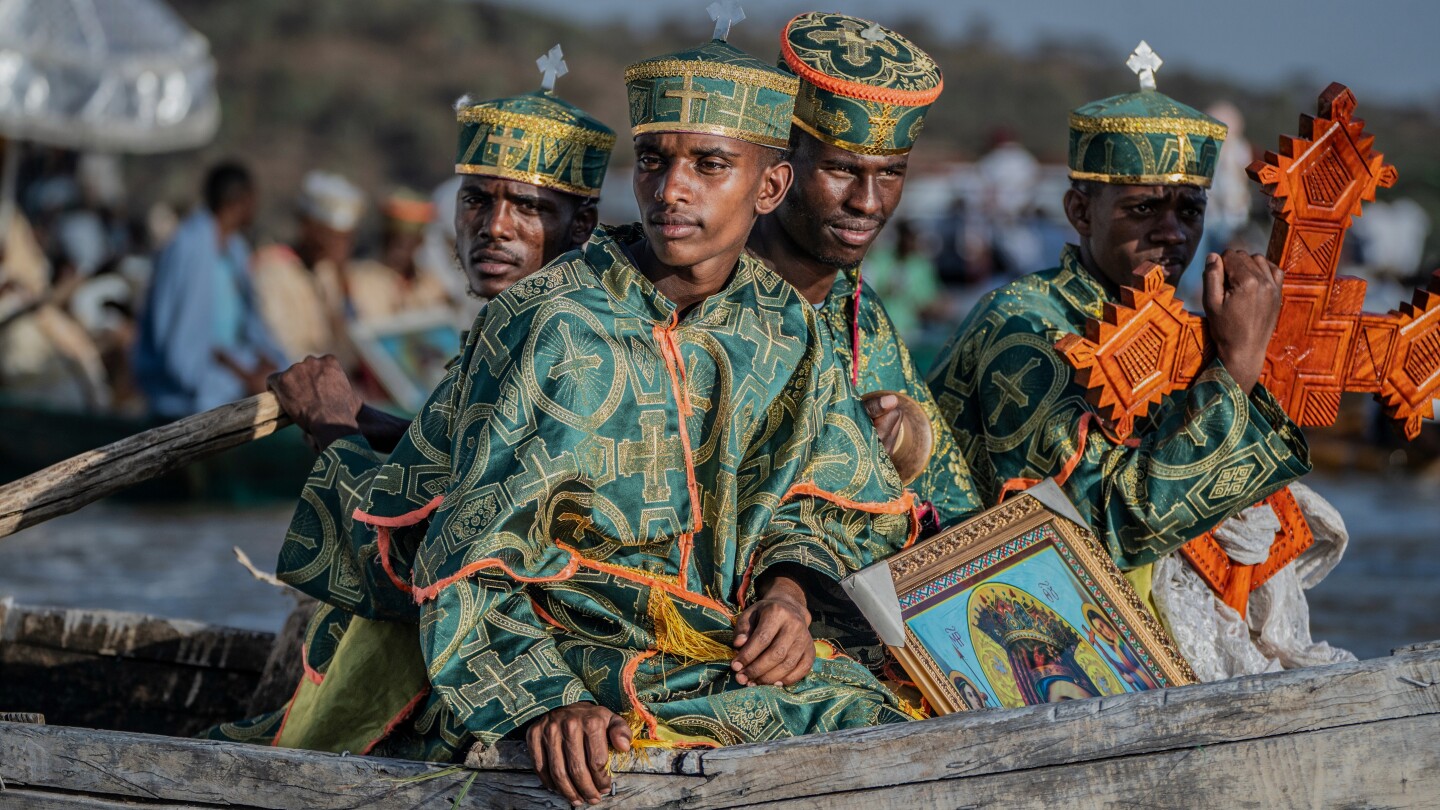
In the town of Batu, situated on the western shore of Lake Dambal in the Oromia Region, the celebration took on a particularly vivid form as thousands of pilgrims immersed themselves in the lake’s waters following a blessing by priests. This symbolic reenactment of baptism represents the core themes of the festival: purification, spiritual renewal, and an affirmation of faith.
“We are celebrating the baptism of Jesus Christ, and our hearts are filled with joy,” said Bereket Adugna, 43, who made the journey from Addis Ababa with his wife and two children specifically to participate in the Batu ceremonies.
In the capital city of Addis Ababa, crowds gathered in anticipation of the procession of tabots—replicas of the Ark of the Covenant believed to contain the Ten Commandments. These sacred objects, which are used in the consecration of churches, were carried in solemn processions to public spaces where the faithful engaged in overnight prayer vigils before returning them to their respective churches the following day.
The tabots were escorted by priests adorned in vibrant ceremonial robes and carrying decorative umbrellas, creating a colorful spectacle as they moved through streets filled with chanting and hymns. Millions of devotees surrounded these processions in an impressive demonstration of religious devotion.
Similar celebrations unfolded throughout Ethiopia, including inside the historic 17th-century Fasilides Fortress in Gondar, located in the Amhara region, which has been experiencing significant conflict in recent times. The continuation of these ceremonies despite regional tensions highlights the profound cultural and religious importance of Timkat to Ethiopian identity.
“For us Ethiopians, Epiphany is an opportunity to share what we have with those who need our help,” explained Asnake Dechasa, a deacon, speaking to The Associated Press. This sentiment of communal sharing and support resonates deeply in a country facing numerous challenges.
The significance of Timkat extends beyond religious observance. In 2019, UNESCO recognized the festival as an Intangible Cultural Heritage of Humanity, acknowledging its cultural importance and unique expressions of faith. For Ethiopian Orthodox Christians, Timkat ranks among their most significant religious observances, holding a place of reverence comparable to Easter and Christmas.
This year’s celebrations occur against a backdrop of mounting difficulties for Ethiopia. The country is experiencing escalating tensions with neighboring Eritrea, continuing the complex geopolitical dynamics that have characterized the Horn of Africa region in recent years.
Simultaneously, Ethiopia faces a worsening humanitarian crisis. Numerous humanitarian organizations have raised alarms about widespread food insecurity, with millions of Ethiopians reportedly requiring emergency food assistance. The situation has been compounded by declining humanitarian support from Western nations, leaving vulnerable populations at increased risk.
Despite these challenges, the Timkat celebrations serve as a powerful demonstration of cultural resilience and spiritual continuity. For many participants, the festival provides not only religious fulfillment but also a sense of community and shared identity during difficult times.
The religious ceremonies, with their blend of ancient traditions and communal participation, reflect Ethiopia’s unique Christian heritage. Ethiopian Orthodox Christianity, which dates back to the 4th century, has developed distinctive liturgical practices and theological interpretations that set it apart from other Christian denominations.
As the festivities concluded and the tabots returned to their churches, participants carried with them the spiritual renewal that forms the heart of Timkat, while confronting the practical realities of life in contemporary Ethiopia—a nation balancing profound religious traditions with pressing modern challenges.
Fact Checker
Verify the accuracy of this article using The Disinformation Commission analysis and real-time sources.

9 Comments
I’m curious to know more about the significance of the Ark of the Covenant replicas in the Addis Ababa processions. What role do these sacred objects play in the Epiphany celebrations?
That’s a great question. The Ark of the Covenant is clearly a crucial symbol in the Ethiopian Orthodox tradition, and understanding its place in the Timkat festivities would provide valuable insight into the cultural and theological roots of this holiday.
It’s always fascinating to learn about the diversity of religious practices and customs around the globe. The Ethiopian Orthodox Church’s Timkat festival is a beautiful example of how faith can be expressed in vibrant, community-driven ways.
Fascinating to see how the Ethiopian Orthodox Church celebrates this important religious holiday. The symbolic reenactment of Jesus’ baptism must be a powerful experience for the faithful.
The procession of the sacred tabots and the overnight prayer vigils sound like deeply meaningful traditions. It’s wonderful to see a community come together to honor their faith and spiritual renewal.
I agree, the communal aspect of these celebrations seems crucial. Sharing these sacred rituals must strengthen the bonds within the Ethiopian Orthodox community.
I wonder how the celebrations in Batu, with the immersion in the lake’s waters, compare to Epiphany observances in other parts of the world. Each culture seems to have its own unique traditions for this holy day.
The spiritual renewal and affirmation of faith that the Timkat celebrations represent are universal themes, even if the specific rituals and traditions vary across different religious and cultural contexts. It’s heartening to see a community come together to honor their beliefs in such a vibrant way.
The reenactment of Jesus’ baptism through the lake immersion in Batu must be a powerfully symbolic moment for the faithful. I imagine the sense of purification and connection to the sacred is palpable during these ceremonies.