


Listen to the article
Middle East Conflict Disrupts Global Energy Trade, Asia Most Vulnerable
Global energy markets have been thrown into disarray as conflict in the Persian Gulf region severely restricts oil and natural gas shipments, sending prices soaring and creating ripple effects throughout the world economy.
The impact is particularly acute across Asia, a region heavily dependent on imported fuel. Much of Asia’s energy supplies pass through the Strait of Hormuz, the strategic maritime passageway that handles approximately one-fifth of global crude oil and liquefied natural gas (LNG) trade.
According to energy consultancy Kpler, roughly 13 million barrels of oil traverse this corridor daily, representing about one-third of all seaborne crude oil worldwide. The strait also accommodates approximately 20% of global LNG shipments, with more than 80% of this volume destined for Asian markets, based on data from the U.S. Energy Information Administration.
Since hostilities erupted in the region, Brent crude prices have surged 15% to approximately $84 per barrel, reaching their highest level since July 2024. U.S. President Donald Trump has announced plans to offer risk insurance to shipping companies and potentially deploy naval vessels to protect commercial shipping if necessary.
However, energy market disruptions are extending far beyond the immediate conflict zone. As supplies tighten, wealthier nations typically outbid less affluent countries for limited shipments, leaving vulnerable economies facing fuel shortages—a pattern previously observed during the energy crisis that followed Russia’s invasion of Ukraine in 2022.
“The crisis, with the closure of the Hormuz Strait as the latest development, would not only raise oil and gas prices but also grind global economic activity to a halt,” warned Zulfikar Yurnaidi, an expert with the Association of Southeast Asian Nations’ Centre for Energy.
China and India, the world’s first and third-largest crude oil importers respectively, face significant challenges. Extended price increases would affect various sectors across their economies, impacting transportation, industrial production, and household budgets.
China has positioned itself as the primary purchaser of Iranian oil, importing approximately 1.4 million barrels daily last year—roughly 13% of its total seaborne crude imports. Most of these shipments are already in transit and should satisfy demand for another four to five months, according to Kpler’s estimates. China also maintains substantial strategic petroleum reserves, though their precise volume remains classified.
“It is therefore unlikely that China would struggle to source enough crude to power its economy or meet domestic demand,” noted Muyu Xu, senior crude oil analyst at Kpler. “The real question is at what price.”
India’s situation appears more precarious, with crude reserves sufficient for less than a month. Energy analyst Vibhuti Garg from the Institute for Energy Economics and Financial Analysis (IEEFA) describes the next two weeks as critical, with potential for rapid deterioration if the conflict persists, driving up fuel costs and broader inflation.
East Asian economies—Japan, South Korea, and Taiwan—remain particularly vulnerable to Middle East energy disruptions. Japan imported 2.34 million barrels of crude daily in January, representing about 95% of its total imports. The country ranks as the world’s second-largest LNG importer. South Korea depends almost entirely on energy imports, with approximately 70% of its crude oil and 20% of its LNG sourced from Middle Eastern suppliers.
Taiwan imports nearly all its LNG, with about one-third coming from Qatar, which has temporarily halted production following attacks on its facilities. While Japan and South Korea maintain substantial energy stockpiles, and Taiwan has announced adequate supplies through March with contingency plans in place, analysts caution that these reserves provide only temporary protection.
Energy-intensive industries, particularly Taiwan’s critical semiconductor sector, remain vulnerable to extended disruptions. Grant Hauber with IEEFA warned that some governments may regret not diversifying sooner into renewable energy, which provides a “natural hedge” against such disruptions.
Southeast Asian nations face additional challenges as their developing economies compete against wealthier countries for increasingly scarce supplies. Singapore has warned businesses and households to prepare for higher energy costs, while Manila has restricted non-essential travel and personal use of government vehicles to conserve fuel.
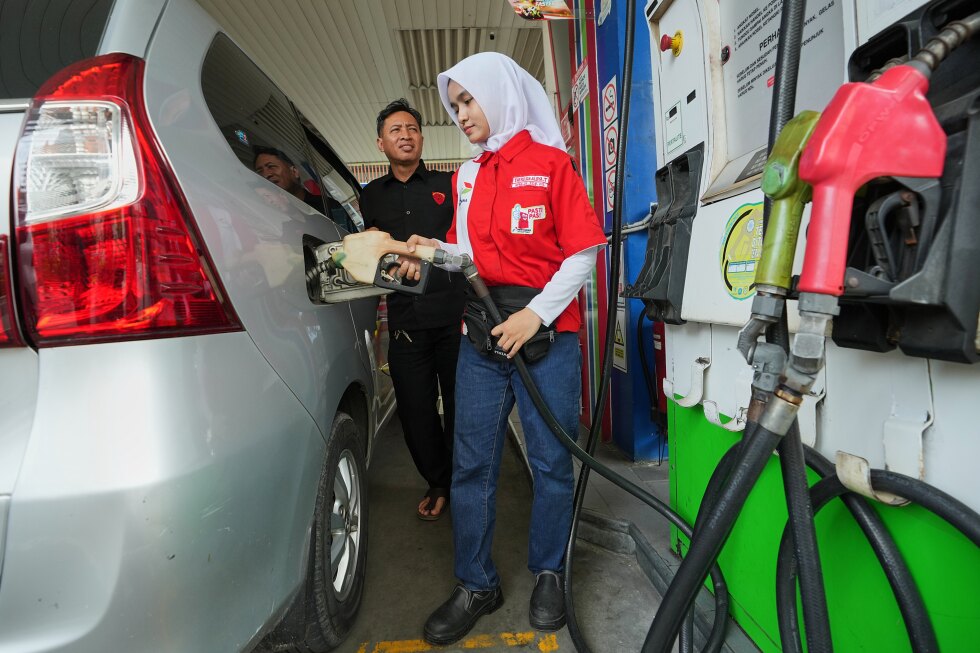
In Thailand, where officials have urged public energy conservation, motorists have formed lines at gas stations as prices climb. The government has suspended petroleum exports to protect domestic reserves—reportedly sufficient for 61 days—while increasing natural gas production from the Gulf of Thailand and Myanmar.
Thailand’s heavy reliance on spot-market LNG leaves it “highly exposed to price and geopolitical volatility,” according to Amy Kong of Zero Carbon Analytics, making the country particularly vulnerable when competing against more affluent nations for limited supplies.
For workers like 64-year-old Thai taxi driver Sommit Sutar, the crisis presents an immediate economic threat. “Gasoline was already expensive. This war will make the problem even worse,” Sutar said, expressing uncertainty about how to conserve fuel while maintaining his livelihood.
Fact Checker
Verify the accuracy of this article using The Disinformation Commission analysis and real-time sources.

11 Comments
This is a worrying development for global energy markets. The conflict in the Persian Gulf region has huge implications for Asia, which relies heavily on oil and gas imports that transit the Strait of Hormuz. Securing alternative supply routes and sources should be an urgent priority for policymakers in the region.
This conflict in the Persian Gulf is really troubling. With so much of Asia’s energy supplies passing through the Strait of Hormuz, I’m worried about the cascading economic impacts if the situation isn’t resolved quickly. Hopefully diplomatic efforts can de-escalate tensions and restore stability.
The potential fallout from this energy crisis in the Persian Gulf is extremely worrying, especially for fuel-dependent Asian economies. With so much of the region’s oil and gas supplies passing through the Strait of Hormuz, any prolonged disruption to shipments through this strategic chokepoint would be catastrophic. Diplomatic solutions to resolve the conflict and restore stability are crucial.
An energy crisis of this magnitude in Asia would be devastating. With the Strait of Hormuz so critical for regional fuel supplies, I worry about the potential for severe economic disruption if shipments through this chokepoint remain restricted for an extended period. Diplomacy is crucial to restoring stability.
This escalating conflict in the Middle East is deeply troubling, particularly given Asia’s heavy reliance on energy imports that transit the Strait of Hormuz. The prospect of a major energy shock across the continent is alarming and could severely disrupt economic activity. Urgent action is needed to secure alternative supply sources and routes.
The Strait of Hormuz is such a strategic choke point for global energy trade. Any prolonged disruption to shipments through this corridor would be catastrophic, especially for fuel-dependent Asian economies. Policymakers must act quickly to mitigate the fallout.
You’re right, the geopolitical risks around the Strait of Hormuz are immense. Diversifying energy import routes and supply sources should be an urgent priority for countries across Asia to enhance their energy security.
The surge in oil and gas prices resulting from this regional conflict is deeply concerning. Fuel-dependent Asian economies will bear the brunt of this energy shock, which could disrupt industrial activity, transportation, and household budgets across the continent. Coordinated policy action is needed to manage the fallout.
The potential for an energy shock in Asia due to this regional conflict is very concerning. With so much of the continent’s fuel supplies passing through the Strait of Hormuz, disruptions to shipping in this crucial waterway could have far-reaching economic consequences. Diplomatic efforts to de-escalate tensions and restore stability are critical.
This energy crisis in the Middle East is really concerning. The disruption to oil and gas supplies across Asia could have devastating economic consequences if it persists. I hope diplomatic efforts can de-escalate the conflict and restore stability to global energy markets soon.
Agreed, the potential for an energy shock in Asia is alarming. Governments in the region need to work closely together to identify alternative supply sources and secure critical energy imports during this turbulent period.