


Listen to the article
Ecuador’s President Denies Cross-Border Bombing as Tensions Rise with Colombia
Ecuador’s President Daniel Noboa strongly denied allegations Tuesday that his country is conducting bombing operations in neighboring Colombia, responding to claims that have escalated tensions between the two South American nations.
“Ecuador is fighting narco terrorism in all its forms,” Noboa declared on social media platform X, acknowledging that his forces are “bombing places that serve as hideouts for those groups, of which many are Colombian.” However, he emphasized that these operations occur strictly within Ecuadorian territory.
The diplomatic dispute erupted after Colombian President Gustavo Petro accused Ecuador of conducting cross-border bombings on Monday. Petro claimed Colombian officials had discovered an unexploded bomb and stated he had asked U.S. President Donald Trump to intervene and persuade Noboa to halt the alleged operations. Colombia’s state broadcaster RTVC later published photographs of what it described as an unexploded bomb found in a coca field near the Ecuador border.
As tensions mount, religious leaders from both countries have called for restraint. The bishops of the border cities of Ipiales (Colombia) and Tulcan (Ecuador) issued a joint statement urging both governments to strengthen dialogue and cooperation. “We are worried about the expansion of illicit activities that deteriorate our social fabric and cause great damage to the environment,” the statement noted, highlighting concerns about drug trafficking in the border region.
This latest conflict occurs against a backdrop of deteriorating relations between nations that were once close commercial and security partners. In January, Noboa imposed a 30% tariff on Colombian imports, which he later increased to 50%. The Ecuadorian president labeled this a “security tax” and vowed it would remain in place until Colombia takes stronger action against criminal groups operating near the border.
The Colombian government, for its part, has responded by implementing its own duties on Ecuadorian goods. Petro has rejected accusations that his administration is failing to combat drug traffickers who use Ecuadorian ports to ship Colombian cocaine to international markets.
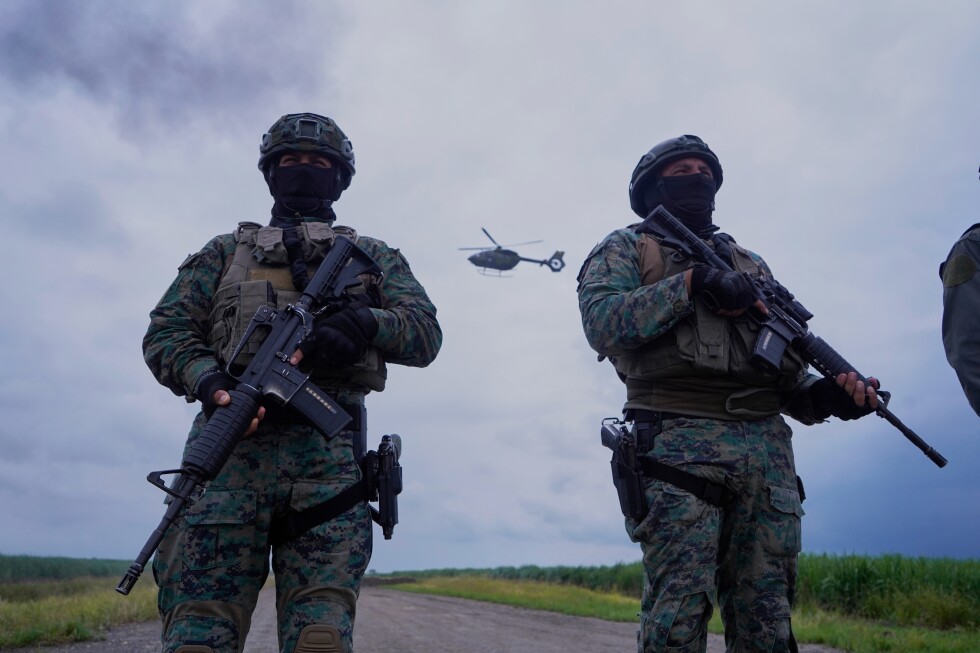
Ecuador has witnessed an alarming surge in drug-related violence under Noboa’s conservative administration. The country’s homicide rate has quintupled over the past five years, forcing the government to impose nightly curfews in four provinces as part of emergency security measures. Recently, Ecuador conducted joint operations with U.S. forces against drug trafficking camps near the Colombian border, deploying drones, helicopters, and river boats.
Meanwhile, Petro’s administration has pursued a different approach to security challenges. The leftist president, who was once a member of a rebel group himself, has implemented a “total peace” strategy focused on negotiations with Colombia’s remaining rebel groups. Critics argue this approach has inadvertently allowed these groups to strengthen their control over rural communities, particularly in territories abandoned by the Revolutionary Armed Forces of Colombia (FARC) following their 2016 peace agreement with the Colombian government.
The escalating tensions highlight the complex security dynamics in the Andean region, where drug trafficking networks frequently operate across national boundaries. Both countries face significant challenges from organized crime groups involved in cocaine production and trafficking, with violence increasingly spilling across borders.
The dispute also comes at a politically sensitive time, with Colombia preparing for presidential elections in May, adding another layer of complexity to the diplomatic friction between these neighboring Andean nations.
Fact Checker
Verify the accuracy of this article using The Disinformation Commission analysis and real-time sources.

10 Comments
This is a complex geopolitical issue with potential implications for the wider Andean region. I’m curious to see how the two governments navigate these allegations and work to maintain stability along their shared border.
Absolutely. Regional security and the wellbeing of local communities should be the top concern as Ecuador and Colombia try to resolve this dispute.
The allegations of cross-border bombing operations are concerning, but it’s good to see Ecuador’s president reject them and affirm respect for national sovereignty. Diligent verification of claims will be crucial here.
Agreed. Transparent and impartial investigation of the alleged incidents will be important to establish the facts and chart a path forward.
Interesting developments on the Ecuador-Colombia border. It’s important that both sides exercise restraint and work towards a diplomatic solution to avoid further escalation of tensions in the region.
Agreed. Cross-border violations of sovereignty are concerning, but open communication and de-escalation should be the priority here.
This border dispute highlights the delicate balance between national security and respect for international law. I hope the leaders of Ecuador and Colombia can find a peaceful resolution that addresses the concerns of both sides.
Yes, the role of regional and international bodies in mediating such disputes could be crucial in this case. Constructive dialogue will be key to de-escalating the tensions.
The call for restraint from religious leaders is a welcome development. In situations like this, maintaining open channels of communication and focusing on areas of common ground can be vital for finding a lasting solution.
Absolutely. Encouraging all stakeholders, including civil society, to participate in the dialogue process could help build trust and pave the way for a sustainable resolution.