


Listen to the article
Ecuadorian Court Sentences Soldiers to 34 Years for Children’s Abduction and Torture
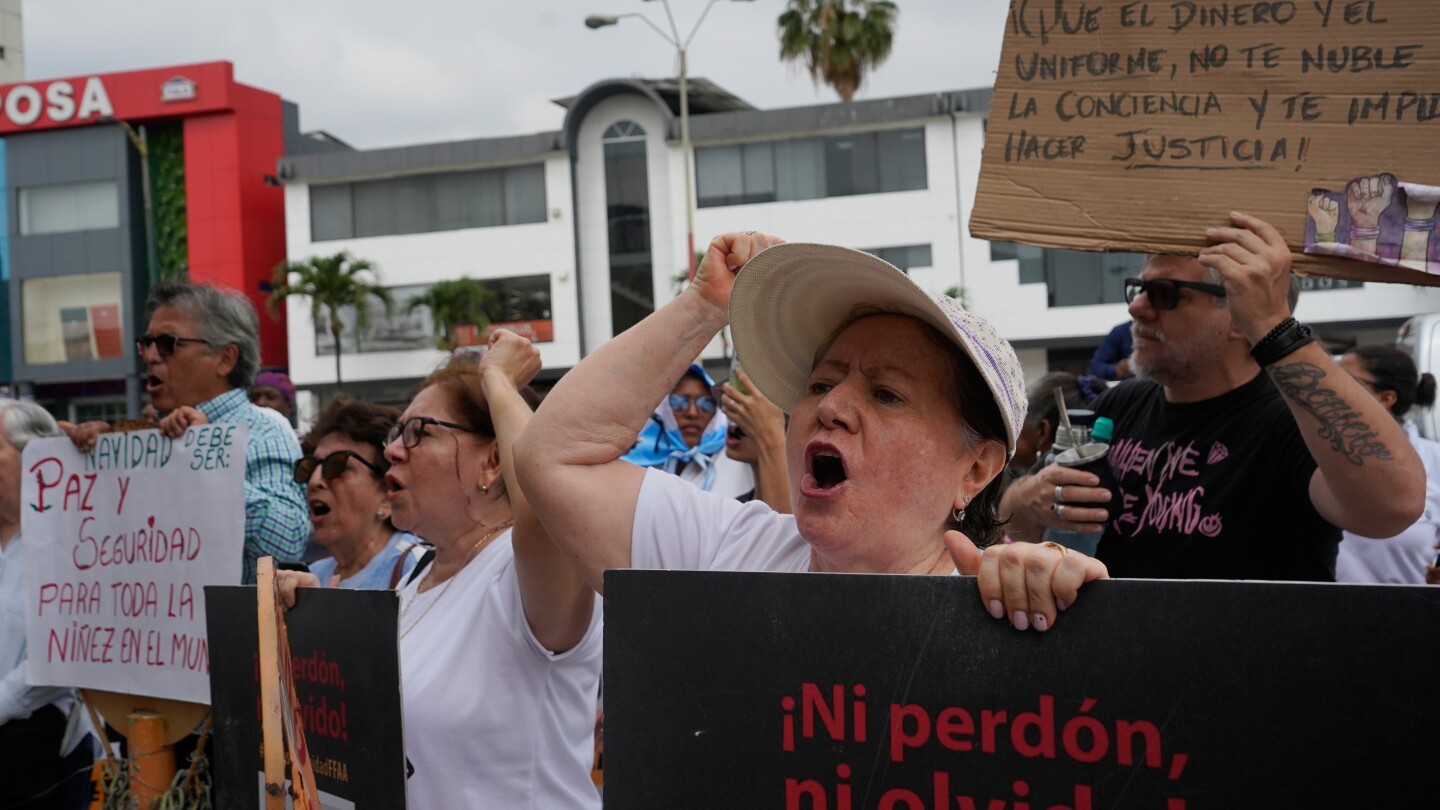
A court in Ecuador delivered a significant ruling Monday, sentencing eleven soldiers to 34 years in prison for the abduction and torture of four children last year. The case has deeply shaken the South American nation and raised serious concerns about President Daniel Noboa’s military-focused approach to combating drug violence.
The convicted soldiers were found guilty of “forced disappearance” of the children and will be required to pay $10,000 in restitution to each victim’s family and issue public apologies. Beyond this sentence, they face an additional murder trial next year for the deaths of the four victims, who were between 11 and 15 years old. The children’s remains were discovered in December 2024, weeks after they were reported missing.
The case unfolds against the backdrop of Ecuador’s expanding military presence in urban areas. Since January 2024, President Noboa has deployed military forces to patrol city streets under a decree declaring the country in an “internal armed conflict.” Noboa, a conservative who won reelection to a four-year term in April, has defended the militarization as necessary to address Ecuador’s spiraling violence, with the homicide rate tripling since 2021 as drug cartels battle for control of ports and cocaine trafficking routes.
Human rights organizations, however, have raised alarms about military and police abuses against civilians, including extrajudicial killings and mass arrests without proper legal procedures. The conviction of these soldiers provides concrete evidence supporting these concerns.
The tragic events began on December 8, 2024, when brothers Ismael and Josué Arroyo, along with their friends Saúl Arboleda and Steven Medina, vanished after a soccer game in Guayaquil, Ecuador’s largest city and major port. Security camera footage later obtained by journalists revealed the children had been detained by military personnel and forced into a pickup truck.
By late December, investigators discovered the children’s charred remains near a military base outside Guayaquil, leading to the arrest of several soldiers connected to the crime. While military officials initially acknowledged detaining the children following robbery reports, they originally attempted to shift blame to local drug gangs, claiming the children had been released before being murdered.
Judge José Suárez’s ruling on Monday directly contradicted this narrative. The court determined the soldiers failed to report the detention to superiors or police and subsequently executed the children “in a cruel fashion.” According to court findings, the children were forced to move a fallen tree near the military base, beaten with rifles, ordered to strip, and then killed.
The investigation involved approximately 100 witnesses, with forensic evidence confirming the children had suffered head trauma before execution. Five soldiers who cooperated with investigators received reduced sentences of two and a half years.
In a symbolic measure addressing institutional responsibility, the court ordered Ecuador’s military to conduct a ceremony acknowledging state and military culpability and to install a commemorative plaque honoring the victims at the base where the convicted soldiers had been stationed.
Ecuador’s Defense Ministry responded to the ruling with a statement pledging compliance. “Justice has been delivered today,” the ministry declared. “We ratify our respect for the law and the sentence that has been handed.”
This case represents a critical test of Ecuador’s judicial system and highlights the potential dangers of militarizing domestic security operations. As Ecuador continues to struggle with drug-related violence, the government faces mounting pressure to ensure security forces operate within legal boundaries while effectively addressing the crime crisis that has gripped the nation in recent years.
Fact Checker
Verify the accuracy of this article using The Disinformation Commission analysis and real-time sources.

7 Comments
This tragic incident highlights the dangers of unchecked military power and the importance of robust civilian oversight. I hope the Ecuadorian government will take this opportunity to reexamine its policies and prioritize the protection of all citizens, especially the most vulnerable.
Ecuador’s decision to deploy the military in urban areas is concerning and appears to have contributed to this tragic outcome. I hope the government will reconsider this approach and focus instead on strengthening civilian law enforcement and community-based solutions to violence.
The court’s decision is a positive step, but the deeper issues here are complex and systemic. Militarizing public safety often leads to the erosion of civil liberties and the targeting of vulnerable groups. Ecuador must find a better balance between security and human rights.
The sentences seem appropriate given the gravity of the crimes, but true justice will be elusive until the full truth emerges. The military’s role in this incident raises troubling questions about the use of force and the protection of vulnerable populations.
While I’m glad the perpetrators received harsh sentences, the deaths of these young people are an unspeakable loss. The military’s involvement is deeply disturbing and raises urgent questions about oversight, accountability, and the protection of human rights, even in the context of combating drug violence.
This is a heartbreaking case that highlights the risks of militarizing public safety. I hope the victims’ families find some justice, though nothing can undo such a terrible tragedy. The court must hold all responsible parties accountable, no matter their rank or position.
This case underscores the need for robust mechanisms to investigate and prosecute abuses of power, regardless of the perpetrators’ rank or affiliation. The victims’ families deserve justice, and Ecuador must take steps to ensure the military operates within clear legal boundaries and with respect for human dignity.