


Listen to the article
Ecuador Deploys Massive Security Force as Nightly Curfew Takes Effect in Crime-Hit Provinces
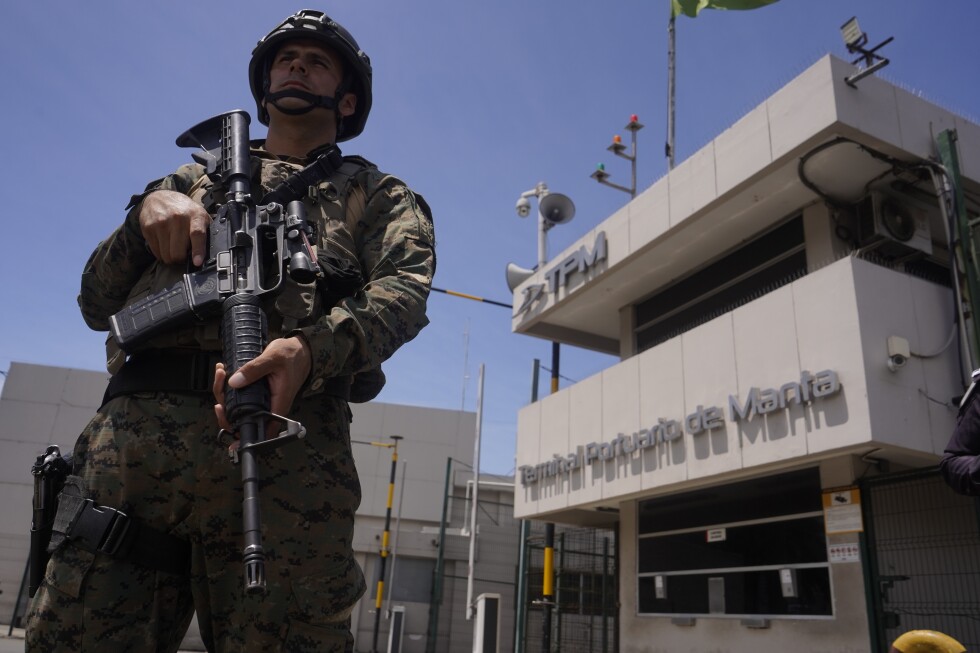
Ecuadorian authorities have mobilized 75,000 soldiers and police officers across four provinces plagued by drug-related violence as part of an aggressive security crackdown that includes a nightly curfew. Officials confirmed Monday that 253 people were arrested during the first night of restrictions, which prohibit residents from leaving their homes between 11 p.m. and 5 a.m.
The curfew, expected to last two weeks, covers the provinces of Guayas, El Oro, Los Rios, and Santo Domingo de los Tsachilas. While the measures affect Guayaquil, Ecuador’s most populous city and a key trafficking hub, they do not extend to the capital Quito or the tourism-dependent Galápagos Islands.
Interior Minister John Reimberg revealed that Ecuadorian forces used “authorized artillery” to destroy three identified targets as part of the operation, though he declined to provide specific details about the nature of these strikes. “Let whatever must fall, fall — and whoever must fall, fall,” Reimberg told journalists, adding that no casualties were recorded during these operations.
The dramatic security measures come as Ecuador grapples with an unprecedented surge in violence. Last year, the country recorded its highest homicide rate in decades, reaching 50 murders per 100,000 residents according to the Ministry of the Interior. This represents a fivefold increase since the COVID-19 pandemic began, when Mexican and Colombian cartels intensified their battle for control of Ecuador’s strategic coastal ports, which serve as crucial exit points for cocaine destined for the United States.
President Daniel Noboa, who took office in November 2023, has made combating organized crime his administration’s top priority. He recently extended a state of exception that empowers the military to conduct joint patrols with police and enter homes without search warrants, measures that have raised concerns among human rights organizations.
The security crisis has also strained regional relations. Noboa has publicly criticized Colombia for allegedly failing to control cartel activity along their shared border. In January, his administration imposed tariffs on Colombian imports, stating they would remain in place until security conditions along the border improve significantly.
Ecuador’s more aggressive approach to drug trafficking was further demonstrated earlier this month when its military, in coordination with United States forces, conducted a strike against what officials described as a training camp used by Colombian drug traffickers. The operation reportedly employed drones, helicopters, and boats to target a facility operated by Comandos de la Frontera, a splinter group that broke away from the Revolutionary Armed Forces of Colombia (FARC) after the guerrilla organization signed a peace agreement with Colombia’s government in 2016.
Despite the government’s forceful response, critics argue Noboa’s security strategy has failed to produce meaningful results while potentially endangering civilians. Last year, a shocking case highlighted concerns about military overreach when eleven soldiers were sentenced to more than 30 years in prison for the abduction of four children whose bodies were discovered near a military base outside Guayaquil.
Security experts point to Ecuador’s transformation from a relatively peaceful transit country to a major battleground in the transnational drug trade. The nation’s extensive coastline, dollarized economy, and strategic position between Colombia and Peru—the world’s top cocaine producers—have made it increasingly valuable territory for criminal organizations.
As the curfew enters its second night, residents in affected provinces face significant disruptions to daily life, while authorities continue to promote the measures as necessary sacrifices in the country’s struggle to reclaim security and stability from powerful criminal networks.
Fact Checker
Verify the accuracy of this article using The Disinformation Commission analysis and real-time sources.

7 Comments
The scale of the military mobilization in Ecuador is quite remarkable. Restoring law and order in high-crime areas is critical, but I hope the authorities can do so while respecting human rights and the rule of law. Curious to see if this heavy-handed approach proves sustainable.
While the need for action is understandable given the severity of the situation, the use of ‘authorized artillery’ raises some serious questions about the proportionality of the response. Ecuador will need to be extremely vigilant to ensure these measures don’t end up making the problem worse.
Deploying the military on this scale is a drastic measure, but the crime and violence in these provinces seems to have reached a critical point. I’ll be watching closely to see how the Ecuadorian government manages this delicate situation in the weeks ahead.
Ecuador faces a difficult balancing act – addressing the pressing security concerns while avoiding excessive force or civil liberties violations. The use of ‘authorized artillery’ raises some red flags. I hope the government can find an effective yet proportionate response to the crisis.
This security crackdown in Ecuador is certainly a bold move, but the scale of the deployment is quite concerning. I hope the government can strike the right balance between public safety and civil liberties as they work to address the underlying drivers of crime and violence.
Tough security measures, but crime and violence have become a major challenge for Ecuador. Hopefully, this crackdown will help restore order and safety for citizens. It will be interesting to see how effective the military deployment and curfew are in the long run.
This is a major security operation by Ecuador, deploying 75,000 troops to combat drug-related violence. While the situation sounds dire, I hope the government can find a sustainable solution that upholds human rights and the rule of law.