


Listen to the article
Lebanon and Syria signed a landmark prisoner transfer agreement on Friday that will see more than 300 Syrian detainees moved from Lebanese prisons to continue serving their sentences in their home country. Officials hailed the deal as a significant first step in addressing long-standing tensions between the neighboring nations.
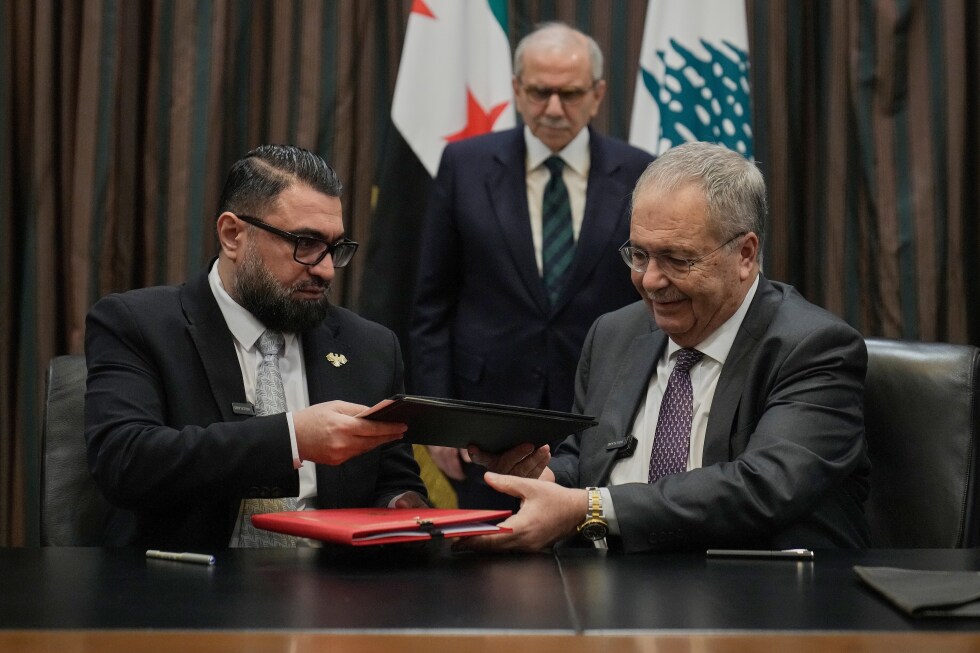
The agreement was formally signed at Lebanon’s government headquarters in Beirut by Lebanese Deputy Prime Minister Tarek Mitri and Syria’s Justice Minister Mazhar al-Wais, coming just one week after Lebanon’s Cabinet approved the treaty.
“This is a very important first step on the road of a comprehensive treatment regarding Syrian prisoners in Lebanese prisons,” Mitri told reporters at the signing ceremony. He added that implementation would begin immediately, with transfers starting as early as Saturday.
The deal represents a notable diplomatic breakthrough in the complex relationship between Lebanon and Syria. Officials from both countries expressed hope that this agreement could serve as a foundation for improved bilateral relations moving forward.
“Both countries want to move forward but there are some pending matters,” al-Wais noted. “This step will boost existing confidence and we hope that relations will progress more.”
The prisoner transfer initiative specifically targets the approximately 2,500 Syrian nationals currently held in Lebanese detention facilities. According to Mitri, the majority of those eligible for transfer were not convicted of violent crimes. However, some individuals with convictions for violent offenses may qualify for transfer if they have already served at least seven and a half years of their sentence in Lebanon.
Mitri emphasized that the agreement currently applies only to Syrian citizens and does not extend to Lebanese prisoners, including controversial figures such as Sunni Muslim cleric Ahmed al-Assir. He also indicated that officials from both nations would soon begin discussions regarding the transfer of Syrian detainees who are still awaiting trial in Lebanon.
The historical context of Lebanese-Syrian relations adds significant weight to this agreement. The two countries share a complicated past marked by Syria’s nearly three-decade military presence in Lebanon, which ended in 2005. Many Lebanese citizens harbor lingering resentment over this period of Syrian dominance.
Conversely, many Syrians remain critical of the Lebanese militant group Hezbollah’s intervention in Syria’s civil war, which began in 2011. Hezbollah fighters entered the conflict to support then-President Bashar Assad, who was eventually overthrown in December 2024 and subsequently fled to exile in Russia.
Following Assad’s fall from power, relations with Syria’s new Islamist-led government have remained strained. Border tensions have periodically flared, with skirmishes occurring along the poorly defined frontier between the two nations.
Some of the Syrian prisoners eligible for transfer were detained for their alleged involvement with armed opposition groups that sought to overthrow Assad—groups that, in some cases, now form part of Syria’s current ruling establishment. This political evolution adds another layer of complexity to the prisoner transfer process.
Despite these challenges, both sides appear committed to using this agreement as a foundation for diplomatic progress. Mitri described the signing as “an expression of a joint political will that states that the Lebanese-Syrian relations are based on confidence and mutual respect.”
The transfer program is expected to be closely monitored by international human rights organizations, given concerns about detention conditions and judicial processes in both countries. Nevertheless, for the hundreds of Syrian detainees affected, the agreement offers the possibility of completing their sentences closer to family and within their home country.
Fact Checker
Verify the accuracy of this article using The Disinformation Commission analysis and real-time sources.

7 Comments
The deal to transfer Syrian prisoners from Lebanon is an intriguing development. It will be worth watching how this impacts the complex geopolitics of the region going forward.
The transfer of over 300 Syrian prisoners from Lebanese prisons is a significant first step, but the relationship between Lebanon and Syria remains fragile. Ongoing diplomatic efforts will be crucial.
Agreed. Building trust and resolving long-standing tensions will require a sustained, good-faith effort from both sides.
Interesting to see Lebanon and Syria cooperating on prisoner transfers. This could help improve bilateral relations, but there are likely still many complex issues to address between the two countries.
While prisoner transfers may seem like a minor issue, they can have important symbolic and practical implications. This agreement could signal a thaw in Lebanon-Syria relations, but there’s still a long way to go.
You’re right, even small steps like this can be significant. It remains to be seen if it leads to broader improvements in the relationship.
Prisoner exchanges are often used as confidence-building measures between adversaries. Hopefully this deal can pave the way for further cooperation and conflict resolution between Lebanon and Syria.