


Listen to the article
US Resumes Drug Intelligence Cooperation with Bolivia After Two-Decade Hiatus
The United States has reestablished intelligence coordination on counternarcotics efforts with Bolivia, marking a significant shift in bilateral relations nearly 20 years after former leftist President Evo Morales expelled American anti-drug agents from the world’s third-largest cocaine producer.
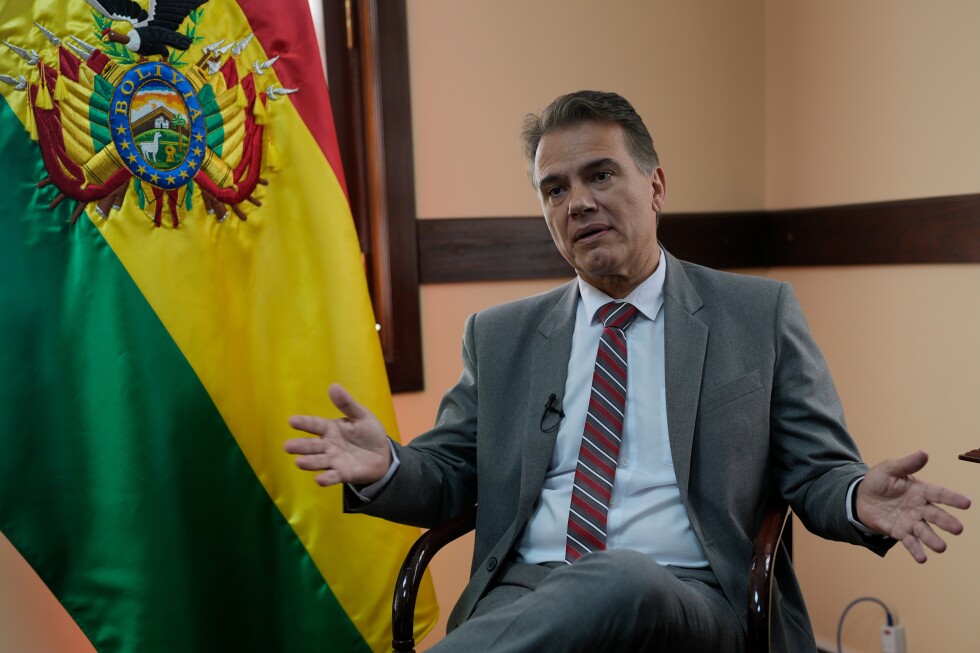
Bolivia’s Vice Minister of Social Defense and Controlled Substances Ernesto Justiniano revealed in an interview that while officials are still finalizing details for the Drug Enforcement Administration’s (DEA) formal return, the U.S. has already begun sharing intelligence on transnational criminal networks with Bolivian authorities.
“We are already receiving support in various ways, in the training and integrity analysis of personnel,” Justiniano stated. “There is a lot of intelligence, resources, they can provide us, and we need it.”
This quiet resumption of cooperation comes as Bolivian President Rodrigo Paz, a centrist former senator who took office last November, works to restore full diplomatic relations with Washington. For nearly two decades, Morales’ Movement Toward Socialism party had distanced Bolivia from Western powers, instead fostering closer ties with China, Russia, Cuba and Iran.
U.S. Secretary of State Marco Rubio has characterized Paz’s election as a “transformative opportunity for both nations,” reflecting the Trump administration’s efforts to reassert American influence throughout the Western Hemisphere.
Daniel Foote, a retired U.S. diplomat who previously worked on counternarcotics policy in Bolivia, underscored the strategic importance of the DEA’s return: “We have little idea what’s been going on these past 20 years, so having the DEA back there can open a lot of other doors for the U.S. This is as much about helping Bolivia as it is keeping the U.S. safe.”
The renewed partnership touches on sensitive historical terrain. In the late 1990s, DEA-backed operations in Bolivia led to deadly confrontations with coca farmers as authorities attempted to eradicate crops that had sustained indigenous communities for centuries. The resulting backlash helped propel Morales, a former coca growers’ union leader, to the presidency in 2006.
Justiniano acknowledged these sensitivities, particularly in the coca-growing regions near Cochabamba. “In Bolivia, when it comes to language, you have to be very careful,” he said, adding, “Are we going to have bases full of gringos here? No, that’s not going to happen.”
Nevertheless, he indicated that Bolivia would welcome direct DEA involvement in interdiction operations, stating, “We do need to conduct joint operations.”
Meanwhile, coca farmers in the Chapare region have expressed concern about potential hard-line policies. “We will not allow the establishment of any military base in the Cochabamba tropics,” declared coca growers’ leader Aquilardo Caricari, citing the arrests and killings of farmers during previous American involvement.
Morales himself has been in hiding in the Chapare region for months, evading an arrest warrant related to allegations of statutory rape that he denies. He has not appeared publicly since the January 3 U.S. seizure of his ally, former Venezuelan president Nicolás Maduro, fueling speculation he may have fled the country.
During his tenure as Bolivia’s first Indigenous president, Morales made coca leaves central to his agenda of resisting foreign influence while promoting Andean heritage. He decriminalized the leaf, praised its medicinal benefits, and allocated cultivation plots to farming families. However, Justiniano claims that over 90% of coca grown in Chapare now feeds the cocaine trade, where profits far exceed those from traditional markets.
Bolivia has been a “blind spot” for U.S. intelligence since 2008 when Morales expelled DEA agents. At that time, the agency maintained approximately 100 personnel across four offices in Bolivia—its second-largest foreign presence outside Colombia.
The impact of this intelligence vacuum has been profound. Santa Cruz, once a quiet city in eastern Bolivia, has transformed into a thriving center for international traffickers from regions as diverse as Albania and China, who now reside in modern, gated communities.
President Paz’s efforts to reestablish Bolivia as a U.S. ally in counter-narcotics mirror the actions of his father, former President Jaime Paz Zamora, who took similar steps in the late 1980s when Colombia’s Medellin and Cali cartels were using Bolivia as an air bridge for cocaine distribution.
Robert Gelbard, who served as U.S. ambassador to Bolivia during that period, expressed hope that under the younger Paz, the DEA would avoid “the sort of aggressive approach we followed in the 1990s.”
The scope of the DEA’s renewed presence remains uncertain, especially given that the agency closed more than a dozen offices worldwide during the Biden administration. However, former Bolivian ambassador to Washington Jaime Aparicio anticipates a different approach under Trump, noting, “Drugs are his main enemy in this region.”
Fact Checker
Verify the accuracy of this article using The Disinformation Commission analysis and real-time sources.

8 Comments
While the details are still being finalized, this renewed cooperation could mark a thaw in US-Bolivia relations after years of tension. It will be worth monitoring how this plays out and whether it leads to any substantive changes on the ground.
I’m curious to see how the Bolivian public reacts to this news, given the country’s past expulsion of the DEA. Restoring full diplomatic ties with the US will likely be a delicate balancing act for the current government.
The resumption of anti-drug coordination between the US and Bolivia seems like a pragmatic move, even if the history between the two countries has been rocky. Sharing intelligence on transnational criminal networks could be mutually beneficial.
The reestablishment of intelligence sharing between the US and Bolivia on transnational criminal networks is a notable development, even if the details are still being worked out. It will be important to monitor the impact and any potential political implications.
While the details are still being finalized, this renewed coordination could signal a pragmatic shift in Bolivia’s approach to working with the US on counternarcotics efforts. It will be interesting to see how this unfolds and whether it leads to tangible outcomes.
This is an interesting development, especially given Bolivia’s past expulsion of the DEA. It will be important to see how this renewed cooperation unfolds and whether it leads to tangible results in the fight against drug trafficking.
The quiet resumption of DEA cooperation with Bolivia is intriguing, given the history between the two countries. It will be worth following whether this leads to any significant changes in anti-drug efforts or broader diplomatic relations.
This is an interesting development in the ongoing efforts to combat drug trafficking in the region. The sharing of intelligence and resources could potentially yield positive results, but it will be important to monitor the implementation and any potential risks.