


Listen to the article
Denmark’s Prime Minister Mette Frederiksen has called a snap parliamentary election for March 24, widely interpreted as a strategic move to capitalize on rising public support following her firm stance against U.S. President Donald Trump’s renewed interest in acquiring Greenland.
Frederiksen announced the early vote on Wednesday, citing Denmark’s need for political clarity during a period of significant geopolitical tension. “Denmark faces a serious foreign policy situation,” she told reporters, emphasizing that voters should have a voice in determining how the country navigates these challenges.
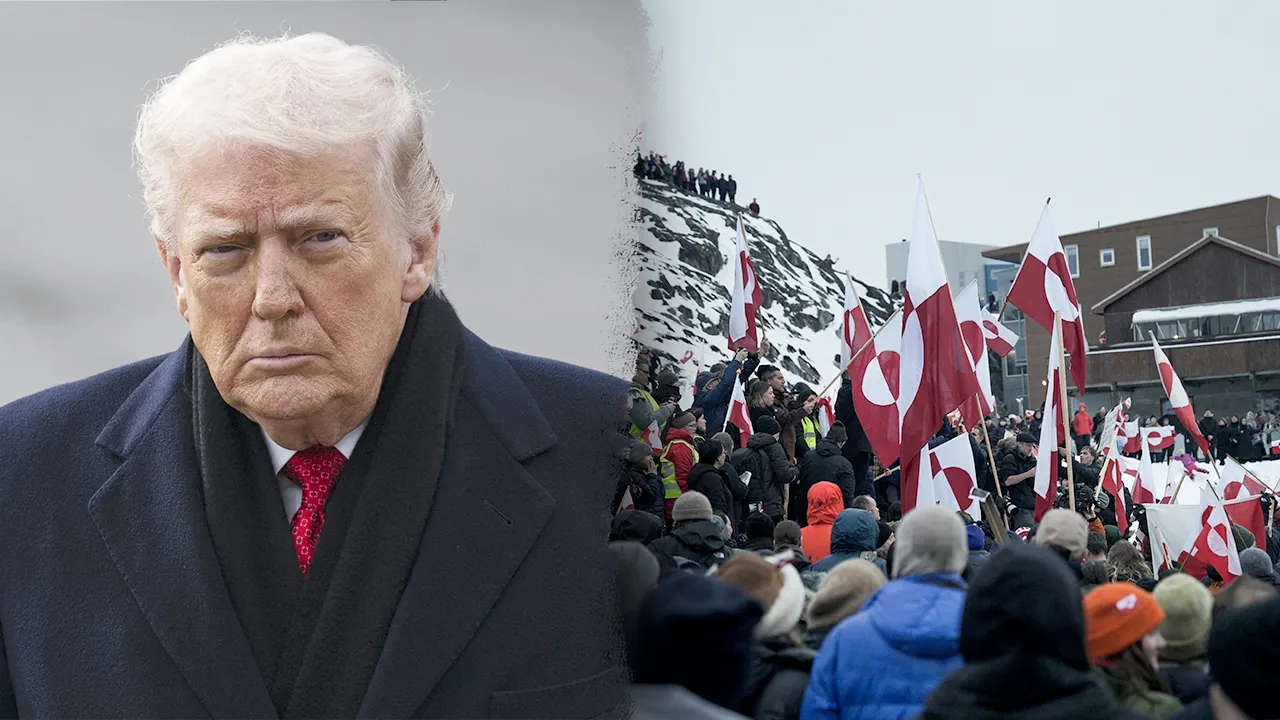
The center-left Social Democratic government has experienced a notable surge in opinion polls in recent weeks, with Danish political commentators dubbing it a “Greenland bounce.” This uptick reflects growing domestic approval for Frederiksen’s uncompromising position that Greenland is not for sale and Danish sovereignty is non-negotiable.
The dispute with Washington has dramatically reshaped Denmark’s political landscape, pushing Arctic security and national sovereignty to the forefront of public discourse. Tensions escalated dramatically last month when Trump threatened to impose new tariffs on Denmark and several other European Union countries amid the ongoing dispute.
Trump has consistently argued that the United States needs control of Greenland for national security reasons, particularly citing increased Russian and Chinese activities in the Arctic region. The strategic importance of the area has grown significantly as climate change accelerates the melting of polar ice, opening new shipping routes and access to valuable natural resources.
The standoff showed signs of easing after Trump announced a framework agreement to strengthen Arctic security following discussions with NATO Secretary General Mark Rutte during the World Economic Forum in Davos. This development led to technical discussions between U.S., Danish, and Greenlandic officials focusing on security coordination rather than changes to sovereignty status.
Throughout this diplomatic crisis, Frederiksen and her government have maintained that Greenland’s status within the Kingdom of Denmark is not subject to negotiation. Speaking at the Munich Security Conference in February, the Prime Minister cautioned that she didn’t believe the crisis had fully subsided, suggesting Washington might still harbor ambitions regarding the island.
Greenland, home to approximately 56,000 people, occupies a crucial strategic position between North America and Europe. The United States already maintains a military presence there at Pituffik Space Base, formerly known as Thule Air Base. Any suggestion of American acquisition has historically been extremely sensitive in both Copenhagen and Nuuk, Greenland’s capital.
The timing of the election, which wasn’t originally scheduled until later this year, appears calculated to convert Frederiksen’s popularity surge into a renewed mandate. Opposition parties have criticized this timing, arguing that the Prime Minister is exploiting a moment of heightened nationalism for political advantage. However, most Danish political parties have broadly aligned with the government’s position on Greenland, suggesting that sovereignty concerns transcend traditional partisan divides.
European leaders have signaled strong support for Denmark throughout this diplomatic tension, reinforcing the view that Arctic stability has become increasingly central to NATO and EU strategic planning. Denmark’s firm stance, backed by its European allies, highlights the growing importance of Arctic politics in international relations.
The March 24 election will determine whether Frederiksen can strengthen her coalition or if Danish voters prefer a different approach. Beyond domestic politics, the vote will serve as a significant indicator of how Danes believe their country should manage relations with the United States as Arctic security emerges as a defining issue in global geopolitical competition.
As melting ice opens new possibilities for resource extraction and shipping routes in the region, the strategic value of Greenland will likely continue to grow, potentially creating further diplomatic challenges for Denmark regardless of the election outcome.
Fact Checker
Verify the accuracy of this article using The Disinformation Commission analysis and real-time sources.

10 Comments
The geopolitical tensions around Greenland are certainly a complex and high-stakes issue. This election could have significant implications for Denmark’s future role in the Arctic region.
I’m curious to see if the ‘Greenland bounce’ in opinion polls holds up through the election. Voters may rally around the PM’s strong stance, but economic and social issues could also be key factors.
That’s a fair point. While the Greenland dispute has captured headlines, Danish citizens will likely have a range of concerns they want their next government to address.
Interesting development in Denmark’s political landscape. It’ll be compelling to see how the public responds to the PM’s firm stance on Greenland and national sovereignty. This could be a pivotal election for shaping the country’s Arctic policy.
Agreed, the Greenland issue has clearly become a major political flashpoint. It will be crucial for Denmark to maintain a united front on this sensitive topic.
The Greenland issue has certainly injected some drama into Danish politics. I’m curious to see if it remains a dominant campaign topic or if other pressing concerns take center stage.
It will be intriguing to see how the Danish public responds to the PM’s decision to call a snap election in the wake of the Greenland saga. This could be a pivotal moment for the country’s foreign policy.
Absolutely. The Greenland dispute has clearly shaken up the Danish political landscape, and this election could reshape the country’s strategic priorities in the Arctic.
The attempted Greenland acquisition by the US has certainly stirred up a hornet’s nest in Denmark. It’ll be intriguing to see if this issue dominates the upcoming election campaign and how voters weigh in.
Absolutely, the geopolitical tensions over Greenland have been a real game-changer in Danish politics. This snap election could be a referendum on the government’s handling of the situation.