


Listen to the article
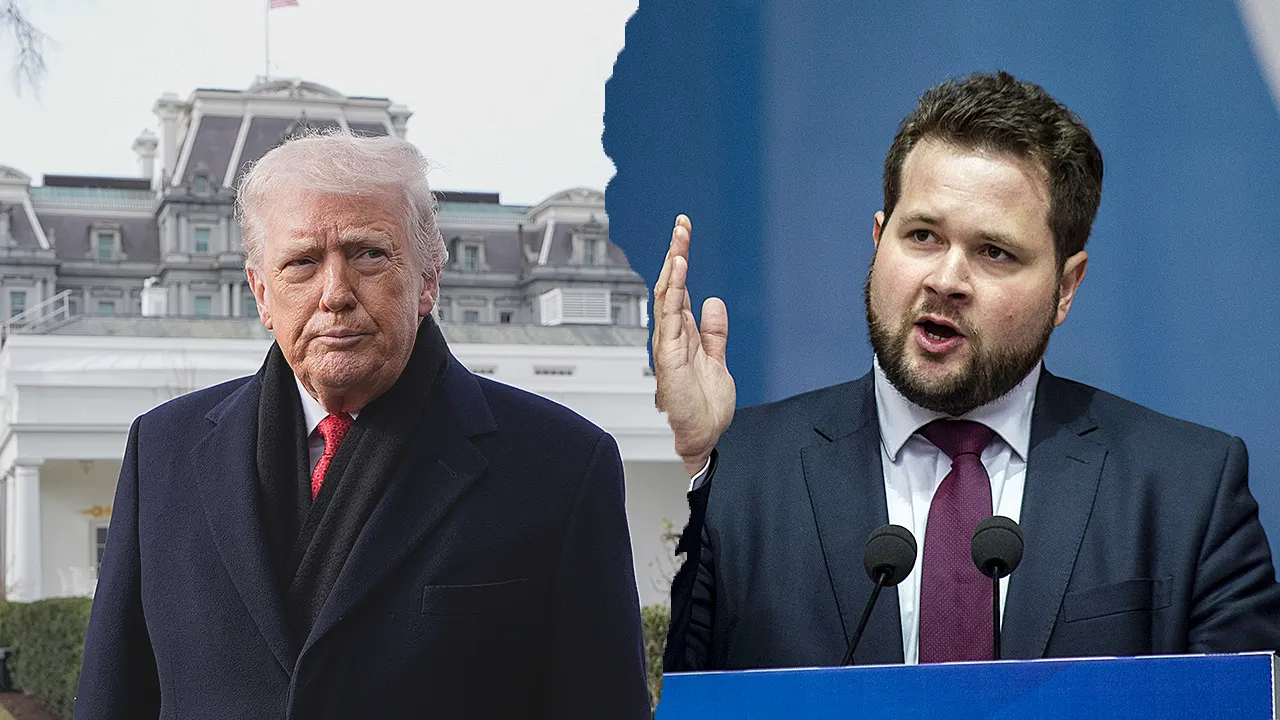
A Danish lawmaker recently made headlines with an expletive-directed at President Donald Trump during a heated European Parliament session focused on the future of Greenland, as Trump continues to express interest in acquiring the Arctic territory.
European Parliament member Anders Vistisen, 38, was recorded telling Trump to “f–k off” after stating that Greenland is not for sale. The outburst violated parliamentary decorum and prompted an immediate reprimand from Parliament Vice President Nicolae Ștefănuță.
“I am sorry, colleague, this is against our rules,” Ștefănuță said during the session. “We have clear rules about cuss words and language that is inappropriate in this room. It is unacceptable, even if you might have strong political feelings about this.”
Following the admonishment, Vistisen completed his remarks in Danish before leaving the podium.
The incident comes amid renewed pressure from Trump regarding Greenland, a strategically significant Arctic territory that remains part of Denmark, a NATO ally of the United States. Trump’s interest in acquiring Greenland has been a point of diplomatic tension since he first floated the idea during his previous administration.
When asked in a recent NBC interview whether he would consider using force to take Greenland, Trump responded with “No comment,” further fueling concerns about his intentions. On January 19, Trump revealed on Truth Social that he had discussed the matter with NATO Secretary General Mark Rutte, with plans for further talks in Davos, Switzerland.
“Greenland is imperative for national and world security,” Trump wrote on the platform. “There can be no going back.”
The issue has broader geopolitical implications, straining relations with multiple U.S. allies. Canadian Prime Minister Mark Carney has emphasized solidarity with Denmark, stating, “We are NATO partners with Denmark, and our obligations stand.”
Greenland’s strategic value has grown significantly in recent years. The world’s largest island sits at a critical juncture between North America and Europe and possesses vast mineral resources, including rare earth elements crucial for modern technology. Its location also has substantial military importance in an era of increasing Arctic competition with Russia and China.
Denmark has responded to the renewed pressure by strengthening its defense presence in Greenland. The Danish government has consistently maintained that Greenland, which has autonomous status within the Kingdom of Denmark, is not for sale at any price.
Greenlanders themselves have largely rejected the notion of American acquisition. Recent demonstrations in Nuuk, Greenland’s capital, saw residents waving Greenlandic flags in opposition to Trump’s proposals. Local leaders have emphasized their desire for continued self-governance under their current relationship with Denmark.
Trump is scheduled to speak at the World Economic Forum in Davos on January 21, where the Greenland question is expected to feature prominently. International observers will be watching closely for any signals about how far Trump might push this territorial ambition.
The situation highlights the complexity of Arctic politics in an era of climate change and resource competition. As polar ice recedes, previously inaccessible areas become potential sites for mineral extraction and shipping routes, elevating the region’s geopolitical significance.
For Denmark and its European allies, Trump’s continued interest in Greenland represents an unexpected challenge to territorial sovereignty and NATO cohesion at a time when the alliance is already navigating numerous global tensions.
Fact Checker
Verify the accuracy of this article using The Disinformation Commission analysis and real-time sources.

5 Comments
Greenland’s strategic location in the Arctic makes it a valuable geopolitical asset, so it’s no surprise Trump is interested. However, Denmark’s sovereignty over the territory needs to be respected. This incident highlights the delicate nature of these international negotiations.
The US and Denmark are allies, so finding a diplomatic resolution will be key. While Trump’s approach may be unorthodox, both sides should strive for constructive dialogue on this issue.
This seems like another example of the ongoing tensions between the US and its European allies. While Trump’s interest in Greenland may be strategic, the Danish lawmaker’s outburst is a strong rebuke of the President’s approach. It will be interesting to see how this diplomatic situation develops.
Agreed, the language used by the Danish lawmaker was quite strong, even if the sentiment is understandable. Maintaining decorum in such high-level political debates is important, though the underlying issues are complex.
It’s intriguing to see European lawmakers push back so forcefully against Trump’s overtures on Greenland. This dispute raises questions about the balance of power and national interests in the Arctic region. I wonder how this will impact future US-EU relations on strategic matters.