


Listen to the article
Danish Election Ends in Stalemate, Leaving Prime Minister’s Future Uncertain
Denmark’s parliamentary election has concluded with no clear winner, throwing the political future of Prime Minister Mette Frederiksen into doubt as neither left-leaning nor right-leaning blocs secured a majority in the 179-seat parliament.
Official results showed Frederiksen’s center-left Social Democrats lost significant ground compared to the 2022 election, dropping from 27.5% to 21.9% of the vote. Her coalition partners also saw their support decline, weakening the government’s overall position despite the Social Democrats remaining the largest single party.
The inconclusive outcome places Foreign Minister Lars Løkke Rasmussen, leader of the centrist Moderates party and former prime minister, in the powerful position of kingmaker with his 14 parliamentary seats. His support will be crucial in determining whether Frederiksen can secure a third term leading the European Union and NATO member state.
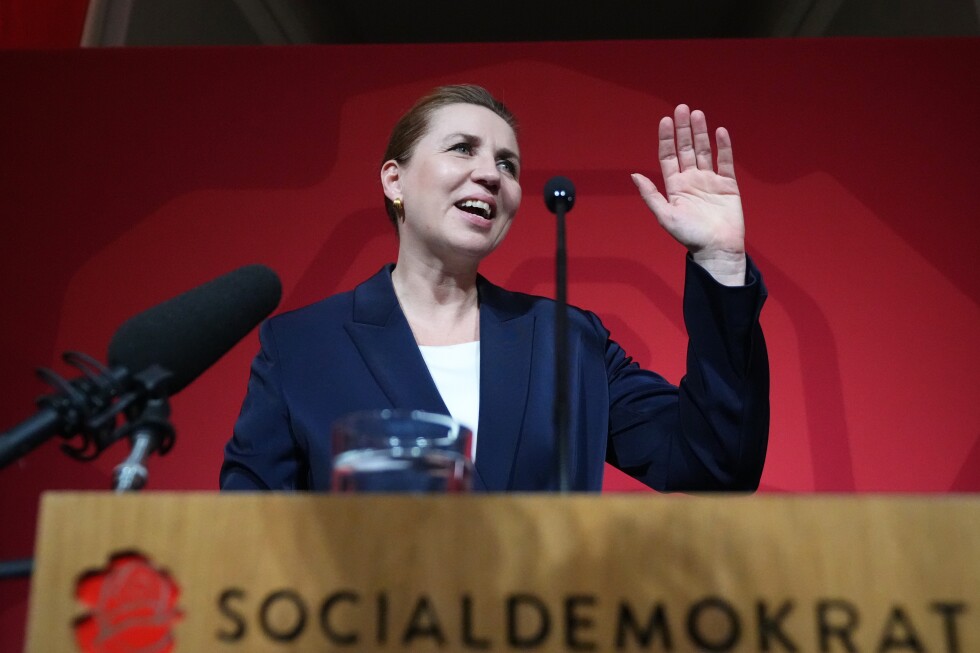
“Denmark needs a stable government, a competent government. We are ready to take the lead,” Frederiksen told supporters, emphasizing the need for stability amid global uncertainty. “The world is unsettled. There are strong winds around us.”
Løkke Rasmussen called for political unity, urging rivals to move beyond campaign positions and work together. “Denmark is a small country of 6 million people in a world of 8 billion, which is in upheaval — and there is war in Iran, and there is war in Ukraine,” he said. “We are one tribe. We must come together. We must not be divided.”
However, Defense Minister Troels Lund Poulsen, representing the center-right Liberal party and a key challenger to Frederiksen, has already ruled out joining another government with the Social Democrats, complicating potential coalition negotiations.
Frederiksen called the snap election in February, several months ahead of schedule, perhaps hoping to capitalize on her decisive leadership during the standoff with U.S. President Donald Trump over his ambitions toward Greenland. However, domestic economic concerns, including rising living costs, pensions, and debates over a potential wealth tax, dominated the campaign instead.
The 48-year-old prime minister, known for her strong support of Ukraine and restrictive immigration policies, acknowledged the results fell short of her hopes but noted it was common for governing parties to lose support when seeking a third term. “I have been in charge of this wonderful country for nearly seven years,” she said. “We have weathered the pandemic; we have had to deal with war. We have been threatened by the American president, and in those nearly seven years, we have seen a four percent decline.”
Denmark’s proportional representation system typically results in coalition governments, traditionally formed within either the “red bloc” on the left or the “blue bloc” on the right after weeks of negotiations. Frederiksen’s outgoing administration had been unusual as the first in decades to bridge the left-right divide.
Social Democrat lawmaker Morten Klessen suggested the government’s focus on international issues, particularly Ukraine, may have cost domestic support. “There’s been a lot of trouble in Europe and I think our government has had a lot of focus about Ukraine and I think we have lost a little bit in domestic votes for that,” he said, adding that “we need Mette Frederiksen in Europe for solidarity.”
Notably, Greenland, which consumed significant government attention in recent months, played little role in the campaign as there is broad cross-party consensus about its place within the Danish kingdom. Earlier this year, Frederiksen had warned that an American takeover of Greenland would amount to “the end of NATO,” though tensions have eased since Trump backed down on threats to impose tariffs on Denmark and other European nations that opposed U.S. control of the Arctic territory.
More than 4.3 million people were eligible to vote in the election, which will determine the composition of Denmark’s single-chamber parliament, the Folketing. Of its 179 seats, 175 represent Denmark, while two each go to the semi-autonomous territories of Greenland and the Faroe Islands.
As coalition negotiations begin, the political landscape remains in flux, with multiple potential configurations possible depending on Løkke Rasmussen’s decision and the willingness of various parties to compromise on their campaign positions.
Fact Checker
Verify the accuracy of this article using The Disinformation Commission analysis and real-time sources.

14 Comments
Stability and competent governance are understandably priorities for Denmark given the global instability. I hope the parties can find common ground to form an effective government.
Agreed. Denmark’s reputation for pragmatic, consensus-driven politics will be tested, but the country’s democratic institutions should help navigate this transition.
The decline in support for the traditional parties is a sign of changing voter sentiment. It will be interesting to see if this leads to a more diverse, coalition-based government.
That’s a good observation. A more fragmented parliament may result in a government that better reflects the nuances of public opinion.
The decline in support for the Social Democrats is noteworthy. Voters seem to be seeking change, but finding a governing coalition may prove challenging. I’m curious to see how the negotiations unfold.
You raise a good point. With no clear majority, the role of smaller parties like the Moderates will be crucial in determining the next government’s direction.
This is an interesting development in Danish politics. It will be important to see how the parties negotiate and form a stable government to address the country’s priorities amid global uncertainty.
I agree, the inconclusive result creates some uncertainty, but Denmark has a history of multi-party cooperation to find pragmatic solutions.
The kingmaker role of the Moderates party highlights the growing importance of centrist and independent voices in Danish politics. Their influence could shape the government’s policy priorities.
That’s a good point. The Moderates’ ability to bridge ideological divides may help forge a consensus-based coalition focused on pragmatic solutions.
As a major EU and NATO member, Denmark’s political stability is important for regional and global affairs. I hope the parties can find a way to work together constructively.
Absolutely. Denmark’s leadership role in Europe and its strategic location make a smooth transition of power crucial for broader geopolitical stability.
This election result reflects the complex and evolving political landscape in Denmark. It will be important to monitor how the various parties navigate the negotiations and form a stable government.
Agreed. Denmark’s democratic resilience will be tested, but the country’s history of compromise and cooperation provides a solid foundation for overcoming this challenge.