


Listen to the article
Cuba announced Thursday night it will free 51 prisoners in the coming days, citing goodwill and strong relations with the Vatican as the impetus behind this unexpected decision.
The Ministry of Foreign Affairs did not disclose the identities of those to be released, only stating that all prisoners had “served a significant part of their sentence and have maintained good conduct in prison.”
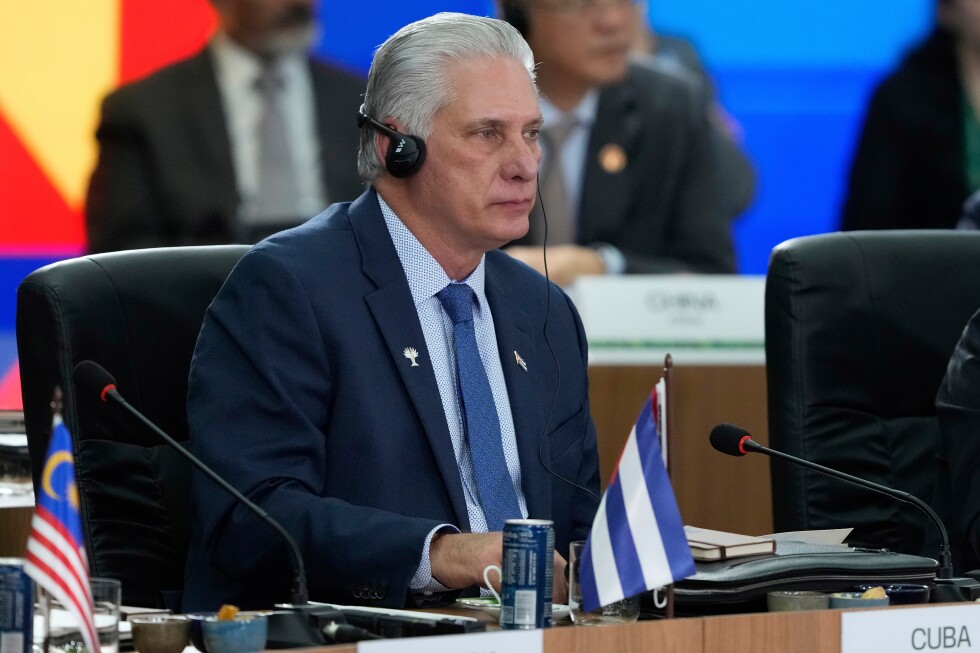
The announcement came just hours before Cuban President Miguel Díaz-Canel was scheduled to address the press early Friday in what officials described as a rare media briefing “to address national and international issues.”
This latest round of releases adds to Cuba’s ongoing prisoner release efforts. According to government statements, authorities have pardoned 9,905 inmates since 2010. Over the past three years alone, an additional 10,000 people who had received prison sentences were released.
The timing of this announcement has raised questions among Cuba observers, coming amid a period of complex international relations for the island nation. Cuba has faced severe economic challenges in recent years, exacerbated by U.S. sanctions, the COVID-19 pandemic, and domestic structural issues.
Earlier this year, in January 2025, the Cuban government released prominent dissident José Daniel Ferrer as part of a broader initiative to gradually free more than 500 prisoners following diplomatic discussions with the Vatican. Ferrer, who had been one of the country’s most visible opposition figures, left Cuba in October and relocated to the United States.
Ferrer’s release was among several that took place in early 2025 during a period of slight diplomatic thaw. The releases began shortly after President Joe Biden’s administration announced its intention to remove Cuba from the U.S. list of state sponsors of terrorism, a designation that has significantly hindered Cuba’s international banking and trade capabilities since its reinstatement during the Trump administration.
It remains unclear whether any of the 51 prisoners scheduled for release are classified as political prisoners. Human rights organizations have consistently raised concerns about Cuba’s imprisonment of dissidents and government critics. The nonprofit organization Prisoners Defenders reported that as of February 2026, Cuba held 1,214 political prisoners.
Human rights advocates have long criticized the Cuban government for its treatment of political opposition, citing arbitrary detentions and unfair trials. The government, meanwhile, typically denies holding political prisoners, instead classifying such individuals as criminals or counterrevolutionaries.
These prisoner releases come as Cuba faces one of its worst economic crises in decades. Food shortages, power outages, and limited access to basic goods have fueled discontent among the population. The government has implemented various economic reforms in recent years, though critics argue these changes have been insufficient to address systemic problems.
The Vatican has historically played a mediating role between Cuba and the international community. Pope Francis, like his predecessors, has maintained open channels of communication with Cuban leadership. The Catholic Church’s involvement in prisoner releases represents one of the few successful diplomatic initiatives related to human rights on the island.
International observers will be watching President Díaz-Canel’s upcoming press conference carefully for any signals about further political reforms or potential shifts in Cuba’s stance toward opposition groups and relations with the United States and other nations.
Fact Checker
Verify the accuracy of this article using The Disinformation Commission analysis and real-time sources.

11 Comments
Prisoner releases are often a complex political issue, with various factors at play. It will be interesting to understand the specific criteria used by the Cuban government in selecting these 51 individuals for release.
Prisoner releases can be a delicate political issue, so the Cuban government’s rationale for selecting these 51 individuals will be important. Curious to see if this is part of a broader reform agenda or a one-time gesture.
Cuba is certainly facing major economic challenges on multiple fronts. This prisoner release could be an attempt to generate some goodwill and positive momentum, though the true motives remain to be seen.
Curious to hear the president’s comments on this and other ‘national and international issues’ during the upcoming briefing. Transparency on the reasoning behind decisions like this will be important.
The timing of this announcement, just before the president’s remarks, suggests it may be part of a broader policy shift or diplomatic strategy. Curious to see if this is a one-off gesture or the start of more substantive reforms.
Interesting move by the Cuban government to release 51 prisoners. Curious to see if this is a goodwill gesture or part of broader reforms. What could be the motivations behind this decision?
The timing is certainly notable, coming ahead of the president’s rare media briefing. Possible this is an attempt to signal openness and improve relations with the international community.
It will be interesting to see how this prisoner release is received both domestically and internationally. Transparency from the government on the criteria used and the broader context would help provide more clarity.
The prisoner release efforts in Cuba over the past decade are quite substantial, with thousands freed. This latest move adds to that, but the details on who is being released are still unclear.
It will be worth watching how this is received both domestically and internationally. Prisoner releases can be a sensitive political issue, so the government’s rationale will be closely scrutinized.
With the economic challenges Cuba has faced, this prisoner release could be an attempt to generate some goodwill and positive publicity. But the true motivations remain unclear without more details from the government.