


Listen to the article
US Pressure Reshapes Mexico’s Anti-Cartel Strategy Following El Mencho’s Death
The killing of notorious drug lord Nemesio “El Mencho” Oseguera Cervantes marks a significant victory in the ongoing war against cartels, but analysts view it as more than just a tactical win. The operation, executed by Mexican forces with crucial U.S. intelligence support, signals a strategic shift in Mexico’s approach to combating cartel violence amid intensifying pressure from Washington.
El Mencho, leader of the Jalisco New Generation Cartel (JNGC), was among the most wanted criminals in the Western Hemisphere. His organization had established itself as one of Mexico’s most violent and heavily militarized criminal enterprises, responsible for significant fentanyl trafficking into the United States.
Senator Ted Cruz revealed he had personally warned Mexican officials last year about U.S. expectations for stronger action. “In August of last year, I went down to Mexico and met with senior officials in the Mexican government,” Cruz told Fox News Digital. “The message I conveyed to them was that they needed to get serious about fighting the cartels to stop the drug trafficking into America and to stop the human trafficking into America.”
The timing of the operation reflects increasing bilateral cooperation on what has become a central political and security issue in the United States. Fentanyl trafficking has emerged as a particularly contentious topic, with American deaths from synthetic opioid overdoses reaching record levels in recent years.
Melissa Ford Maldonado, director of Western Hemisphere at the America First Policy Institute, emphasized that the operation demonstrates how U.S. pressure has fundamentally altered Mexico’s calculations. “Pressure is the only thing that compels the Mexican state to act,” she said. “The Trump administration has been explicit in linking trade leverage and even the possibility of unilateral action to Mexico’s performance against the cartels, which has completely changed the incentive structure in Mexico City.”
The high-profile nature of the target offers Mexico a concrete achievement to showcase. However, security experts caution that such tactical victories rarely translate into lasting strategic success. “El Mencho was one of the most wanted men in the hemisphere,” Ford Maldonado noted. “His death gives the Mexican government something concrete to point to — a high-value target — and claim they’re delivering. But these are only tactical wins, designed to relieve immediate pressure from Washington.”
The history of Mexico’s cartel landscape suggests that leadership decapitation strategies often fail to produce lasting results. Previous high-profile arrests and killings have frequently led to fragmentation among cartels and subsequent power struggles that generate more violence.
There are also complex political dimensions to the operation. Omar García Harfuch, Mexico’s current Secretary of Security and Citizen Protection who oversaw the operation against El Mencho, survived an assassination attempt in 2020 widely attributed to the drug lord. This personal connection has raised questions about potential motivations beyond bilateral security cooperation.
Regional dynamics add another layer of complexity. The JNGC has been engaged in a bloody, protracted conflict with the Sinaloa cartel, which some analysts believe has historically enjoyed a more permissive relationship with elements of the Mexican government. “If the Mexican government goes after the rivals of a cartel it’s long been accused of tolerating or working alongside, that alone doesn’t prove it has truly broken with cartel-state collusion,” Ford Maldonado cautioned.
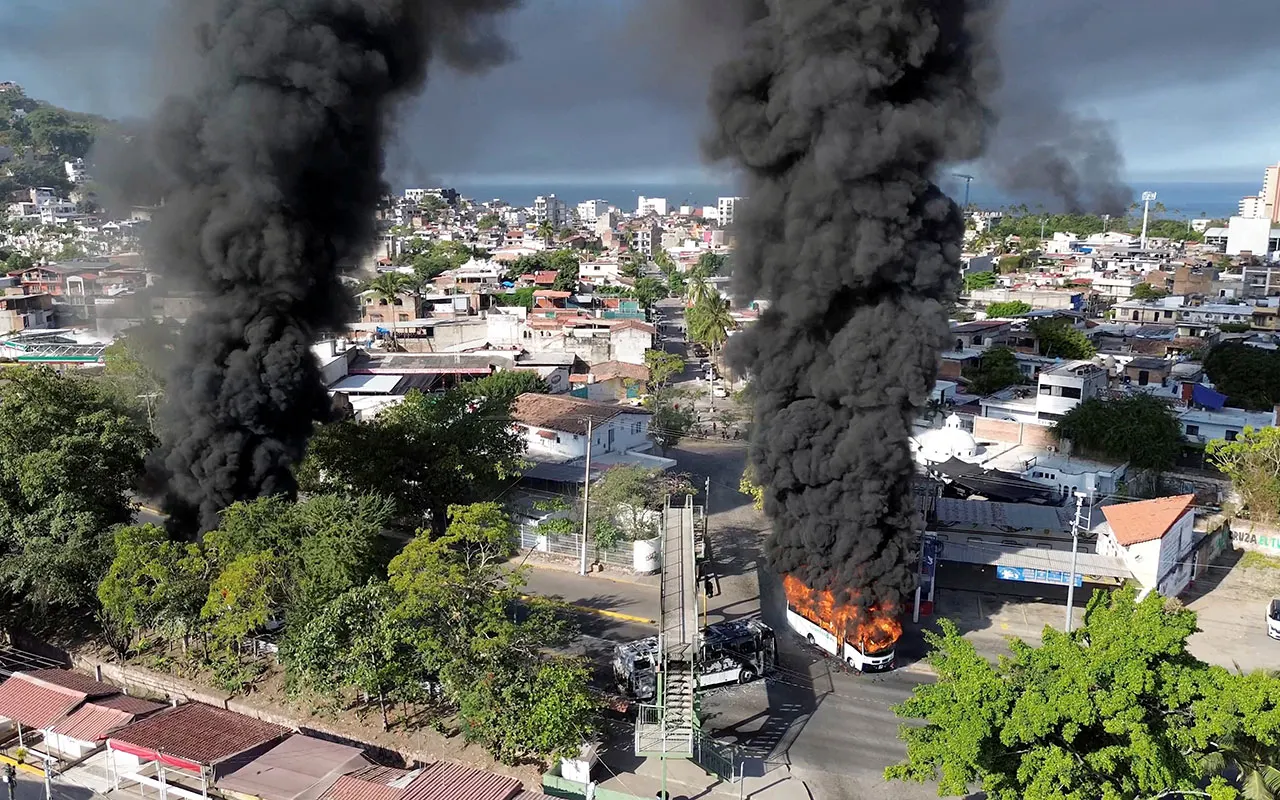
The aftermath of El Mencho’s death has already triggered violence across multiple Mexican states, with burned vehicles and roadblocks reported in at least seven regions. This pattern of retaliatory violence has typically followed previous operations against high-ranking cartel figures.
Security analysts emphasize that meaningful progress against Mexico’s cartel problem requires addressing deeper structural issues. “Whether this is a real turning point depends on what comes next, specifically, whether enforcement moves beyond high-profile cartel leaders and begins to confront the political and financial networks that sustain them,” Ford Maldonado said.
For now, the operation represents an important milestone in U.S.-Mexico security cooperation, but whether it signifies a fundamental shift in Mexico’s approach to cartel violence or merely a tactical concession to U.S. pressure remains to be seen. Sustained progress will require confronting corruption, territorial control issues, and the political protection that has allowed cartel power to flourish.
Fact Checker
Verify the accuracy of this article using The Disinformation Commission analysis and real-time sources.

8 Comments
It’s good to see the US and Mexico cooperating more closely to take down high-profile cartel leaders like El Mencho. Coordinated intelligence and operations seem crucial to disrupting these powerful criminal networks.
Agreed. The cartels have become extremely sophisticated, so a collaborative, intelligence-driven approach is needed to combat them effectively.
Interesting to hear that Senator Cruz was directly engaging with Mexican officials about this issue. Maintaining strong diplomatic ties is important for coordinating cross-border anti-cartel efforts.
Yes, having high-level political engagement can help align priorities and strategies between the US and Mexico on this critical security challenge.
It’s good to see the US and Mexico strengthening their cooperation to combat the cartels. Tackling this complex, transnational issue will require sustained effort and intelligence sharing on both sides of the border.
The death of El Mencho is a significant blow to the Jalisco New Generation Cartel, one of Mexico’s most violent criminal organizations. However, the drug trade and cartel violence remain major issues that require sustained, coordinated action.
Fentanyl trafficking from Mexico into the US is a huge problem that has fueled the opioid crisis. Cracking down on cartel operations that produce and distribute this deadly drug should be a top priority for both governments.
Absolutely. Fentanyl overdoses have devastated many American communities, so disrupting the cartel supply chains is crucial.