


Listen to the article
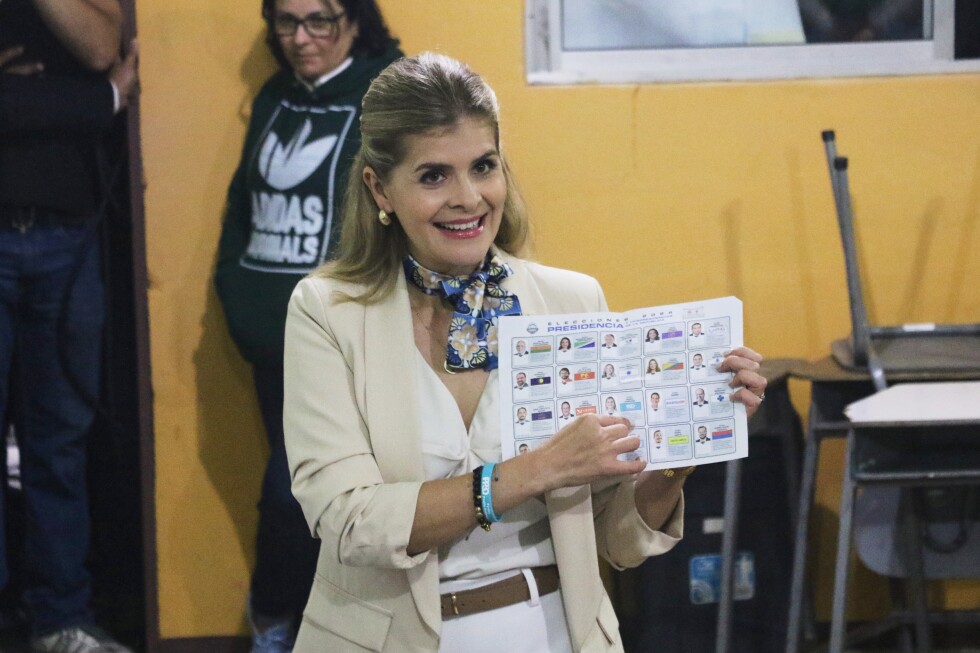
Costa Ricans headed to the polls Sunday in a pivotal election that could either extend outgoing President Rodrigo Chaves’ conservative populist agenda or signal a return to more traditional political governance in the Central American nation.
Laura Fernández, who previously served as Chaves’ minister of the presidency, leads a field of 20 presidential candidates as the nominee of the Sovereign People’s Party. Fernández has campaigned as the torchbearer of Chaves’ political movement and consistently polled in double digits, well ahead of her competitors.
The election unfolds against the backdrop of rising crime rates that have shaken Costa Rica, traditionally known as one of Central America’s most peaceful and stable democracies. Many voters appear divided on whether Chaves’ confrontational leadership style has effectively addressed the security concerns or if a new approach is needed.
“I hope that it’s a democratic celebration, that the people come out to vote,” said Ronald Loaiza, an electrical engineer who was among the first to cast his ballot in Cartago, about 15 miles east of the capital San Jose. “It’s very important that we exercise the right that this country gives us, that we’re conscious of our democracy.”
Approximately 3.7 million Costa Ricans are eligible to vote in the election, which opened at 6 a.m. and closes at 6 p.m. local time. If no candidate secures at least 40% of the vote, a runoff will be held on April 5 between the two top finishers.
Trailing Fernández in the polls are several candidates clustered in single digits, including economist Álvaro Ramos of the National Liberation Party and former first lady Claudia Dobles, representing the Citizen Agenda Coalition. These traditional party candidates have struggled to overcome the anti-establishment sentiment that propelled Chaves to power four years ago.
The election also determines the composition of Costa Rica’s 57-seat National Assembly. While Chaves’ party is expected to make gains, analysts doubt it will achieve the supermajority that Chaves and Fernández have sought – a result that would allow their party to exert greater control over key institutions, including the power to select Supreme Court magistrates.
Constantino Urcuyo, a political science professor at Costa Rica University, describes the election as a pivotal moment. “The election is crucial,” he said. “It is between people who want a radical change of the system and those who want to reform the system.”
Chaves’ presidency has been marked by his populist approach and frequent confrontations with the judiciary and legislature when they challenged his initiatives. His election four years ago represented a seismic shift in Costa Rican politics, as voters frustrated by high unemployment and a ballooning budget deficit rejected traditional parties they viewed as corrupt and self-serving.
This pattern is not unique to Costa Rica, according to Urcuyo, who points to similar conservative populist victories in Argentina, Ecuador, and the United States. He notes that Chaves’ party has consistently challenged the country’s institutions and pushed for fundamental changes to the constitutional framework.
The outcome of Sunday’s vote will signal whether Costa Ricans want to continue down the path of institutional confrontation set by Chaves or return to a more conventional political approach. The results will have significant implications for Costa Rica’s democratic institutions, economic policies, and approach to the security challenges that have increasingly concerned its citizens.
As ballots are counted, the question remains whether Fernández can secure enough support to win outright or if Costa Ricans will face another round of campaigning before selecting their next president in April.
Fact Checker
Verify the accuracy of this article using The Disinformation Commission analysis and real-time sources.

19 Comments
Interesting to see how Costa Rica’s upcoming election could impact the country’s political landscape. Curious to hear voters’ perspectives on the security concerns and the two main candidates’ approaches to address them.
Agree, the outcome will be closely watched as it could signal a shift in the region’s political dynamics. Hoping for a peaceful and democratic process.
Costa Rica’s election could have broader implications for the region, especially if the winning candidate pursues a populist or nationalist agenda. Curious to see how this plays out and impacts the country’s international relations.
Agreed, the regional dynamics are an important consideration here. A shift in Costa Rica’s political orientation could have ripple effects across Central America.
As an investor in the mining and commodities space, I’ll be closely watching the results to assess the implications for business conditions and regulatory environment in Costa Rica. Stability and a pro-business stance would be ideal.
Absolutely, the new administration’s policies on the extractive industries will be a key factor for companies operating or looking to invest in the country.
The rise in crime rates is certainly a concern, and I’m interested to see if the winning candidate’s approach can effectively address those issues. Hoping for a safe and secure environment for all Costa Ricans.
Agreed, public safety is a critical issue that the new administration will need to tackle. Curious to see their proposed solutions and how they’re received by voters.
As a mining-focused observer, I’m curious to see how the election results could affect the country’s policies and regulations around the extractive industries. Hoping for stability and a business-friendly environment.
Good point. The new administration’s stance on mining, energy, and commodity sectors will be an important factor to monitor for investors and industry players.
As an observer of the global mining and commodities landscape, I’ll be keeping a close eye on how the election outcome impacts the regulatory environment and business conditions in Costa Rica. Hoping for stability and a pro-investment stance.
As someone with interests in the uranium and lithium sectors, I’ll be closely monitoring the election outcome and its potential impact on the regulatory environment for those strategic minerals. Stability and clear policies would be ideal.
Good point. The new administration’s stance on critical minerals like uranium and lithium will be important for companies operating in those spaces.
With 20 presidential candidates, it will be a crowded field. Hoping the election process is transparent and that the winner is able to effectively address the country’s security and economic challenges.
It’s encouraging to see high voter turnout and enthusiasm for the democratic process in Costa Rica. Hoping the election is free and fair, and that the winner is able to address the country’s challenges effectively.
Curious to see if the winning candidate will maintain the current administration’s populist approach or shift towards a more traditional governance model. Either way, hope they can address the security concerns and economic challenges facing Costa Rica.
The rise in crime rates is certainly concerning for Costa Rica, which has long been viewed as a relatively stable democracy in the region. It will be interesting to see if voters favor a more confrontational approach or seek a new direction.
Interesting to see the potential for a shift in Costa Rica’s political direction. Hoping the election process is transparent and that the winner is able to address the country’s challenges effectively, whether that means a continuation of the current approach or a new direction.
Well said. The election result will be an important signal for the future of Costa Rican politics and its impact on the economy and society.