


Listen to the article
Congress Advances Tough China Measures Despite White House Softening
Congress is pushing forward with stringent measures against China in a comprehensive defense bill, diverging from the Trump administration’s more conciliatory approach toward Beijing. The House-approved National Defense Authorization Act (NDAA) contains multiple provisions aimed at limiting Chinese influence in sensitive technologies and strengthening U.S. support for Taiwan.
The 3,000-page defense bill, which authorizes $900 billion for military programs, includes scrutiny of American investments in China that could enhance Chinese military capabilities. It also prohibits government funds from being used for equipment and services from blacklisted Chinese biotechnology companies, addressing longstanding concerns about biosecurity and pharmaceutical supply chains.
“Taken together, these measures reflect a serious, strategic approach to countering the Chinese Communist Party,” said Rep. Raja Krishnamoorthi, the top Democrat on the House Select Committee on the Chinese Communist Party, noting the approach “stands in stark contrast to the White House’s recent actions.”
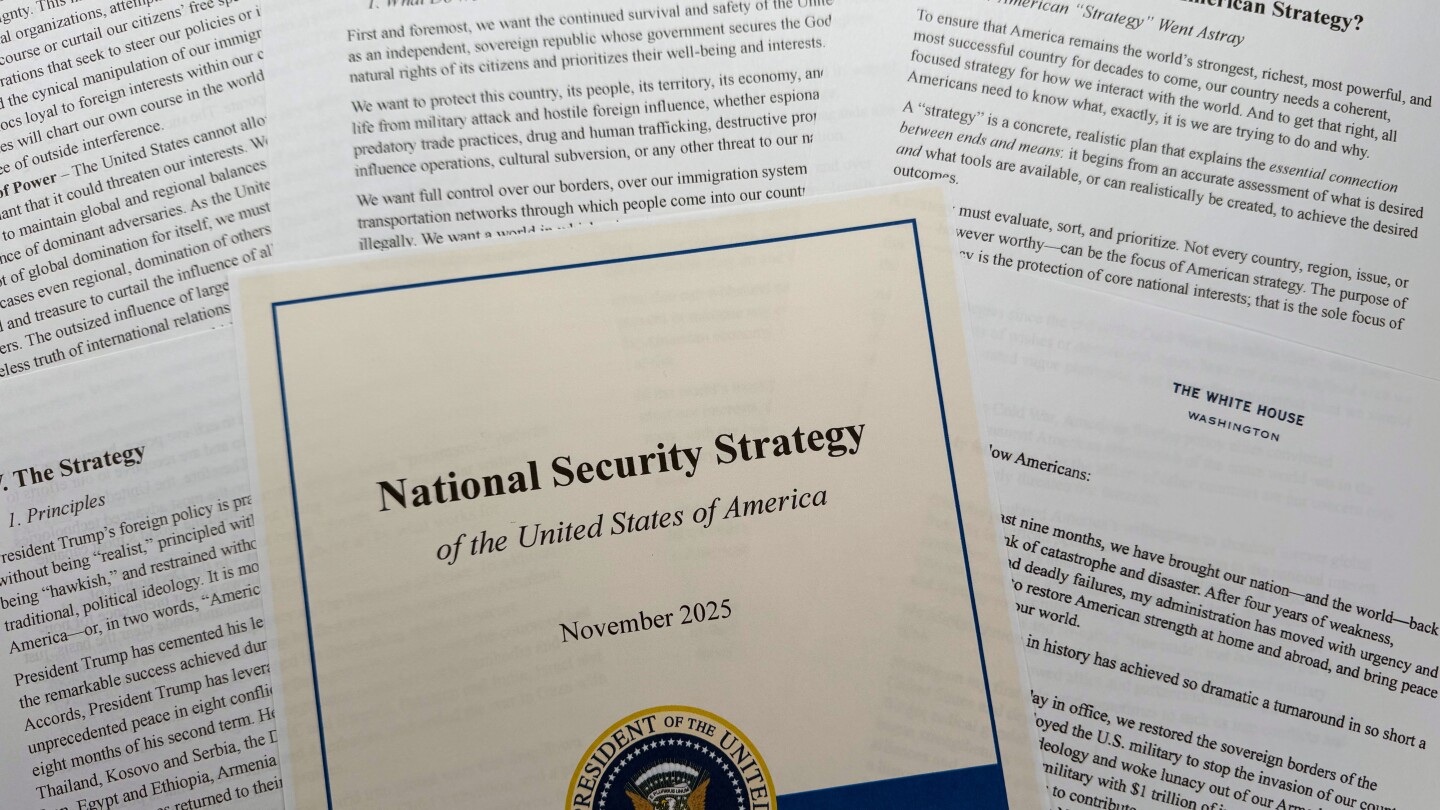
The bill’s advancement comes just days after the Trump administration unveiled its national security strategy, which notably dropped Biden-era language characterizing China as a strategic threat. The new White House position indicates President Trump’s preference for a “mutually advantageous economic relationship” rather than long-term competition with Beijing. Additionally, the administration recently permitted Nvidia to sell advanced computer chips to China, raising concerns about potentially boosting Chinese artificial intelligence capabilities.
Craig Singleton, senior director of the China program at the Foundation for Defense of Democracies, observed that the China-related provisions in the traditionally bipartisan defense bill “make clear that, whatever the White House tone, Capitol Hill is locking in a hard-edged, long-term competition with Beijing.”
The Chinese embassy in Washington promptly condemned the bill. Embassy spokesperson Liu Pengyu said China “strongly deplores and firmly opposes” the legislation, claiming it “kept playing up the ‘China threat’ narrative” and undermined efforts to stabilize bilateral relations.
The investment restrictions included in the NDAA represent years of bipartisan effort to curb U.S. investments in cutting-edge Chinese technologies such as quantum computing, aerospace, semiconductors, and artificial intelligence. Previous attempts to pass such restrictions failed last year, reportedly due to opposition from Tesla CEO Elon Musk, who maintains extensive business interests in China, including a major manufacturing facility in Shanghai.
Rep. John Moolenaar, a Michigan Republican who chairs the House Select Committee on the Chinese Communist Party, welcomed the investment provisions, stating, “For too long, the hard-earned money of American retirees and investors has been used to build up China’s military and economy. This legislation will help bring that to an end.”
On the biotechnology front, the bill takes a more flexible approach than last year’s failed BIOSECURE Act. Rather than explicitly naming Chinese companies, the new legislation directs the Office of Management and Budget to compile a list of “biotechnology companies of concern.” It also expands Pentagon investments in biotechnology, which Moolenaar described as “defensive action to secure American pharmaceutical supply chains and genetic information from malign Chinese companies.”
The NDAA significantly increases funding for Taiwan-related security cooperation from $300 million to $1 billion and directs the Pentagon to establish a joint drone and anti-drone program with the self-governing island. Another provision supports Taiwan’s bid to join the International Monetary Fund, which would provide financial protection from China.
These measures come at a delicate time in U.S.-China relations, with President Trump appearing careful not to antagonize Beijing as he pursues trade deals with Chinese President Xi Jinping. Xi has urged Trump to handle the Taiwan issue “with prudence,” considering it a core Chinese interest.
The defense bill now heads to the Senate, where its passage would establish what Singleton describes as “a floor under U.S. competitiveness policy—on capital, biotech, and critical tech—that will be very hard for future presidents to unwind quietly.”
Fact Checker
Verify the accuracy of this article using The Disinformation Commission analysis and real-time sources.

8 Comments
The defense bill’s focus on limiting Chinese influence in sensitive tech and boosting support for Taiwan reflects growing bipartisan concerns. It will be important to watch how this plays out.
Agreed. Managing the US-China relationship is a major challenge, with both economic and security implications.
The provisions around biosecurity and pharmaceutical supply chains are timely given the pandemic. Reducing over-reliance on China for critical goods is a prudent move.
Absolutely. Building more resilient and diversified supply chains is crucial for national and global health security.
Restricting Chinese investments that could enhance military capabilities makes sense from a national security standpoint. But it will be important to avoid overreach that harms broader economic ties.
While the tough China measures may create tension, it’s good to see a strategic, bipartisan approach to countering the CCP’s influence. Careful diplomacy will be needed to manage the fallout.
Interesting to see Congress taking a tougher stance against China on technology and security issues. I wonder how this will impact trade relations and cooperation on global challenges.
Yes, it’s a complex geopolitical landscape. Balancing competitiveness and collaboration will be critical.