


Listen to the article
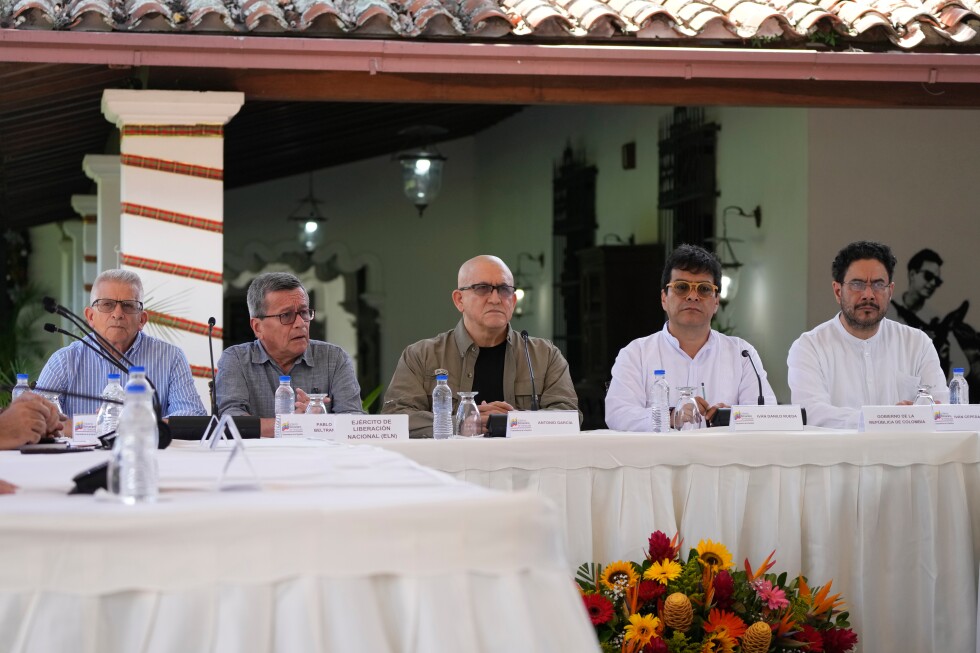
Colombia’s largest rebel group, the National Liberation Army (ELN), announced a unilateral ceasefire on Monday ahead of Colombia’s congressional elections scheduled for March 8, a move aimed at allowing citizens to vote “in liberty” amid growing concerns about political violence in rural areas.
In a statement published on its website, the ELN pledged to halt attacks against military and electoral authorities during the election period, though it did not specify when the ceasefire would end. The group also rejected allegations that it attacks politicians who oppose its interests or controls positions within municipal governments to misappropriate public funds.
“For the ELN it is very important for the people to vote for whom they think is best, or to abstain if they feel that is most appropriate,” the statement read, adding that the organization “does not finance any campaigns as drug traffickers do.”
The announcement comes at a critical juncture in Colombian politics. Last year, the Colombian government broke off peace talks with the ELN following a series of attacks in the country’s northeast that displaced more than 50,000 people. The deterioration of the peace process has contributed to growing insecurity in regions where state presence remains weak.
The upcoming elections will see Colombians select a new Senate and House of Representatives, with over 300 congressional seats at stake. The vote will also include primaries to determine who will represent both left-wing and center-right coalitions in the presidential election scheduled for May.
For President Gustavo Petro, the congressional elections represent a crucial test as he attempts to build a majority for his left-wing movement, the Historical Pact. A favorable outcome could potentially strengthen his position to push forward ambitious reforms, including efforts to rewrite the nation’s constitution.
However, pre-election violence has cast a shadow over the democratic process. Earlier this month, Indigenous Senator Aida Quilcue was kidnapped in the southwestern Cauca region, though she was released unharmed hours later as military troops mobilized for her rescue. In a separate incident, two bodyguards working for Senator Jairo Castellanos were killed when ELN fighters opened fire on his convoy. The rebel group later claimed they did not intend to attack the senator but fired because the vehicle refused to stop at a roadblock.
The specter of political violence has loomed particularly large since last year’s assassination of conservative presidential hopeful Miguel Uribe, who was shot during a rally in Bogota and died of his injuries two months later. This marked the first attack against a Colombian presidential candidate in three decades and has forced some candidates in the current race to limit their public appearances due to security concerns.
The Movement for Electoral Observation, a Colombian electoral watchdog, recently reported that in 11% of the nation’s municipalities, there is an “extreme risk” that elections could be affected by violence. The organization bases its assessment on factors including the presence of armed groups, recent cases of forced displacement, and attacks on human rights defenders.
Adding to these concerns, the Colombian Human Rights Office warned on Monday that immediate action was required to prevent political violence in 69 municipalities. “The risks persist as illegal armed groups take hold of regions, where criminals have supplanted the state, regulate political campaigns and veto candidates,” the public agency stated.
These developments highlight the ongoing challenges Colombia faces in consolidating peace and democracy in areas where illegal armed groups maintain significant influence, despite multiple peace initiatives over the years. The outcome of the March elections will not only determine the balance of power in Congress but may also indicate whether Colombia can overcome its long history of political violence and establish more stable democratic institutions.
Fact Checker
Verify the accuracy of this article using The Disinformation Commission analysis and real-time sources.

7 Comments
This announcement comes at an important time for Colombia. While the ceasefire is a positive step, the country’s history of election-related violence means close monitoring will be crucial in the weeks ahead.
The ELN’s rejection of allegations around financing campaigns and controlling local governments is noteworthy. However, the group’s history of violent attacks raises concerns about the sincerity of this ceasefire.
You raise a fair point. The ELN’s track record makes it difficult to take this ceasefire at face value. Vigilance will be needed to ensure the elections proceed safely.
This ceasefire by the ELN is an interesting move ahead of the upcoming elections. It will be important to see if it holds and whether it helps create a more secure environment for voters.
Elections amid armed conflict are always challenging. This ceasefire could provide some breathing room, but long-term stability will require a comprehensive peace process that addresses the root causes of the conflict.
Absolutely. A sustainable political solution, not just a temporary ceasefire, is what’s needed to truly protect the democratic process in Colombia.
The ELN’s statement about allowing voters to choose freely is encouraging, but the group’s past actions have undermined democratic freedoms. It remains to be seen if this ceasefire will be honored.