


Listen to the article
Colombian authorities report that the Revolutionary Armed Forces of Colombia (FARC) has failed to fulfill its financial obligations under the historic 2016 peace agreement, significantly hampering victim reparation efforts.
According to a report released Tuesday by Colombia’s Inspector General’s Office, the former rebel group has surrendered only a fraction of the assets it promised to relinquish. Of the 444 kilograms of gold the FARC committed to hand over, only 252 kilograms have been delivered to authorities. The report also highlights that the group has transferred just one of 722 promised rural properties and only 17% of pledged cash assets.
These unfulfilled commitments are undercutting programs designed to help victims of Colombia’s decades-long internal conflict, which claimed over 260,000 lives and displaced millions.
The 2016 peace accord, which formally ended more than five decades of armed conflict between the FARC and the Colombian government, included provisions allowing former rebels to avoid prison sentences, form a political party, and secure 10 reserved seats in Colombia’s congress. In exchange, FARC leadership agreed to surrender assets to fund victim reparation projects including rural infrastructure development, memorial initiatives, and truth and reconciliation programs.
Under the agreement, these assets would be transferred to the Society of Special Assets, which would convert them to funds for agencies supporting conflict victims.
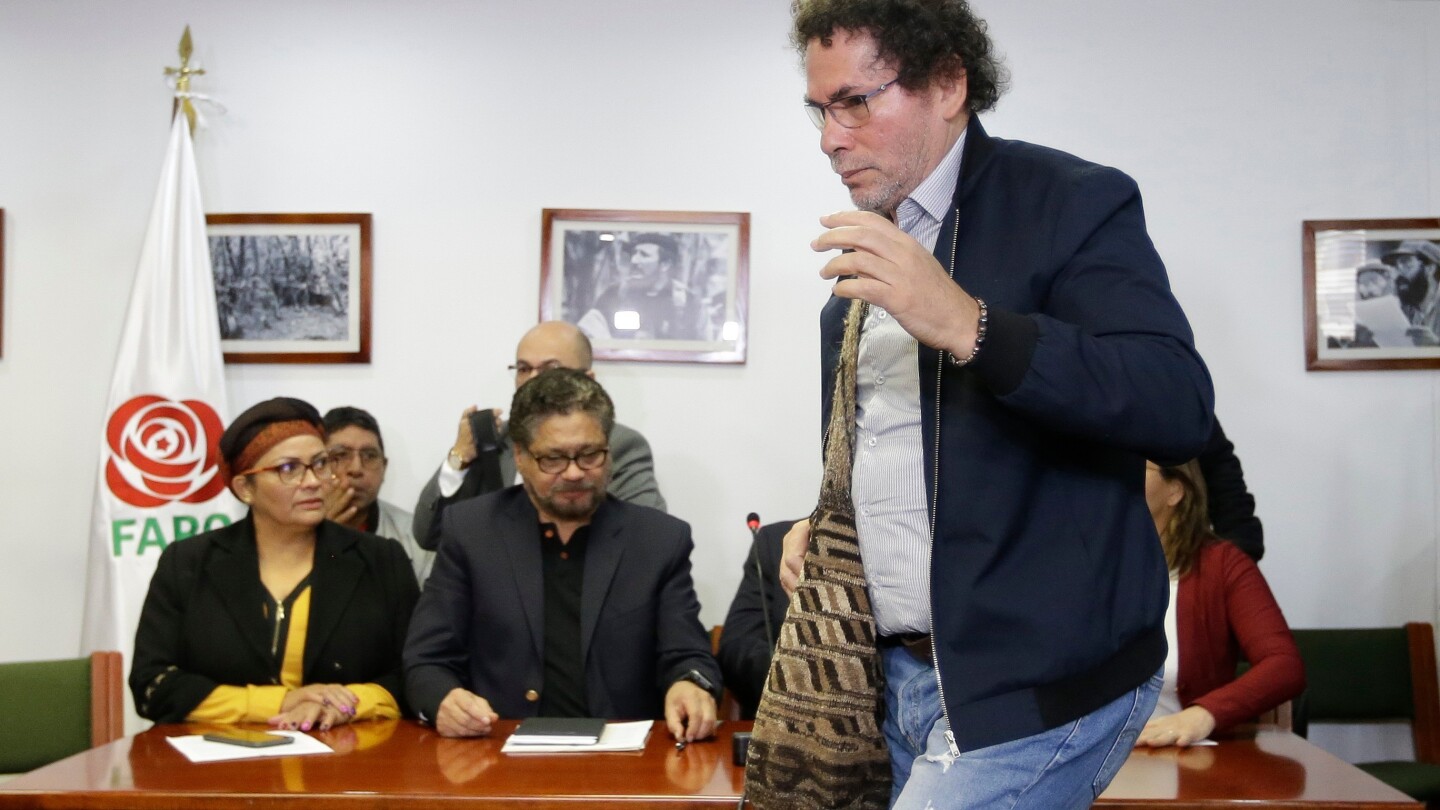
Jose Lisandro Lascarro, a former FARC commander known by the alias “Pastor Alape,” defended the group’s compliance efforts in response to the report. Speaking to The Associated Press, he claimed the FARC had surrendered all assets it could in a UN-supervised process but cited security concerns as a major obstacle.
“We handed over all of the assets that we could turn in, before other groups occupied our territory,” Lascarro stated.
Indeed, the power vacuum created by FARC’s disarmament has triggered a surge in violence across parts of rural Colombia, with various armed groups now competing for control of former FARC territories. This volatile security situation, according to Lascarro, has prevented former members from retrieving cash buried in remote areas now controlled by other rebel groups.
He further explained that the lack of formal property titles has complicated the transfer of rural properties to the government, as the FARC had no legal documentation for much of its land holdings.
The Inspector General’s report also revealed that the Special Jurisdiction for Peace (JEP), the tribunal established under the peace agreement, lacks sufficient funding to implement its rulings on truth and reparation activities. The tribunal has issued orders requiring reparations for victims of FARC kidnappings and extrajudicial executions carried out by the Colombian military.
Alarmingly, the report indicates that the budget currently allocated for these victim reparations amounts to just 17% of what is actually required, creating a substantial funding gap that threatens the peace process’s credibility.
This financial shortfall poses a significant challenge to Colombia’s broader reconciliation efforts, which rely heavily on meaningful reparations to acknowledge and address the suffering of conflict victims. The situation also raises questions about the long-term sustainability of the peace agreement if key financial commitments remain unfulfilled.
Colombia’s peace process has been closely watched internationally as a potential model for resolving long-standing internal conflicts. However, these implementation challenges highlight the complex reality of transitioning from war to peace in a country still grappling with armed violence, territorial disputes, and the legacy of decades of conflict.
Fact Checker
Verify the accuracy of this article using The Disinformation Commission analysis and real-time sources.

8 Comments
The failure to surrender assets is a major setback. Victim reparations are a critical part of the peace process, and the FARC’s lack of follow-through undermines confidence in the agreement. Colombia must find ways to ensure the group upholds its commitments.
Absolutely. The government needs to take a firm stance and compel the FARC to deliver on its obligations. Victims deserve justice and compensation, and the peace deal cannot succeed without the group’s full participation.
This is a concerning development. The FARC’s unfulfilled promises are hindering victim support efforts in Colombia. The government will need to explore legal and diplomatic avenues to ensure the group meets its commitments under the peace deal.
The FARC’s failure to surrender assets is a major setback for Colombia’s reconciliation efforts. Victim reparations are crucial, and the group’s noncompliance undermines the entire peace process. The government must find ways to hold the FARC accountable and secure the promised assets.
This report highlights the challenges of post-conflict reconciliation. Securing asset handovers is a complex process, and the FARC’s noncompliance complicates efforts to assist victims. Colombia will need to explore creative solutions to overcome these obstacles.
This is a troubling development. The FARC’s failure to surrender the promised assets is a major setback for reparations and reconciliation efforts in Colombia. The government will need to find ways to compel compliance or pursue alternative solutions to support victims.
It’s disappointing to see the FARC not living up to its commitments under the peace deal. Surrendering assets is crucial for funding victim support programs. Colombia will need to take a firm stance to ensure the group fulfills its obligations.
Agreed. The peace process relies on good faith from all parties. Colombia must hold the FARC accountable if the group continues to renege on its promises.