


Listen to the article
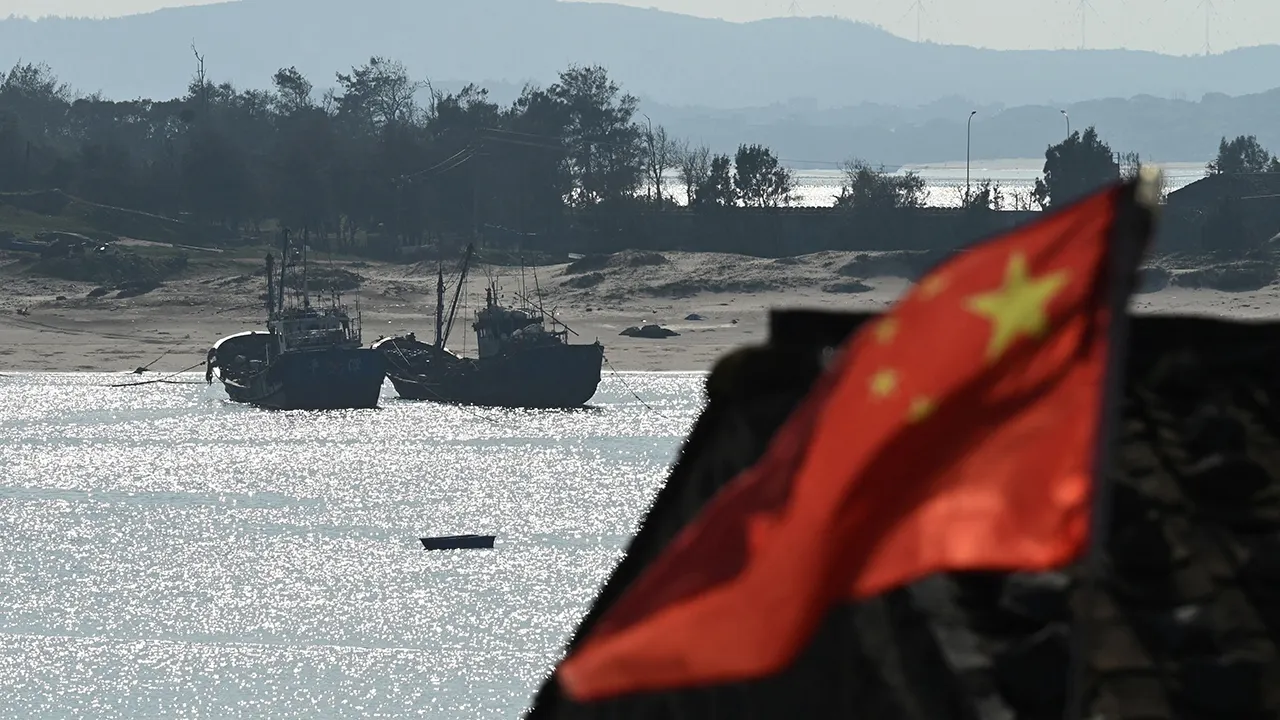
Last Christmas Eve, an unusual maritime event unfolded in the East China Sea when thousands of Chinese fishing vessels gathered in tight, linear formations, holding position for extended periods. The phenomenon repeated two weeks later, raising concerns among security experts about China’s expanding “gray zone” tactics in disputed waters.
Geospatial analysts first identified two large stationary formations involving approximately 1,400 and 2,000 fishing vessels. These flotillas forced cargo ships to reroute or carefully navigate between the thousands of stationary vessels that had ceased normal fishing activity.
“There have been proposals by defense experts in the United States that the U.S. Navy should treat China’s maritime militia as a real naval force,” said Holmes Liao, a defense expert currently serving as senior advisor for the Taiwan Space Agency. Liao suggested Taiwan should consider deploying surveillance drones or air patrols over these formations to demonstrate presence and reinforce deterrence.
“Taiwan has so far been very timid in response to PRC aggression,” Liao noted. “They may be fishing boats, but they are actually under the PLA’s command… part of the maritime militia.”
The U.S. Department of Defense has consistently described China’s People’s Armed Forces Maritime Militia (PAFMM) as a “state-organized, trained, and equipped” force that actively supports China’s navy and coast guard. While analysts at the Center for Strategic and International Studies have previously documented swarms of Chinese vessels in the South China Sea near contested reefs, the recent incidents highlight a significant expansion in both scale and scope.
These fishing vessels present a unique strategic challenge. They are inexpensive, numerous, and operate in a legally ambiguous status. When deployed en masse, they complicate navigation, create radar clutter, and raise operational risks for commercial shipping. Their civilian status conveniently allows Beijing to frame any incidents as either “rogue actions not sanctioned by authorities” or simple accidents.
The region surrounding Taiwan is already classified by maritime insurers and shipping firms as a “higher-risk environment,” meaning even temporary flotilla formations could influence shipping decisions and significantly affect both regional and global economies. The United States frequently cites freedom of navigation as justification for navy patrols in the Indo-Pacific, with State Department documents noting that the region “accounts for 60% of global GDP.”
Taipei-based security analyst Sasha Chhabra, however, warned of the risks China would face should it deploy civilian fishing vessels in an active conflict. “A U.S. Navy convoy could easily break through these lines, and the large commercial vessels that carry Taiwan’s much-needed imports would easily splinter most fishing vessels in a ramming incident.”
Chhabra noted historical precedent for Beijing using fishermen as “live bait” during conflicts. “In 1973, China used civilian fishing vessels to bait the South Vietnamese Navy into conflict and seize full control over the Paracels (islands),” he said. “But what worked against teetering South Vietnam in 1973 won’t work against the U.S. Navy.”
For Taiwan, the concern isn’t necessarily a single dramatic incident but rather cumulative pressure. Encounters between Taiwanese patrol vessels and Chinese fishing boats have grown more frequent around outlying islands and in parts of the Taiwan Strait, with vessels sometimes operating in coordinated groups that shadow or crowd Taiwanese ships.
Taiwan’s major ports serve as energy and industrial lifelines for the island. The southern port of Kaohsiung, for example, handles large volumes of LNG imports and petrochemical shipments. Even partial disruption or perceived instability in surrounding sea lanes could ripple through global supply chains and sharply increase costs.
Jason Wang, CEO of ingeniSPACE, the company that revealed the fishing fleets on their satellite systems, told Fox News Digital that despite Taiwan’s semiconductor advantage, China is winning in space. Wang emphasized that data fusion and satellite-based maritime awareness have become strategic necessities.
“Intelligence is deterrence without provocation. Intelligence ensures efficient targeted spending and is a force multiplier by shaping a more effective military force,” Wang said. “Taiwan, like all First Island Chain nations, must be prepared for a new kind of warfare.”
Security experts note that countries like Japan and South Korea have spent the last decade augmenting their satellite spy constellations with commercial satellites to “ensure sufficient coverage and revisit rates so that their leadership has the capability to distinguish both overt military and gray zone activity.”
The broader lesson is increasingly clear: sea control no longer depends solely on destroyers and submarines. In the immediate future, the most consequential maritime pressure may come not from warships but from vessels that appear, at first glance, entirely harmless.
Fact Checker
Verify the accuracy of this article using The Disinformation Commission analysis and real-time sources.

10 Comments
I’m curious to learn more about the role of China’s maritime militia and how it fits into the PLA’s overall military strategy. The use of fishing vessels for this type of coercive activity is an interesting tactic.
The idea of treating China’s maritime militia as a real naval force is an intriguing one. It speaks to the blurring of lines between civilian and military assets that Beijing has pursued in the maritime domain.
This is concerning. China’s use of its fishing fleet as a maritime militia to pressure Taiwan is a concerning tactic. Taiwan should consider more robust surveillance and deterrence efforts to counter these gray-zone maneuvers.
Agreed. Taiwan needs to be more assertive in responding to this type of PRC aggression. Deploying drones or air patrols over the fishing flotillas could be an effective way to demonstrate presence and reinforce deterrence.
This seems to be part of China’s broader strategy of ‘salami-slicing’ – using incremental, ambiguous actions to gradually assert control without triggering a major confrontation. The use of fishing vessels as a maritime militia is a clever tactic in this regard.
You’re right, this is classic gray-zone coercion. China is testing the limits of Taiwan’s and the international community’s response through these kinds of ambiguous, non-kinetic actions. Vigilance and a calibrated response will be key.
Taiwan’s ‘timid’ response to PRC aggression is understandable, given the power imbalance and risk of escalation. However, the article suggests Taiwan needs to be more proactive in demonstrating presence and deterrence, even if through non-kinetic means like surveillance drones.
Agreed. Taiwan faces a difficult balancing act, but demonstrating a willingness to actively counter these gray-zone tactics could be an important signal to China and the international community.
These large, coordinated flotillas of Chinese fishing vessels seem to be more about political signaling than actual fishing. It’s a clever way for China to exert pressure on Taiwan without resorting to overt military action.
You’re right, this is part of China’s broader ‘gray-zone’ strategy to incrementally assert control without crossing redlines. Taiwan will need to carefully calibrate its response to avoid escalation while still defending its sovereignty.