


Listen to the article
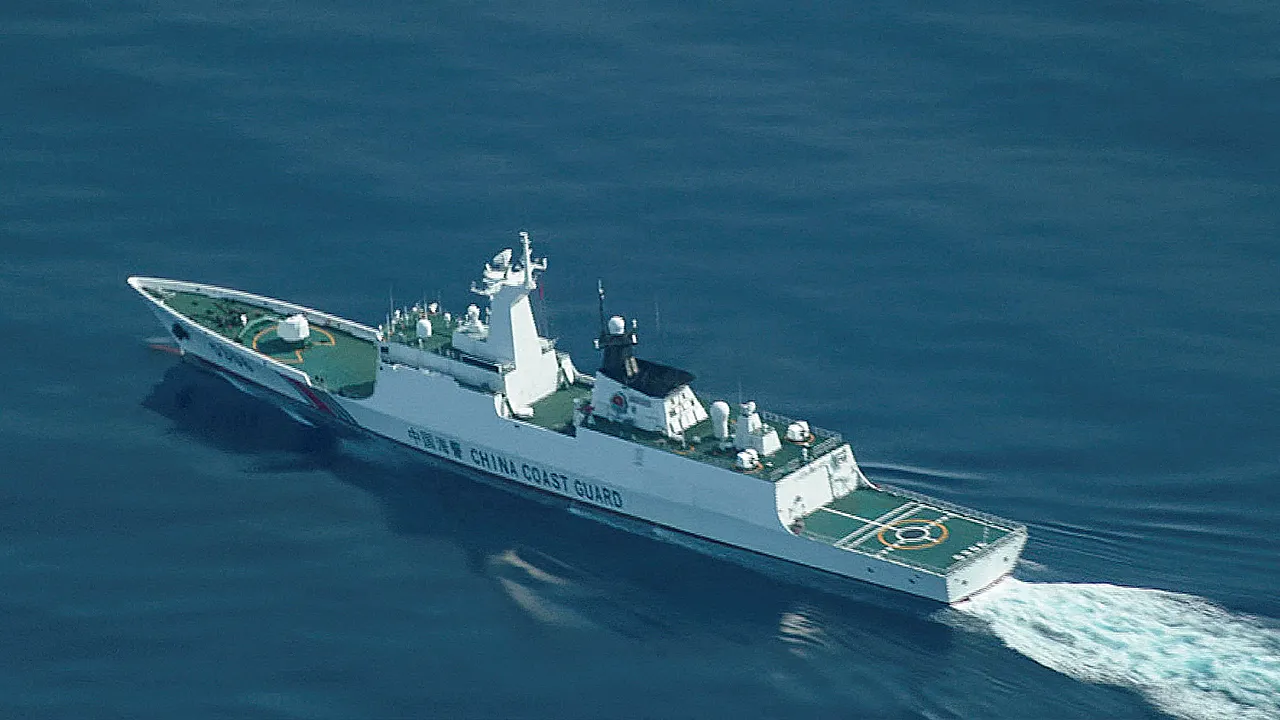
Chinese coast guard ships sailed through the Senkaku Islands on Sunday in what Beijing described as a “rights enforcement patrol,” escalating tensions with Japan amid diplomatic friction between the two Asian powers.
The maritime action comes as relations have deteriorated following newly elected Japanese Prime Minister Sanae Takaichi’s recent statements supporting Taiwan. Earlier this month, Takaichi pledged that Japan would respond militarily to any Chinese attack on Taiwan, a position that has provoked harsh reactions from Beijing.
“China Coast Guard vessel 1307 formation conducted patrols within the territorial waters of the Diaoyu Islands. This was a lawful patrol operation conducted by the China Coast Guard to uphold its rights and interests,” China’s coast guard said in an official statement. China refers to the disputed islands as Diaoyu, while Japan, which administers them, calls them Senkaku.
The territorial dispute over these uninhabited islands in the East China Sea has long been a flashpoint between the two countries, with both claiming sovereignty over the resource-rich area. While Japan has maintained administrative control since 1972, China has increasingly challenged this position through maritime incursions.
Beijing’s response to Takaichi’s November 7 statement on Taiwan has been swift and multi-pronged. Chinese officials summoned Japan’s ambassador for a formal complaint and issued travel warnings to Chinese citizens regarding Japan. The Chinese defense ministry also warned that any Japanese intervention would fail to protect Taiwan from what China considers an internal matter.
The diplomatic clash reached a particularly contentious point when China’s consul general in Osaka, Xue Jian, appeared to threaten violence against Takaichi in a social media post that was later deleted. The official wrote, “That filthy neck that barged in on its own–I’ve got no choice but to cut it off without a moment’s hesitation. Are you prepared for that?”
Japan’s Chief Cabinet Secretary Minoru Kihara condemned the statement as “extremely inappropriate” and confirmed that Tokyo had filed a formal protest. Kihara noted that Xue had made “multiple” inflammatory remarks previously and called for China to take disciplinary action against the diplomat.
Far from reprimanding the official, China’s Foreign Ministry spokesperson Lin Jian defended the consul general, telling reporters that Xue’s comments were a response to Takaichi’s “wrongful and dangerous” statements about Taiwan. Lin accused Japan of “refusing to face up to its historical responsibilities” and warned Tokyo against interfering in what Beijing considers internal Chinese affairs.
The Taiwan issue remains at the heart of this diplomatic tension. China considers the democratic self-governed island part of its territory and has never renounced the use of force to bring it under Beijing’s control. Taiwan’s defense ministry has reported increased Chinese military activity in recent days, saying it detected 30 Chinese military aircraft and seven naval ships operating in the vicinity of the island.
The situation reflects the broader geopolitical dynamics in the Indo-Pacific region, where China’s growing assertiveness is challenging the established security architecture. Japan, a key U.S. ally, has been strengthening its defense posture in response to perceived threats from China, particularly regarding Taiwan.
The Senkaku/Diaoyu dispute adds another layer of complexity to these tensions. The islands, while uninhabited, hold strategic value due to their location and potential undersea resources. Regular Chinese coast guard patrols in these waters serve as a constant reminder of Beijing’s territorial claims.
For Prime Minister Takaichi, who took office last month, the firm stance on Taiwan represents a continuation of Japan’s increasingly assertive foreign policy. Her predecessor, Fumio Kishida, had already signaled stronger support for Taiwan amid concerns about China’s regional ambitions.
As tensions continue to simmer, the international community is closely watching how this diplomatic row might affect regional stability and economic relations between two of Asia’s largest economies.
Fact Checker
Verify the accuracy of this article using The Disinformation Commission analysis and real-time sources.

11 Comments
The Senkaku/Diaoyu Islands have long been a flashpoint between China and Japan. Both countries have legitimate claims to the resource-rich area. Hopefully the situation can be resolved through diplomatic channels rather than military posturing.
You raise a good point. Deescalating tensions and finding a peaceful solution should be the priority for all parties involved.
The ongoing dispute over the Senkaku/Diaoyu Islands is a complex geopolitical issue with deep historical roots. China’s latest coast guard patrols are an escalation that could have far-reaching consequences for regional stability. Diplomatic solutions should be the priority for all parties involved.
Tensions in the East China Sea seem to be ratcheting up again with the latest Chinese coast guard patrols around the Senkaku/Diaoyu Islands. This longstanding territorial dispute has major implications for the regional balance of power. Diplomatic restraint and compromise will be essential to prevent further escalation.
China’s coast guard patrols in the waters around the Senkaku/Diaoyu Islands are a provocative move that risks inflaming tensions with Japan. Both countries have legitimate historical and strategic interests in the region. Carefully managing this dispute through diplomatic channels will be crucial.
The Senkaku/Diaoyu Islands dispute is a complex geopolitical issue with significant economic and strategic implications. I’m curious to see how Japan and other regional powers respond to these latest coast guard patrols by China.
Interesting development in the ongoing dispute over the Senkaku/Diaoyu Islands. China’s coast guard patrols are likely intended to assert its territorial claims, but this could further inflame tensions with Japan. Careful diplomacy will be crucial to avoid any unintended escalation.
The Senkaku/Diaoyu Islands dispute is a delicate issue that has simmered for decades. China’s coast guard patrols are a concerning development that could destabilize the region. I hope the parties involved can find a peaceful resolution through dialogue and compromise.
I agree, de-escalation and diplomacy should be the top priority here. Unilateral actions by any party will only serve to heighten tensions further.
The territorial dispute over the Senkaku/Diaoyu Islands is certainly a complex and sensitive issue. It’s concerning to see the Chinese coast guard escalating tensions in the region. I wonder how Japan will respond to these latest patrols.
This latest development in the Senkaku/Diaoyu Islands dispute is concerning. China’s coast guard patrols are a clear assertion of its territorial claims, but they also risk provoking a strong response from Japan. Careful management of this issue through diplomatic channels is essential to prevent further escalation.