


Listen to the article
Putin and Xi Hold Virtual Summit, Strengthen Strategic Partnership Amid Global Tensions
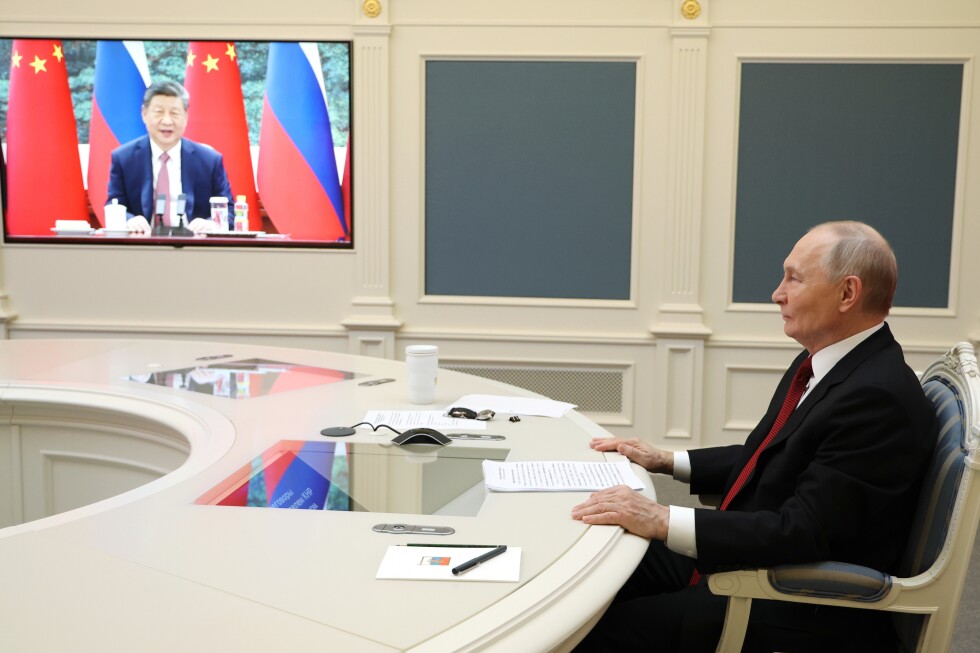
Russian President Vladimir Putin and Chinese leader Xi Jinping reinforced their countries’ growing alliance during a video conference Wednesday, discussing economic cooperation, shared geopolitical interests, and their complex relationships with the United States.
The virtual meeting comes as Beijing has solidified its position as Moscow’s primary trading partner while Russia seeks relief from Western sanctions. Despite international pressure on China to distance itself from Russia over the Ukraine conflict, the two nations have continued deepening their partnership.
“I would like to once again assure you of firm support for our shared efforts to ensure the sovereignty and security of our countries, our socio-economic welfare and the right to choose our own development path,” Putin stated in his opening remarks broadcast on Russian state television.
Xi echoed this sentiment, proposing to work with Putin on “a new blueprint for China-Russia relations” on what he noted was the first day of spring according to the Chinese calendar—a day symbolizing new beginnings. Putin responded warmly, declaring that “any season is springtime in Russia-China relations.”
The call highlights the strategic importance of Sino-Russian relations in a shifting geopolitical landscape. Many Western nations have been cultivating closer ties with China, with recent visits to Beijing by British and Canadian prime ministers and an anticipated visit from Germany’s chancellor in February. These diplomatic overtures come as Western countries reassess their relationships following tensions with the Trump administration over tariffs and other issues.
Putin praised the countries’ expanding cooperation in energy, nuclear technology, industrial initiatives, and space research. He specifically highlighted the mutual visa-free travel arrangement recently implemented between Russia and China, which has already boosted tourism and business exchanges.
According to Yuri Ushakov, Putin’s foreign affairs adviser, the two leaders “support each other on key issues concerning national interests in the face of external challenges.” The call resulted in concrete plans for future engagement, with Putin accepting Xi’s invitation to visit China twice this year—once in the first half of the year and again in November for the Asia-Pacific Economic Cooperation summit in Shenzhen.
The leaders also discussed their respective relationships with the United States, with Ushakov noting their views “practically coincide.” Both leaders addressed former U.S. President Donald Trump’s “Board of Peace” initiative, though China has not directly commented on it beyond acknowledging an invitation to participate. Meanwhile, Putin has expressed openness to considering the proposal and even suggested allocating $1 billion from frozen Russian assets in the U.S. to Gaza reconstruction efforts.
Regarding U.S. relations, Ushakov revealed that both leaders see potential opportunities in engaging with the Trump administration. Xi reportedly supported the ongoing negotiations between Russian, Ukrainian, and U.S. representatives in Abu Dhabi, where a second round of talks began Wednesday.
Nuclear arms control was another topic of discussion, with Putin noting Washington’s lack of response to his proposal for a one-year extension of the New START treaty, which expired Thursday. Putin emphasized Russia would act “in a balanced and responsible manner” while remaining “open to searching for ways of negotiations to ensure strategic stability.”
The leaders also addressed several regional issues, including Taiwan, Iran, Venezuela, and Cuba. Putin reaffirmed Russia’s support for Beijing’s “One China Principle” regarding Taiwan, while both leaders expressed their commitment to maintaining cooperation with Caracas and Havana.
The timing of the call was particularly significant, occurring just before Xi’s scheduled conversation with Trump. The former U.S. president later revealed they discussed Iran, U.S.-China trade relations, Taiwan, and his planned visit to Beijing in April.
As global power dynamics continue to evolve, the strengthening Moscow-Beijing axis represents a significant counterbalance to Western influence, with both nations increasingly coordinating their approaches to international challenges and opportunities.
Fact Checker
Verify the accuracy of this article using The Disinformation Commission analysis and real-time sources.

16 Comments
It’s intriguing to see these two geopolitical heavyweights deepen their relationship, especially in light of their complex histories and differing ideological underpinnings. This could signal a significant shift in the international balance of power.
This is an important partnership between China and Russia, as they seek to strengthen ties amid global tensions. It will be interesting to see how their cooperation on economic and geopolitical issues evolves going forward.
You’re right, their deepening alliance is certainly noteworthy. Balancing relationships with the US and other powers will be a key challenge for both countries.
The China-Russia partnership is a complex and multifaceted one, with implications that extend well beyond their bilateral ties. Its impact on global commodity markets, energy security, and the broader balance of power will be crucial to follow.
Absolutely. This alliance has the potential to reshape various industries and supply chains, particularly in the mining, energy, and natural resource sectors. Its long-term consequences warrant close observation.
This virtual summit highlights the shared interests and growing alignment between China and Russia, even as they navigate their relationships with the United States and other Western powers. It will be intriguing to see how this partnership evolves in the coming years.
This meeting between Xi and Putin underscores the strategic importance they place on their countries’ relationship. The willingness to coordinate on economic and geopolitical issues despite Western pressure is a bold move.
This meeting between Xi and Putin underscores the strategic importance they place on their countries’ relationship, even in the face of international pressure. Their willingness to collaborate on economic and geopolitical issues is a bold move with potential consequences for global markets and security.
The deepening ties between China and Russia are a notable development, with potential ramifications for global commodity markets, energy security, and the overall balance of power. Their ability to coordinate on these issues could have far-reaching implications.
Agreed. This alliance is poised to reshape various industries and supply chains, particularly in the mining, metals, and energy sectors. Its long-term impact on the global economy and geopolitics will be crucial to monitor.
Strengthening economic and political ties between China and Russia is a savvy move, allowing them to better withstand Western sanctions and pressure. However, it also raises concerns about the stability of the global order.
You make a fair point. This alliance could undermine the established global system, presenting both opportunities and risks that will require careful management by all parties involved.
The growing partnership between China and Russia is a fascinating development, with potential implications for global commodity markets and energy security. I’m curious to see how their cooperation evolves in the mining and natural resource sectors.
Excellent point. Their joint efforts in areas like mining, metals, and energy could have major ramifications for global supply chains and pricing. It’s an important dynamic to monitor closely.
China and Russia seem determined to chart their own course, independent of Western influence. Their ability to coordinate on global issues could have far-reaching implications.
Indeed, this strategic partnership is a significant counterweight to US and European power. It will be crucial to monitor how it shapes international dynamics in the years ahead.