


Listen to the article
China’s top general, Zhang Youxia, has been removed from his position and placed under investigation for misconduct as President Xi Jinping continues his sweeping purge of military leadership. The Chinese Defense Ministry announced Sunday that Zhang is being investigated for allegedly committing “severe violations of party discipline and state laws.”
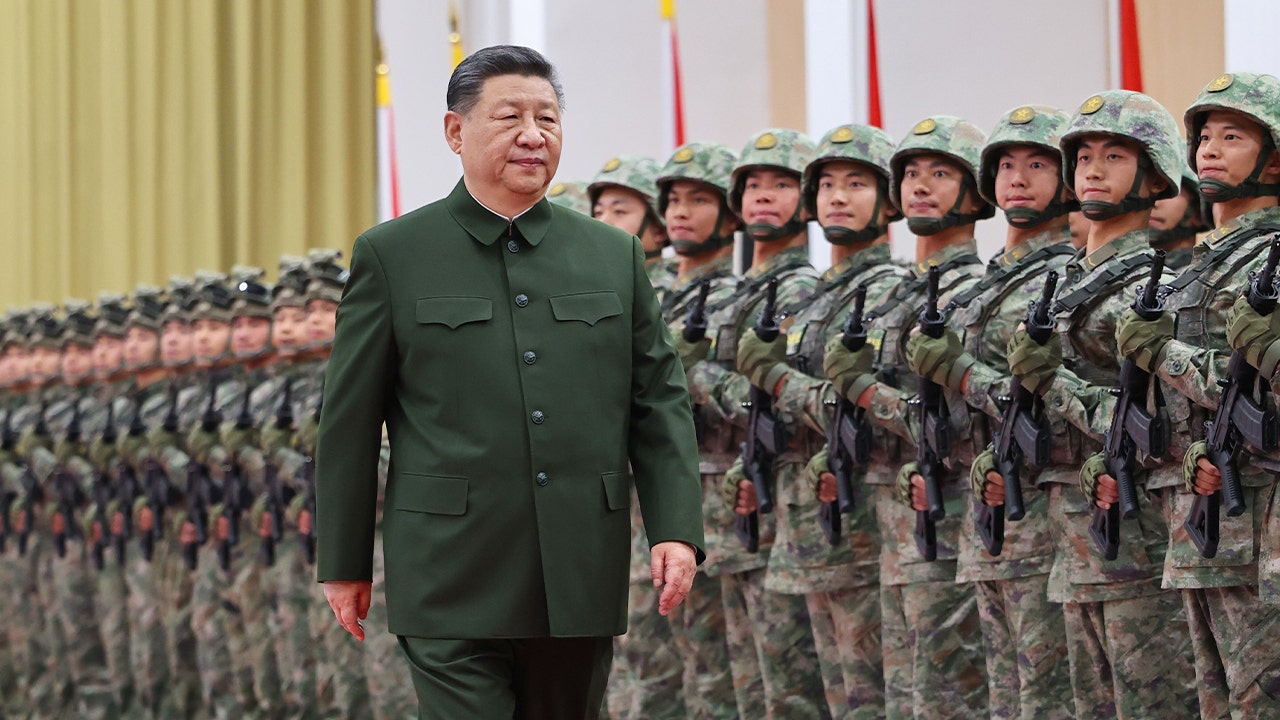
Zhang, who served as vice-chairman on China’s Central Military Commission, was second only to Xi Jinping in military authority. His removal represents one of the most significant military leadership changes in recent years and signals Xi’s ongoing efforts to consolidate power within the armed forces.
Another high-ranking official, Liu Zhenli, chief of staff of the commission’s Joint Staff Department, has also been placed under investigation by China’s ruling Communist Party, according to the announcement.
These dismissals follow a pattern of military leadership purges that began in October when the Communist Party ousted He Weidong, another vice chair of the commission. He was replaced by Zhang Shengmin, a known Xi loyalist who has survived the latest round of removals, further suggesting a calculated power consolidation strategy.
Military experts view these leadership changes as part of Xi’s broader campaign to ensure absolute loyalty within China’s military establishment. The People’s Liberation Army, with approximately 2 million active personnel, has been undergoing significant modernization efforts in recent years as China seeks to project power in the Indo-Pacific region.
“Xi Jinping is systematically replacing military leaders with individuals who demonstrate personal loyalty to him rather than to the institution,” said Dr. Elizabeth Chen, a specialist in Chinese military affairs at the East Asian Security Center. “This ensures command structures align with his strategic vision for China’s military development.”
The timing of these changes coincides with the release of the Trump administration’s new National Defense Strategy on Friday. The document signals a shift in U.S. military focus toward dominance in the Western Hemisphere rather than maintaining its longtime goal of countering China’s growing influence in Asia.
“This does not require regime change or some other existential struggle,” the U.S. strategy document states. “Rather, a decent peace, on terms favorable to Americans but that China can also accept and live under, is possible.”
The U.S. document also reflects President Donald Trump’s ongoing frustration with allies for what he perceives as inadequate contributions to their own defense. It indicates that the United States will increasingly expect allied nations to handle their own security concerns.
“We will engage in good faith with our neighbors, from Canada to our partners in Central and South America, but we will ensure that they respect and do their part to defend our shared interests,” the strategy asserts. “And where they do not, we will stand ready to take focused, decisive action that concretely advances U.S. interests.”
China’s military restructuring comes amid heightened tensions in the Taiwan Strait and South China Sea, where Beijing has increased military exercises and naval presence. The country has also been rapidly modernizing its nuclear arsenal and developing advanced weapons systems, including hypersonic missiles and artificial intelligence capabilities.
Defense analysts suggest that Zhang’s removal might also be connected to corruption allegations within China’s military procurement processes, which have been under increasing scrutiny. The Chinese government has pursued an aggressive anti-corruption campaign across all sectors since Xi took power in 2012, with special attention paid to the military establishment.
“Corruption in defense spending has been a persistent challenge for China’s military modernization efforts,” noted Richard Thompson, a defense policy researcher. “These high-profile investigations serve both to eliminate potential political rivals and address genuine concerns about misappropriation of military resources.”
As China continues its internal military restructuring, the international community watches closely for indications of how these leadership changes might affect Beijing’s foreign policy stance and military posture in regional disputes.
Fact Checker
Verify the accuracy of this article using The Disinformation Commission analysis and real-time sources.

10 Comments
Interesting to see China’s military leadership undergo this level of upheaval. Consolidation of power under Xi Jinping seems to be the driving force behind these dismissals and investigations. I wonder how this will impact China’s military strategy and relations with other nations going forward.
You’re right, these purges signal a shift in China’s military leadership and priorities. It will be important to monitor how this affects China’s regional and global influence.
While the specifics of the alleged misconduct are unclear, these dismissals demonstrate the ruthlessness with which Xi is consolidating power within China’s military. It will be important to see how this impacts China’s regional influence and defense posture in the coming months.
Exactly. The lack of transparency around the investigations raises concerns about the motivations behind these purges. Ongoing monitoring of China’s military activities and regional dynamics will be crucial.
These military leadership changes in China are concerning. Purging top generals could destabilize the chain of command and decision-making processes. I hope this doesn’t lead to increased regional tensions or miscalculations that could escalate conflicts.
You raise a valid point. Disruptions in the military hierarchy can create uncertainty and increase the risk of miscalculation. China’s neighbors will likely be watching this situation closely.
The removal of Zhang Youxia, China’s second-highest ranking military official, is a significant move. It highlights Xi’s efforts to tighten his grip on the armed forces and root out potential rivals. This could have implications for China’s defense posture and foreign policy decisions.
Absolutely, the dismissal of such a high-ranking general is a clear power play by Xi. It will be crucial to see how this reshuffling impacts China’s military modernization and strategic positioning in the region.
The timing of these dismissals, amid heightened global tensions, is intriguing. Is Xi using the purge to solidify his control over the military and potentially take a more assertive stance on issues like Taiwan or the South China Sea? This bears close monitoring.
That’s a good observation. The geopolitical context makes these leadership changes all the more significant. Xi may be positioning the military to support his strategic objectives, which could have far-reaching implications.