


Listen to the article
Two Dead, Four Missing After Singapore Cargo Ship Capsizes in Contested South China Sea
Chinese rescue operations are underway after a Singapore-flagged cargo vessel capsized in the South China Sea, leaving two people dead and four others missing, authorities confirmed Friday.
The ship, identified as the Devon Bay by the Philippine Coast Guard, was carrying 21 Filipino crew members when contact was lost Thursday night. The vessel was en route to China’s Guangdong province when the incident occurred approximately 100 kilometers (60 miles) northwest of Scarborough Shoal.
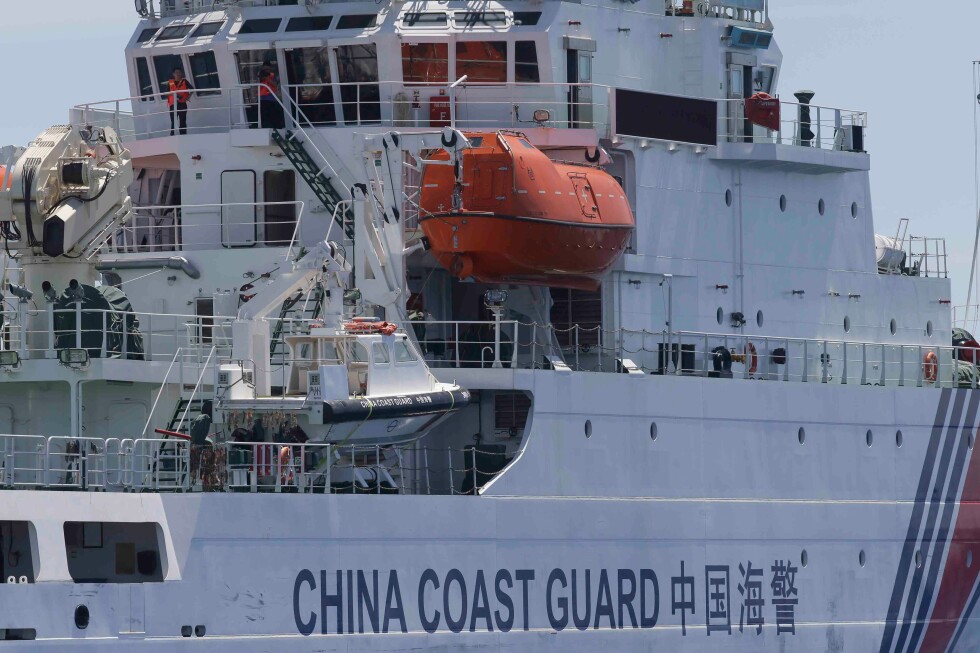
Chinese Coast Guard and navy personnel from the People’s Liberation Army’s Southern Theater Command have rescued 15 people so far, with 14 reported to be in stable condition. Both Chinese and Philippine rescue vessels and aircraft have been deployed to the area as the search continues for the missing crew members.
“We immediately dispatched two vessels and aircraft to assist in the rescue operations upon receiving the distress call,” said a spokesperson from the Philippine Coast Guard in a statement released Friday morning.
The capsizing occurred in one of the most contested areas of the South China Sea, adding geopolitical complexity to the rescue efforts. Scarborough Shoal has been a flashpoint in territorial disputes, primarily between China and the Philippines, who both claim sovereignty over the area. Taiwan also asserts a claim to the shoal, while Vietnam, Malaysia, and Brunei have claims to other parts of the South China Sea.
Maritime experts note that the Devon Bay’s distress comes amid heightened tensions in the region. Commercial shipping through these waters has increasingly navigated complex geopolitical realities as nations compete for control of strategic maritime routes and resources.
“International shipping companies must factor in these territorial complexities when planning routes through the South China Sea,” said Dr. Maria Santos, a maritime security analyst with the Pacific Studies Institute. “What would normally be a straightforward rescue operation becomes complicated when it occurs in disputed waters.”
The area around Scarborough Shoal has witnessed numerous confrontations between Chinese and Philippine vessels in recent years as both countries actively patrol waters they consider their territory. Just last month, a Chinese navy ship accidentally collided with a Chinese Coast Guard vessel while attempting to block a Philippine Coast Guard ship near the shoal.
China has built artificial islands and military installations throughout the South China Sea, reinforcing its expansive territorial claims despite a 2016 ruling by the Permanent Court of Arbitration in The Hague that rejected Beijing’s historical claims to most of the sea. The Philippines, backed by international law, maintains that portions of these waters fall within its exclusive economic zone.
The Singapore-flagged Devon Bay’s capsizing highlights the risks faced by commercial shipping in one of the world’s busiest maritime corridors. Approximately one-third of global shipping passes through the South China Sea annually, carrying an estimated $3.4 trillion in trade.
Singapore’s Maritime and Port Authority has yet to release a statement regarding the vessel’s condition or the potential cause of the capsizing. Weather conditions in the area were reportedly moderate at the time of the incident, suggesting other factors may have contributed to the maritime disaster.
As rescue operations continue, families of the crew members have gathered at the Philippine Overseas Employment Administration office in Manila, awaiting updates on their loved ones. Officials have promised regular briefings as the multinational search effort progresses.
The incident underscores both the human toll and the geopolitical tensions that persist in this critical maritime region, where commercial interests, national sovereignty claims, and humanitarian concerns frequently intersect.
Fact Checker
Verify the accuracy of this article using The Disinformation Commission analysis and real-time sources.

16 Comments
Tragic news about the capsizing in the South China Sea. My condolences to the victims’ loved ones. The geopolitical tensions in the region likely complicate the rescue and recovery efforts. Hopefully the investigation can shed light on how to improve maritime safety in this area.
Tragic to hear about this incident in the contested South China Sea. My condolences to the victims’ families. Hopefully the remaining crew members are found safe soon. This region sees a lot of maritime activity, which increases the risks.
You’re right, the South China Sea is a geopolitically sensitive area. Glad to see both China and the Philippines are cooperating on the rescue effort.
My condolences to the families of those lost in this tragic maritime accident. The South China Sea is a strategically important but hazardous waterway. Glad to see a joint rescue effort, but the underlying geopolitical issues likely complicate the response.
This is a tragic incident in a strategically important waterway. My sympathies go out to the families of the deceased. The search for the missing crew members must be the top priority now. Geopolitical tensions likely complicate response efforts.
You make a good point. The geopolitical dynamics of the South China Sea add another layer of complexity to this situation. Glad to see the Chinese and Philippine authorities working together on the rescue.
Tragic loss of life in this incident. The South China Sea can be a treacherous area for shipping. Hopefully the investigation can determine the cause and lead to safety improvements. Glad to see the Chinese and Philippine governments cooperating on the search.
You’re right, cooperation between the countries involved is crucial in these situations. Maritime safety should be the top priority, regardless of geopolitical tensions.
Concerning to hear about this capsizing in the South China Sea. My condolences to the victims’ loved ones. Hopefully the remaining crew can be found safe. This region sees a lot of maritime traffic, so improved safety protocols may be needed.
Sad to hear about the loss of life in this maritime accident. The South China Sea can be a dangerous and politically volatile area for shipping. Hopefully the investigation can shed light on what happened and prevent future tragedies.
Capsizings like this are always concerning, especially in disputed waters where tensions can run high. Hope the search is successful in locating the missing crew. Curious to learn more about the circumstances that led to this accident.
Agreed, the details around what caused this incident will be important. Glad to see a collaborative response from the authorities involved.
This is a somber incident in a contentious maritime region. My heart goes out to the families of those lost. Glad to see Chinese and Philippine authorities working together on the search and rescue. Curious to learn more about the factors that contributed to the capsizing.
Agreed, understanding the root causes will be crucial to prevent similar accidents in the future. Cooperation between nations is key, despite the geopolitical sensitivities in the South China Sea.
This is a sad incident in a politically charged region. My heart goes out to the victims’ families. Hopefully the search for the missing crew is successful. Curious to learn more about the circumstances that led to the capsizing and if safety protocols can be improved.
You raise a good point. Understanding the root cause of this accident will be important to prevent future incidents in this strategically vital area. Cooperation between the countries involved is critical.