


Listen to the article
Tensions Escalate as China and Japan Exchange Accusations Over Radar Incident
Beijing has intensified its diplomatic confrontation with Tokyo following Japan’s claim that Chinese fighter jets aimed fire-control radar at Japanese F-15s near Okinawa, an action Japanese officials described as “dangerous” and “extremely regrettable.”
During a meeting with German counterpart Johann Wadephul in Beijing, Chinese Foreign Minister Wang Yi declared that “Japan is threatening China militarily,” a stance he characterized as “completely unacceptable.” The comments come amid growing friction between the two East Asian powers.
Wang specifically criticized Japanese Prime Minister Sanae Takaichi, accusing her of “trying to exploit the Taiwan question—the very territory Japan colonized for half a century, committing countless crimes against the Chinese people—to provoke trouble and threaten China militarily.” He added that Japan, as a World War II “defeated nation,” should exercise greater caution in its regional posture.
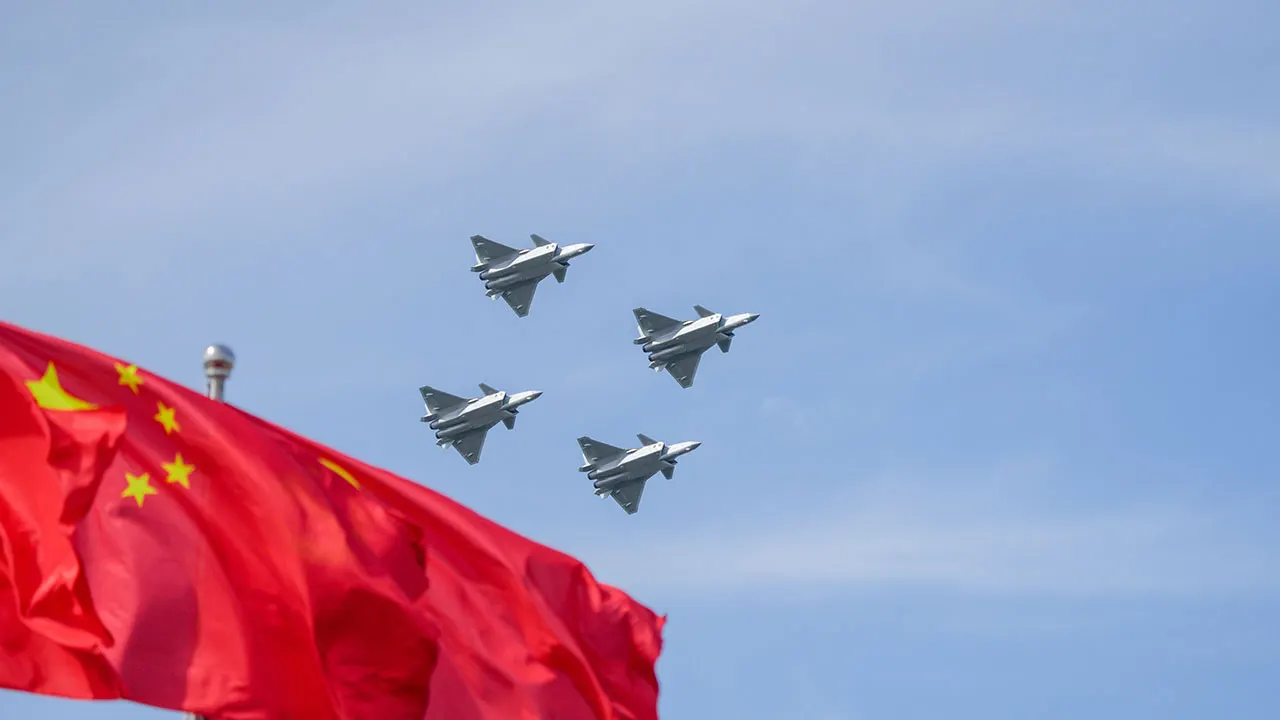
The confrontation that sparked this latest diplomatic row reportedly occurred on December 6, when Chinese J-15 fighter jets operating from the aircraft carrier Liaoning twice locked radar on Japanese F-15s over international waters near Japan’s Okinawa islands. Military experts note that radar-locking is considered a hostile act in aerial encounters, as it typically precedes missile launches.
“These radar illuminations are a dangerous act that goes beyond what is necessary for the safe flight of aircraft,” Prime Minister Takaichi told reporters, adding that Japan had formally protested to China over the incident.
Japan’s government has rejected China’s counter-narrative, with Chief Cabinet Secretary Minoru Kihara stating that Japanese Self-Defense Force fighters “were maintaining a safe distance during their mission” and denying Chinese accusations that its jets obstructed Chinese operations.
The radar incident follows Takaichi’s controversial remarks in early November, when she told the Japanese parliament that a Chinese attack on Taiwan could constitute a “survival-threatening situation” for Japan that might trigger a military response under Japan’s 2015 security laws. Beijing condemned those comments as “egregious” and accused Tokyo of severely interfering in China’s internal affairs, warning of “serious consequences” if the statements were not withdrawn.
Chinese officials and state media have since portrayed Takaichi as exaggerating an external threat to justify Japan’s military modernization and closer alignment with Taiwan. Chinese spokespeople have also accused Japan of “hyping up” the radar incident itself and “deliberately making a false accusation” to increase tensions, according to statements in Chinese state media outlets like People’s Daily.
China expert Gordon Chang told Fox News Digital that these recent events signal serious danger: “China, with Saturday’s radar-lock incidents against Japan and other belligerent acts recently, looks like it wants to start a war. In any event, these incidents could easily spiral into war, especially because China cannot act constructively or deescalate.”
Chang added, “China has not been able to get Prime Minister Takaichi to back down, so its choices are to accept its humiliation or ramp up the crisis. It will ramp up. China is now proving Takaichi right: Beijing is creating a ‘survival-threatening situation’ for Japan.”
The escalating tensions come as Japan continues to strengthen its defense capabilities and deepen security ties with the United States and other regional partners, moves that China has consistently criticized. Meanwhile, Beijing has expanded its naval and air force operations in the East China Sea, including areas near Japanese territory.
Regional security analysts warn that the increasingly hostile rhetoric, combined with dangerous military encounters, raises the risk of miscalculation in a region already fraught with territorial disputes and historical grievances. The incident highlights the fragile security situation in East Asia, where competing territorial claims and military buildups have created a volatile environment.
For Japan, the radar incident reinforces concerns about China’s increasingly assertive military posture, while for China, Japan’s alignment with the United States and statements regarding Taiwan represent unacceptable challenges to its core interests and territorial claims.
Fact Checker
Verify the accuracy of this article using The Disinformation Commission analysis and real-time sources.

14 Comments
The radar incident between China and Japan is a concerning development that highlights the fragility of the relationship between these two major powers. Both sides seem to be taking a firm, unyielding stance, which could lead to a further escalation of tensions in the region. Diplomatic efforts to de-escalate the situation are crucial.
You’re absolutely right. The stakes are high, and the risk of miscalculation or unintended conflict is significant. Cooler heads must prevail, and both sides need to engage in substantive dialogue to find a peaceful resolution to this dispute.
This radar incident is just the latest chapter in the long-running tensions between China and Japan. Both sides appear to be digging in and ratcheting up the rhetoric, which is a worrying development. Hopefully, they can find a way to de-escalate the situation through diplomatic means.
I share your concern. These two nations have a complex history and competing interests in the region, but open communication and compromise will be essential to prevent this from spiraling into a dangerous confrontation.
This radar incident highlights the ongoing tensions between China and Japan over territorial and maritime disputes. With both sides accusing the other of military provocation, it’s a worrying development that could have wider repercussions in the region.
You’re right, this is a highly sensitive issue that goes beyond just the specific incident. Maintaining open lines of communication and finding diplomatic solutions will be crucial to prevent further escalation.
This radar incident seems to be the latest flashpoint in the long-simmering territorial disputes between China and Japan. With both sides accusing the other of military provocation, it’s a concerning development that could have wider regional implications.
Absolutely. The stakes are high, as these two major powers jockey for influence in the Asia-Pacific region. Diplomatic de-escalation is crucial to prevent an unintended conflict.
The exchange of accusations between China and Japan over this radar incident is concerning. Both sides seem to be taking a hardline stance, which could lead to a dangerous escalation of tensions in the region. Diplomatic efforts to de-escalate the situation are critical.
Absolutely. The risk of miscalculation or unintended conflict is high when tensions are this high between major powers. Cooler heads must prevail if they want to find a peaceful resolution to this dispute.
Tensions between China and Japan are certainly escalating over this radar incident. Both sides seem to be taking a hardline stance and trading accusations. It will be interesting to see if diplomatic efforts can de-escalate the situation before it spirals further.
You’re right, the rhetoric is quite heated on both sides. Cooler heads will need to prevail if they want to avoid a dangerous military confrontation.
It’s troubling to see China and Japan exchanging such harsh rhetoric over this radar incident. Both sides have valid security concerns, but they need to find a way to address them through dialogue rather than escalating tensions.
I agree, the rhetoric is concerning. These two nations have a complex history, but open communication and compromise will be essential to prevent the situation from spiraling out of control.