


Listen to the article
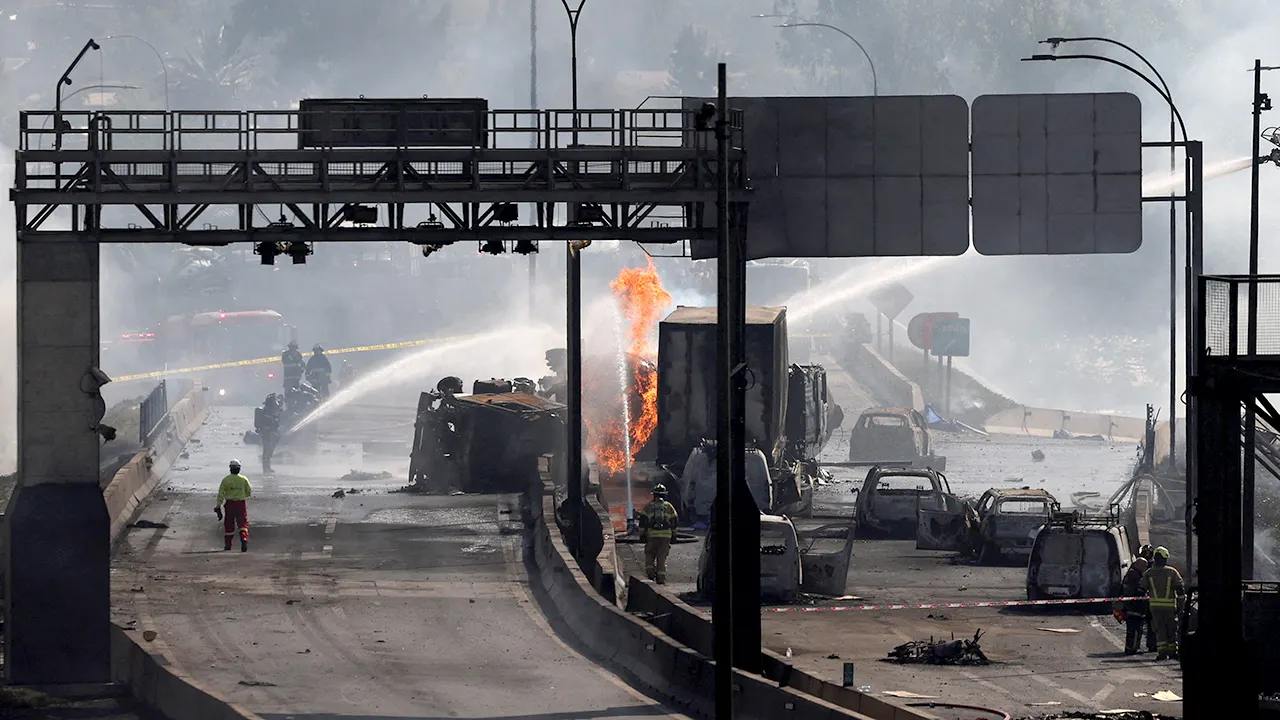
A deadly liquid gas truck explosion rocked Santiago, Chile, on Thursday, leaving four people dead, 17 injured, and a trail of destruction that damaged at least 50 vehicles. According to local authorities, the incident occurred when a truck transporting liquid gas overturned and exploded in the capital city.
The powerful blast sent shockwaves through the surrounding area, with officials reporting that its effects were felt up to 650 feet from the epicenter. Dramatic aerial images from the scene showed firefighters battling intense flames while rows of parked cars in a nearby lot were completely incinerated by the explosion.
Chilean President Gabriel Boric addressed the tragedy on social media, writing: “Government teams are deployed and working together with the competent institutions to protect the population due to the smoke in the area.” He added, “My solidarity and condolences to the families and loved ones of the people who unfortunately died in this tragedy, and much strength to the injured so that they have a speedy recovery.”
The human toll extends beyond the four fatalities, with five of the 17 injured people reported to be in serious condition, according to Claudio Orrego, governor of the Santiago metropolitan region. Medical teams are working to provide care for all victims as the community grapples with the sudden disaster.
Prosecutors have launched an investigation to determine the exact cause of the accident. While liquid gas transportation is common in urban areas, this incident highlights the potential dangers associated with transporting hazardous materials through densely populated regions.
The explosion represents one of the more significant industrial accidents in Chile in recent years. The South American nation, known for its robust mining industry and developing energy sector, maintains transportation safety regulations for hazardous materials, though Thursday’s incident may prompt calls for regulatory review.
Liquid gas, primarily composed of propane and butane, is widely used throughout Chile for heating and cooking, particularly in residential areas without access to natural gas infrastructure. Tanker trucks regularly transport these pressurized gases throughout the country’s urban centers.
The timing of the explosion occurred during a period of regular weekday activity in Santiago, potentially contributing to the significant vehicle damage and casualties. Local businesses and residents in the affected area were evacuated as emergency crews secured the scene.
Environmental concerns have also been raised regarding air quality in the vicinity, with authorities monitoring the smoke plume that rose from the accident site. Residents in nearby neighborhoods were advised to remain indoors as a precaution until air quality assessments could be completed.
Chile’s emergency response protocols were immediately activated following the blast, with specialized hazardous materials teams joining firefighters at the scene to contain the situation and prevent secondary explosions or fires.
As the investigation continues, this incident serves as a sobering reminder of the inherent risks associated with transporting dangerous goods through urban environments, and may lead to enhanced safety protocols for hazardous material transportation throughout Chile and the broader region.
Fact Checker
Verify the accuracy of this article using The Disinformation Commission analysis and real-time sources.

10 Comments
This is a terrible tragedy. My condolences to the families of those who lost their lives and wishes for a full recovery to the injured. Safety must be the top priority for transporting hazardous materials like liquid gas.
Agreed. Strict safety protocols and oversight are critical when handling dangerous goods. Hopefully this incident leads to a thorough review and improvements to prevent future such accidents.
This is a horrific accident. My sincere sympathies to the families who lost loved ones and wishes for a full recovery to the injured. The safe transport of hazardous materials must be an absolute priority. I hope the authorities conduct a thorough probe into the cause and take robust measures to prevent similar tragedies in the future.
Wow, what a devastating explosion. It’s shocking to see the extent of the damage to the surrounding vehicles. My heart goes out to the victims and their loved ones. I hope the authorities conduct a comprehensive investigation to determine the cause and take appropriate measures to enhance safety.
Absolutely. Proper maintenance, training, and emergency response procedures are essential for these types of hazardous materials transport operations. Lessons learned from this tragedy must be applied to strengthen regulations and oversight.
This is a devastating loss of life. My heart goes out to the families and loved ones of those killed in this tragic accident. Liquid gas transportation clearly requires stringent safety protocols to prevent such catastrophic events. I hope the authorities conduct a comprehensive review to identify any gaps and implement necessary safeguards.
What a horrific incident. My condolences to the victims’ families. This underscores the need for robust safety measures and emergency preparedness when transporting volatile substances. I hope a thorough investigation uncovers the root cause and leads to improvements that prevent similar accidents in the future.
Agreed. Proper training, equipment maintenance, and contingency planning are critical for hazardous materials transport. Regulatory bodies must hold operators to the highest safety standards to protect the public.
How utterly tragic. My deepest condolences to the victims’ families and friends. This incident demonstrates the need for ironclad safety procedures when handling hazardous materials like liquid gas. I hope the investigation provides answers and leads to concrete steps to enhance safety and emergency preparedness in the transportation of dangerous goods.
This is a tragic event. My sympathies to the families and friends of those who perished. I hope the injured make a full recovery. Ensuring the safe transportation of hazardous materials like liquid gas should be a top priority for the Chilean government and industry.