


Listen to the article
Deadly Wildfires Ravage Central and Southern Chile, Forcing Mass Evacuations
Firefighters in Chile are battling multiple forest fires that have killed at least 19 people and forced 50,000 residents to flee their homes as flames sweep through central and southern regions of the South American nation.
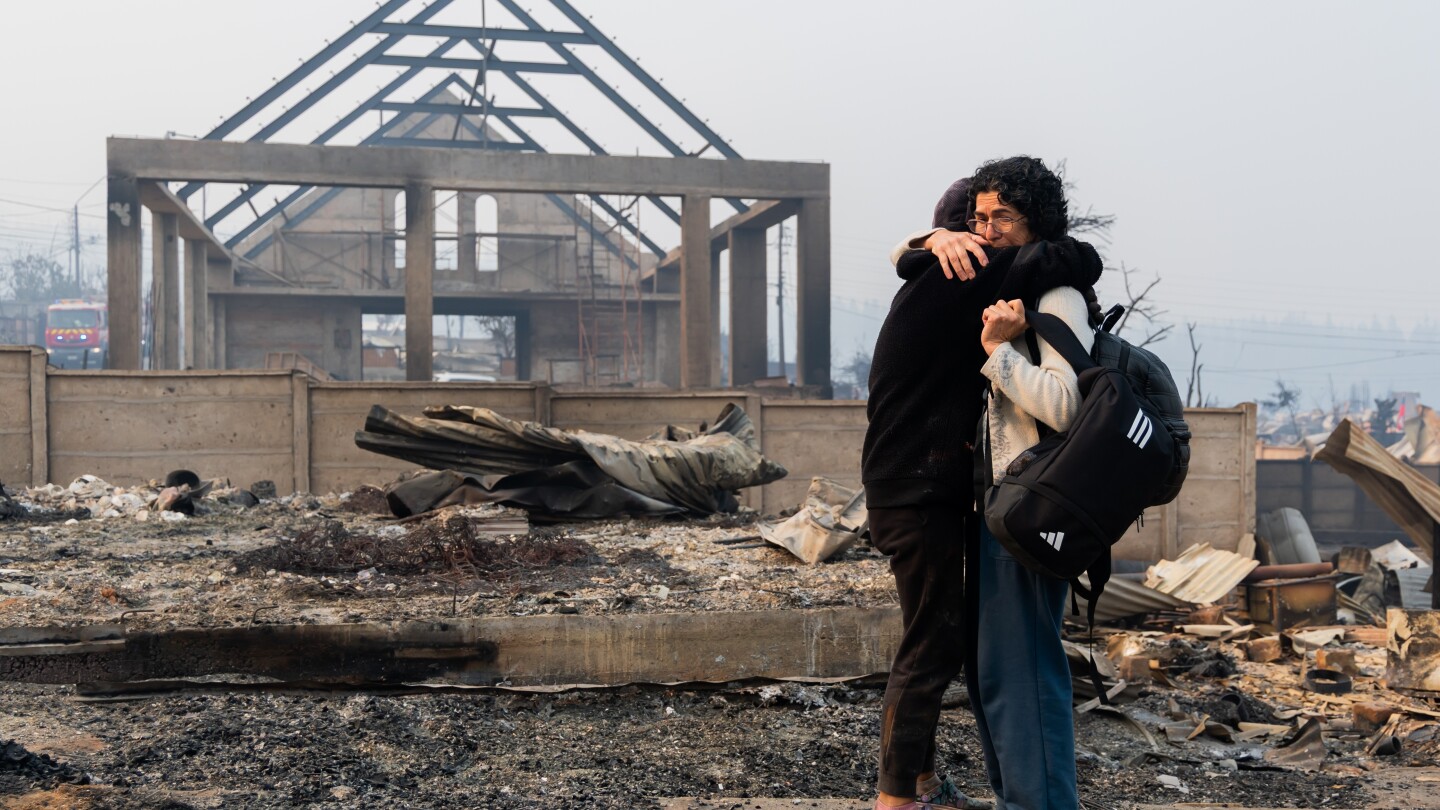
As of Monday, 15 wildfires remained active after the blazes began Sunday, according to Chile’s National Service for the Prevention of Disasters. The fires have cut a destructive path through the landscape, destroying homes, vehicles, infrastructure and vast areas of forest land.
Chilean President Gabriel Boric declared a state of catastrophe in the central Biobio and neighboring Ñuble regions on Sunday, enabling greater coordination with military forces to combat the spreading fires. The emergency response comes as flames have consumed at least 30,000 hectares – an area roughly five times the size of Manhattan.
“Controlling fires of this magnitude, with unfavorable weather conditions like high temperature, wind, and a lack of humidity is a tremendously difficult job,” Boric said during a Monday press conference.
The president expressed gratitude to several Latin American nations that have sent assistance, including Mexico, Argentina and Brazil, which have contributed firefighters and emergency supplies to help contain the disaster.
The human toll has been matched by extensive property damage. Officials report that 325 homes have been completely destroyed, while another 1,140 have sustained significant damage. Thousands of displaced residents now face an uncertain future as authorities work to establish temporary shelters and coordinate relief efforts.
Police have launched investigations into the causes of the fires. President Boric noted during his Monday briefing that “99% of cases” of wildfires in Chile result from human activity, suggesting that many of the current blazes may have been preventable.
Chile is particularly vulnerable to wildfires during its summer months, when high temperatures and dry conditions create ideal conditions for fires to spread rapidly. The country’s geography, with its mix of urban areas, agricultural regions, and forested mountains, can make containment especially challenging when multiple fires erupt simultaneously.
The current disaster is among the deadliest fire events in recent years, though it has not yet reached the devastating scale of the 2024 coastal wildfires that killed at least 130 people. Those fires, which tore through Chile’s central coastal region, marked the nation’s deadliest natural disaster since the catastrophic 2010 earthquake that claimed hundreds of lives.
Climate experts have pointed to Chile’s increasing vulnerability to extreme fire events, as climate change contributes to longer dry seasons and more volatile weather patterns. The country has been working to improve its disaster response capabilities following previous catastrophic events, but the scale of the current emergency is testing those systems.
Emergency management officials continue to monitor the evolving situation closely, particularly in areas where populated regions meet forested landscapes. Evacuation orders remain in effect for dozens of communities, and authorities are urging residents in threatened areas to comply immediately with evacuation instructions.
International aid organizations have begun mobilizing resources to assist with both immediate emergency response and longer-term recovery efforts. The economic impact will likely be significant for affected regions, where agriculture, forestry, and tourism are key industries.
As firefighting efforts continue, the government has pledged support for affected communities and indicated that recovery plans will be developed once the immediate crisis has been contained.
Fact Checker
Verify the accuracy of this article using The Disinformation Commission analysis and real-time sources.

16 Comments
The destruction of homes, vehicles, and infrastructure is truly devastating. I hope the emergency crews are able to quickly bring the fires under control and begin the recovery process. Protecting public safety must be the top priority.
Climate change is likely exacerbating the frequency and intensity of wildfires like these. It’s crucial that we continue to invest in resilient infrastructure and sustainable land management practices to mitigate the impacts of these disasters.
This is a tragic situation in Chile. Wildfires of this scale can be incredibly devastating, both in terms of loss of life and destruction of property and natural resources. It’s encouraging to see the government taking emergency measures to coordinate the response and combat the spread of the flames.
I hope the firefighters and emergency crews are able to gain control of the situation soon and limit further damage. Wildfires like these are only expected to become more frequent and severe due to climate change.
Massive evacuations on this scale must be incredibly challenging to coordinate. I appreciate the Chilean government’s efforts to mobilize military resources to combat these destructive wildfires. Protecting public safety has to be the top priority.
Hopefully the fires can be brought under control before causing even more devastation. My heart goes out to all those who have lost their homes or livelihoods as a result of this disaster.
Losing 30,000 hectares of land to the fires is a massive blow. I hope the firefighters and emergency crews can soon gain the upper hand and start to contain the spread. Protecting human life has to be the top priority.
My heart goes out to the families and communities that have been forced to evacuate their homes. Dealing with the aftermath of such a devastating event must be incredibly challenging.
Losing 19 lives to these wildfires is heartbreaking. My condolences go out to the families and communities impacted. I’m curious to know if the fires were exacerbated by drought conditions or other environmental factors in the region.
It’s good to see neighboring countries offering assistance. International cooperation can be critical in effectively managing large-scale natural disasters like this.
The scale of these wildfires is truly staggering. I’m curious to know if there were any underlying factors that may have contributed to the rapid spread, such as drought conditions or changes in regional weather patterns.
It’s good to see the Chilean government taking decisive action by declaring a state of emergency. Effective coordination and resource allocation will be critical for combating these destructive fires.
Nineteen lives lost is a heavy toll. My condolences to the families and communities affected. Wildfires of this magnitude can be incredibly difficult to control, even for the most experienced firefighters.
The assistance from neighboring countries is much-needed and appreciated. International cooperation is essential for responding to large-scale natural disasters that transcend borders.
These wildfires are a stark reminder of the importance of effective forest management and fire prevention strategies, especially in the face of climate change. I’m curious to learn more about the specific causes and factors that contributed to the rapid spread of the flames.
It’s admirable that neighboring countries are stepping up to provide assistance. International cooperation is crucial for responding to large-scale natural disasters like this.