


Listen to the article
The trouble started with a beautiful photo. Social media was soon awash with the lovely view of Japan’s snow-capped Mount Fuji looming over a red pagoda and the short-lived cherry blossoms that herald the approach of spring.
Tourists wanting a similar shot soon packed the peaceful town of Fujiyoshida at the foot of the mountain. The complaints were not far behind: chronic traffic jams, piles of litter, ill-mannered foreigners knocking on doors of private homes to borrow toilets, and tourists relieving themselves in front yards.
The situation became so unmanageable that officials in Fujiyoshida announced in February they were canceling this year’s annual cherry blossom festival, which ironically was established a decade ago to promote tourism.
What locals now call “tourism pollution” highlights a broader problem for Japan: as the country’s economic struggles deepen, officials eagerly seek the financial boost from increased tourism, even while local communities find themselves overwhelmed by the influx of foreign visitors.
“This area is primarily an ordinary residential neighborhood, where balancing tourism with the safety of people’s living environment has become difficult,” explained Masatoshi Hada, manager of the Fujiyoshida Economics and Environment Department. “We decided not to promote a festival that would invite more visitors.”
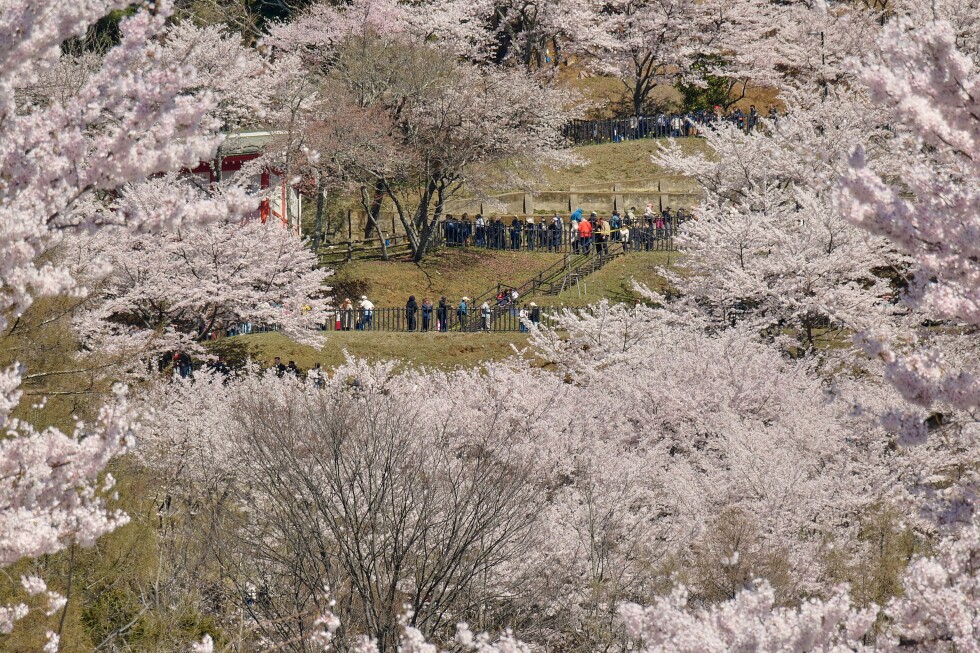
Despite the festival’s cancellation, foreign tourists still packed the area during peak cherry blossom season in early April. Narrow streets leading to the popular Arakurayama Sengen Park were jammed as visitors queued for a chance to capture the world-famous panoramic views.
In recent years, foreign tourists have exceeded 10,000 per day in the area, a volume that has “threatened residents’ daily lives,” according to a city statement released in February.
This phenomenon isn’t isolated to Fujiyoshida. Overtourism has affected other popular destinations across Japan, including Kyoto and Kamakura. In Kyoto, locals frequently complain about tourists with large suitcases clogging city buses and disrupting daily routines.
The “tourism pollution” crisis coincides with Japan’s rapidly growing population of foreign workers, brought in as the country’s native population dwindles and ages. This combination has fueled xenophobia in some communities, with Prime Minister Sanae Takaichi’s nationalistic government proposing tougher rules on foreigners.
Yet even as it promises to address overtourism concerns, the Japanese government aims to boost inbound tourism from the current level of 40 million to 60 million visitors annually by 2030, highlighting the tension between economic goals and community well-being.
Beginning April 1, at the start of the cherry blossom season, Fujiyoshida increased security personnel and restricted entry of tour buses and vehicles into the scenic neighborhood, requiring visitors to reach the park on foot.
Security guard Hiroaki Nagayama spends his days directing pedestrians away from congested areas, asking tourists to dispose of cigarette butts properly, and assisting lost visitors. “I’m struggling. I cannot communicate with them in Japanese. Some people buy food at stalls and leave litter behind,” Nagayama says. “I think what’s happening here is a typical example of overtourism.”
For longtime residents, the tourism boom has dramatically altered daily life. Hitoshi Mori, a 93-year-old who lives just blocks from a popular viewing spot, says having visitors is “good but annoying.” He now limits grocery shopping to once weekly due to the crowds.
Despite new signs ordering better behavior and hours-long queues for scenic spots, tourists remain enthusiastic about the experience. Lisa Goerdert from Paris noted the organization: “When they let you come in, you have like five minutes to take as many pictures as you can, and it was amazing.”
Other visitors, like Vicky Tran from Melbourne, Australia, found that while crowds prevented them from reaching the prime viewing areas for the pagoda with Mount Fuji and cherry blossoms, they still enjoyed the neighborhood and available views.
The surge in tourism has created divisions among residents. Some maintain quiet lives while others have capitalized on the opportunity by converting their yards into paid parking spaces or opening new shops and food stalls to serve visitors.
In a nearby shopping arcade that once featured many shuttered businesses, activity has revived after another viral social media photograph showed Mount Fuji looming over the street. Now tourists regularly stand in the roadway to capture similar images, often blocking traffic and frustrating drivers.
“I only hope the tourists respect our rules and manners,” says Masami Nakamura, who runs a decades-old school uniform shop with her husband. The sudden flood of visitors represents a significant adjustment “for people like us who are used to a quiet suburban lifestyle.”
Even those benefiting from increased business feel the strain. “I once almost hit a tourist who jumped into the street without looking,” said Kyoko Funakubo, a 60-year-old hotel employee who also sells Fuji-themed souvenirs part-time. Still, she sees positives in the transformation: “This place used to be almost abandoned, with many shuttered shops. But now, with many stores reopened or new shops that have opened, I feel good seeing this area come alive again.”
Fact Checker
Verify the accuracy of this article using The Disinformation Commission analysis and real-time sources.

12 Comments
The situation in Fujiyoshida highlights the need for better tourism planning and management, especially during peak seasons. Focusing on quality over quantity, and encouraging more responsible and respectful visitor behavior, could help mitigate the negative impacts.
Strict crowd control measures, improved infrastructure, and education campaigns may be necessary to address the issue of ‘tourism pollution’ around Mount Fuji.
The ‘tourism pollution’ problem in Fujiyoshida is a complex issue with no easy solutions. Promoting sustainable tourism practices while respecting the needs of local communities is an ongoing challenge for many destinations.
Careful planning, infrastructure investments, and visitor education campaigns could help mitigate the negative impacts of mass tourism in Fujiyoshida and similar areas.
It’s a shame to see a cherished cultural event like the cherry blossom festival have to be canceled due to the disruption caused by mass tourism. This is an issue many popular destinations are grappling with.
Striking a balance between promoting tourism and preserving the local way of life is an ongoing challenge that requires creative solutions and cooperation between authorities and communities.
It’s disappointing to hear that the cherry blossom festival had to be canceled due to the disruptive influx of tourists. This highlights the need for better tourism management, especially in popular destinations like those near Mount Fuji.
Authorities should work closely with local communities to find ways to balance the economic benefits of tourism with the need to preserve the quality of life for residents.
The situation in Fujiyoshida serves as a cautionary tale about the potential downsides of overtourism. While economic benefits are welcome, the wellbeing of local residents must be the top priority for policymakers.
Sustainable tourism strategies, including visitor caps, improved infrastructure, and public education campaigns, could help mitigate the negative impacts on Fujiyoshida and similar communities.
It’s a shame to hear that the cherry blossom festival had to be canceled due to the disruptive impact of overtourism. Finding the right balance between promoting tourism and preserving the local community’s quality of life is a tricky challenge many destinations face.
Hopefully the authorities can work with the local community to manage tourism in a more sustainable way going forward.