


Listen to the article
Iran Escalates Regional Attacks as U.S.-Israeli Campaign Intensifies
For years, Iran’s theocratic government warned it would blanket the Middle East with missile and drone fire if it felt its existence was threatened. Now, the Islamic Republic is doing exactly that.
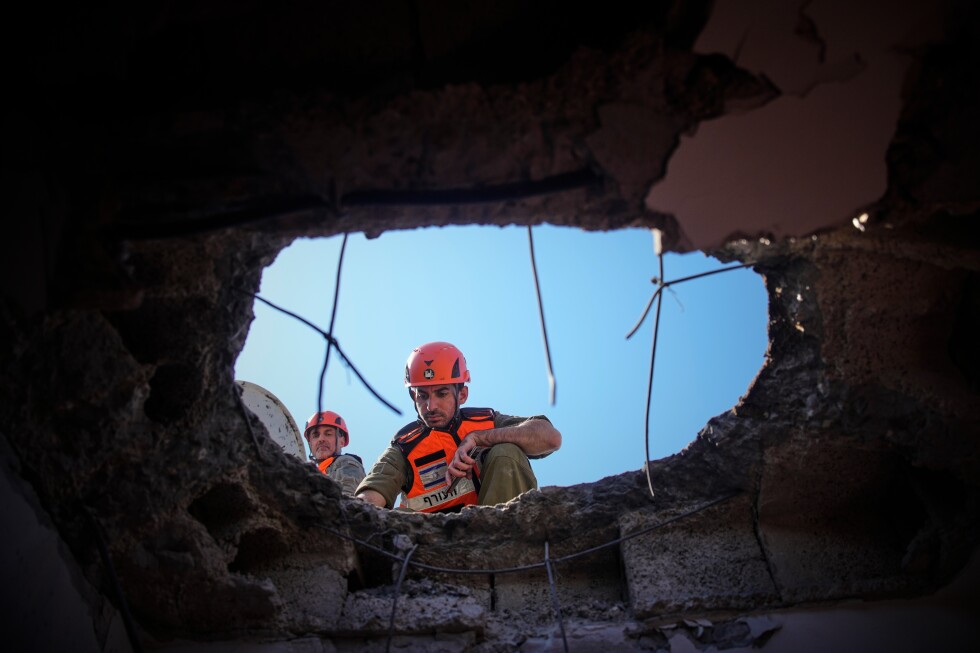
Since the United States and Israel launched a military campaign Saturday that killed Iranian Supreme Leader Ayatollah Ali Khamenei, Iran has unleashed thousands of drones and ballistic missiles targeting Israel, American military bases and embassies across the region, and energy facilities throughout the Persian Gulf. Iranian fire has even crossed its borders with Turkey and Azerbaijan.
Iran’s strategy appears straightforward: instill fear about the dangers of a widening conflict in hopes that allies of the United States will apply enough pressure to halt the military campaign. A protracted conflict, especially one resulting in American and Israeli casualties, could work in Iran’s favor by eroding public support for the war.
“Iran is upping the costs for this U.S. military campaign and regionalizing it from the get-go, as they promised they would if America restarts the war again with Iran,” said Ellie Geranmayeh, deputy director of the Middle East and North Africa program at the European Council on Foreign Relations.
This current escalation follows a 12-day conflict in June when the U.S. joined Israel in targeting Iranian nuclear enrichment sites. Iran has consistently maintained its nuclear program is peaceful, though officials had previously threatened to pursue nuclear weapons while enriching uranium to near-weapons-grade levels.
Iranian leaders appear to be calculating that by inflicting casualties and disrupting energy production – thereby driving up global oil and gas prices – America’s allies or an unsettled U.S. public will pressure President Donald Trump to de-escalate. “The Iranians are banking on basically out-stomaching him, and exhausting him and his allies to the point where they would basically have a diplomatic off-ramp,” Geranmayeh explained.
While Trump’s next moves remain unpredictable, he appears to be demanding “unconditional surrender to his demands, rather than a negotiated settlement,” according to Geranmayeh. The U.S. president outlined four objectives on Monday: destroying Iran’s missile capabilities, eliminating its navy, preventing it from obtaining nuclear weapons, and ensuring it cannot continue supporting allied armed groups in the region.
Despite being significantly outgunned, Iran has continued firing ballistic missiles into Israel, killing 11 people and disrupting life for millions of Israelis. The conflict has also claimed lives in Gulf Arab states, while the U.S.-Israeli campaign has killed 1,045 people in Iran. The widening regional conflict comes at a particularly challenging time for Israel, as its public shows little appetite for another protracted war after more than two years of fighting in Gaza. Similarly, polls suggest the American public remains wary of extended military engagements.
Perhaps most striking is Iran’s indiscriminate targeting of regional countries – including those that have traditionally maintained good relations with Tehran. Oman, which has mediated nuclear talks and maintained close ties with Iran for decades, has seen missiles strike its ports and nearby ships. Saudi Arabia, which established a détente with Iran in 2023, has had its Ras Tanura oil refinery repeatedly attacked and witnessed drone strikes on the U.S. Embassy in Riyadh – an embarrassing development for Crown Prince Mohammed bin Salman, who has cultivated close ties with Trump. Qatar and the United Arab Emirates have also faced multiple attacks.
As the conflict continues, a grim mathematical reality emerges. Iran possesses a finite arsenal of missiles and drones, while Gulf Arab states, the U.S., and Israel have limited interceptor missiles capable of downing incoming fire.
U.S. Defense Secretary Pete Hegseth reported Wednesday that thousands of Iranian missiles and drones have been “intercepted and vaporized” during the war. The Israeli military claims to have destroyed dozens of missile launchers. “In simple terms, we are focused on shooting all the things that can shoot at us,” explained U.S. Navy Adm. Brad Cooper, head of the American military’s Central Command.
A senior Western official, speaking anonymously to discuss intelligence matters, indicated that Iran has several days’ worth of ballistic missiles if it continues firing at current rates, though it may be reserving some for a longer campaign. Israeli military sources report fewer Iranian missiles being launched in recent days due to the airstrikes, though warning sirens continue to sound across Israel.
Iran’s strategy may ultimately be backfiring, according to Hasan Alhasan, a Middle East expert with the London-based International Institute for Strategic Studies. Rather than driving wedges between Gulf states and Western allies, the attacks appear to be “driving and pushing the Gulf states into closer alignment with the United States,” Alhasan said.
“The Gulf states can’t simply sit idle and continue absorbing indefinite attacks to their critical infrastructure and to civilians in Gulf cities,” he added. These nations are likely seeking both additional defensive weapons and diplomatic paths to end the conflict.
Iranian Foreign Minister Abbas Araghchi suggested to Al Jazeera that military units are now acting independently from central government control – potentially an excuse for increasingly erratic fire patterns. However, after a Wednesday phone call with Araghchi, Qatar’s prime minister, Sheikh Mohammed bin Abdulrahman Al Thani, “categorically rejected” Iran’s assertion that missiles were only targeting American interests and not Qatar itself – highlighting the growing regional tensions as the conflict intensifies.
Fact Checker
Verify the accuracy of this article using The Disinformation Commission analysis and real-time sources.

9 Comments
The chaos Iran is deliberately sowing across the Persian Gulf is deeply troubling. While they may believe this will pressure the US and its allies, the risks of this strategy are severe. Cooler heads must prevail, and all sides should pursue diplomatic avenues to de-escalate the situation.
It’s concerning to see Iran unleashing such a barrage of attacks across the region. While they may be aiming to pressure the US and its allies, this kind of destabilizing behavior is extremely dangerous and could easily spiral out of control. Cooler heads must prevail.
I agree, the potential for this conflict to escalate rapidly is very high. Iran seems willing to take significant risks, but that could backfire if it provokes a harsh response from the US and its partners.
This chaos in the Persian Gulf is certainly concerning. Iran’s strategy of escalating regional attacks seems risky, but perhaps they believe sowing instability will pressure the US and its allies to back down. It will be crucial to monitor the situation closely.
Iran’s strategy of sowing chaos through these attacks is worrying, as it could draw the region into a wider, protracted conflict. While their aim may be to pressure the US, the risks of such an approach are immense. Careful diplomacy is needed to de-escalate the situation.
This is a volatile and concerning situation. Iran’s willingness to launch attacks across the region is a major escalation, and the potential for further conflict is very real. All parties must exercise restraint and prioritize diplomatic solutions to avoid a disastrous outcome.
The conflict between the US, Israel, and Iran in the region is highly complex. Iran’s missile and drone strikes are certainly raising the stakes, but a protracted war could have dire consequences for all involved. Diplomacy and de-escalation should be prioritized.
Iran’s actions here are worrying, as the potential for the conflict to widen is very real. However, their stated goal of raising the costs for the US military campaign may be a risky gambit. Restraint and open communication between all parties is needed to avoid further escalation.
Iran’s campaign of regional attacks is extremely concerning and destabilizing. Their apparent goal of raising the costs for the US military campaign is a risky gambit that could easily spiral out of control. Restraint and open communication between all parties is crucial to avoid further escalation.