


Listen to the article
Britain’s Chagos Islands Deal with Mauritius Stalls After U.S. Withdraws Support
A long-negotiated agreement to transfer the Chagos Islands from British to Mauritian sovereignty has been indefinitely suspended after the Trump administration withdrew its support for the deal, British officials confirmed Saturday.
The agreement, which would have included a 99-year lease arrangement for the strategically vital Diego Garcia military base, has run out of time to complete its legislative process in the current session of Parliament. The bill is not expected to appear in the upcoming legislative agenda to be announced by King Charles III on May 13.
“Diego Garcia is a key strategic military asset for both the UK and the US,” the British government said in a statement. “Ensuring its long-term operational security is and will continue to be our priority — it is the entire reason for the deal. We continue to believe the agreement is the best way to protect the long-term future of the base, but we have always said we would only proceed with the deal if it has US support.”
The collapse of the agreement marks another point of tension between Prime Minister Keir Starmer’s government and the administration of President Donald Trump. In January, Trump reversed his initial support for the transfer, calling it “an act of GREAT STUPIDITY” in a social media post.
Simon McDonald, former head of Britain’s Foreign Office until 2020, said the government “had no other choice” but to shelve the agreement. “When the president of the United States is openly hostile, the government has to rethink. So this agreement, this treaty will go into the deep freeze for the time being,” he told the BBC.
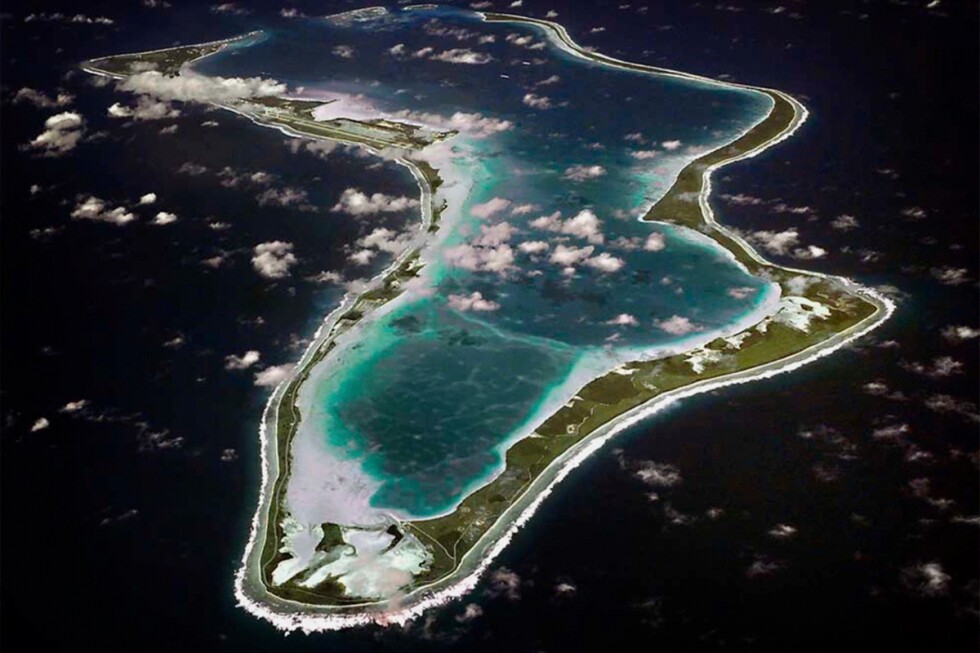
The remote archipelago of more than 60 islands, located in the Indian Ocean south of the Maldives, has been under British control since 1814. The Diego Garcia base has served as a crucial launching point for American military operations from Vietnam to Iraq and Afghanistan, and as a base for U.S. bombers in operations against Iranian targets.
Relations between the U.S. and U.K. have been strained in recent months over military cooperation. Starmer initially blocked American planes from using British air bases for strikes against Iran, though he later permitted the use of bases in England and on Diego Garcia for limited operations targeting Iranian missile sites. Trump subsequently criticized Starmer, saying he was “not Winston Churchill,” and mocked the Royal Navy.
The agreement with Mauritius had been presented by the Starmer government as a pragmatic solution to mounting international pressure. In recent years, both the United Nations General Assembly and the International Court of Justice have urged Britain to return the islands to Mauritius, citing decolonization principles. Under the deal, Britain would have formally transferred sovereignty while securing long-term operational control of the military facility.
Opposition to the agreement has been fierce from Britain’s Conservative Party and Reform UK, who argue that relinquishing sovereignty could potentially expose the islands to interference from China and Russia. These opposition parties reportedly encouraged the Trump administration to withdraw support.
The deal has also faced criticism from Chagossian communities. An estimated 10,000 islanders and their descendants, now living primarily in Britain, Mauritius, and the Seychelles, have expressed concern that they weren’t adequately consulted. Many were forcibly displaced from Diego Garcia between the 1960s and 1970s to make way for the military base and have fought unsuccessfully in UK courts for decades for the right to return.
British officials maintain they still hope the agreement can be revived, though any progress now appears contingent on securing renewed American support. In the meantime, the sovereignty dispute will likely continue in international forums, with Mauritius pressing its claim and Britain maintaining its position that the military base’s security remains paramount.
Fact Checker
Verify the accuracy of this article using The Disinformation Commission analysis and real-time sources.

17 Comments
Interesting development in the long-running dispute over the Chagos Islands. The US withdrawing support for the transfer deal with Mauritius is a setback, but protecting the strategic Diego Garcia military base seems to be the priority for the UK government.
The US likely wants to maintain control over Diego Garcia, a critical military asset in the Indian Ocean. This could complicate any future transfer of the islands to Mauritius.
The Chagos Islands issue highlights the geopolitical tensions between the UK, US, and Mauritius. Protecting the Diego Garcia military base appears to be the overriding concern, even if it means delaying a transfer of the islands’ sovereignty.
Withdrawing support for the Chagos Islands transfer deal is a strategic move by the US to preserve its military influence in the region. The UK’s priority of securing the Diego Garcia base seems to override concerns about the islands’ sovereignty.
This is a complex issue with competing interests at play. It will be interesting to see if the UK and US can find a way to resolve the dispute with Mauritius in the future.
The Chagos Islands dispute is a long-standing and complicated issue, and the US’s withdrawal of support for the transfer deal with Mauritius underscores the strategic importance of the Diego Garcia military base. The UK’s priority of protecting this asset seems to outweigh concerns about the islands’ sovereignty.
The collapse of the Chagos Islands transfer deal is a setback, but not entirely unexpected given the US’s interest in maintaining its military presence on Diego Garcia. This geopolitical tug-of-war is likely to continue.
The collapse of the Chagos Islands transfer deal is a disappointing outcome, but the US and UK’s unwillingness to relinquish control of the strategically important Diego Garcia base is understandable from a military perspective, even if it is problematic from a sovereignty standpoint.
This issue highlights the complex balance between geopolitical interests and self-determination. It will be interesting to see if a compromise can be found in the future.
The US’s withdrawal of support for the Chagos Islands transfer deal is a clear indication of the strategic value of the Diego Garcia military base. The UK’s priority of securing the base’s long-term future appears to have taken precedence over the islands’ sovereignty.
The Chagos Islands issue has been contentious for decades. It’s not surprising the US is reluctant to give up influence over the strategically important Diego Garcia base. This deal seems to have hit a roadblock without American backing.
The UK and US appear unwilling to relinquish control of the Chagos Islands, despite international pressure. Protecting the military base takes precedence over the islands’ sovereignty.
The collapse of the Chagos Islands transfer deal is a setback, but not surprising given the strategic importance of the Diego Garcia military base to the US and UK. Protecting their interests seems to take precedence over the islands’ sovereignty.
This highlights the difficult balance between geopolitical considerations and addressing historical injustices. It will be interesting to see how this issue evolves in the future.
This is an unfortunate development in the long-running dispute over the Chagos Islands. The US’s withdrawal of support for the transfer deal with Mauritius indicates the strategic importance of Diego Garcia outweighs concerns about the islands’ sovereignty.
It will be interesting to see if the UK and US can find a way to address Mauritius’s claims to the Chagos Islands while still maintaining control of the Diego Garcia military base.
The Chagos Islands deal appears to have stalled due to the US’s reluctance to give up influence over the Diego Garcia military base. This is a complex geopolitical issue with no easy solution in sight.