


Listen to the article
Voters in the Central African Republic headed to the polls Sunday in a pivotal election that could strengthen Russia’s influence in the region, as incumbent President Faustin Archange Touadéra seeks a third term in office.
The unprecedented electoral event combines presidential, legislative, regional, and municipal ballots, with approximately 2.4 million registered voters participating in this significant democratic exercise for the conflict-affected nation.
Touadéra, who has positioned himself as a champion of stability and peace, faces six challengers, including former prime ministers Anicet-Georges Dologuélé and Henri-Marie Dondra. However, the main opposition coalition, the Republican Bloc for the Defense of the Constitution, announced in October it would boycott the election, citing an uneven political landscape.
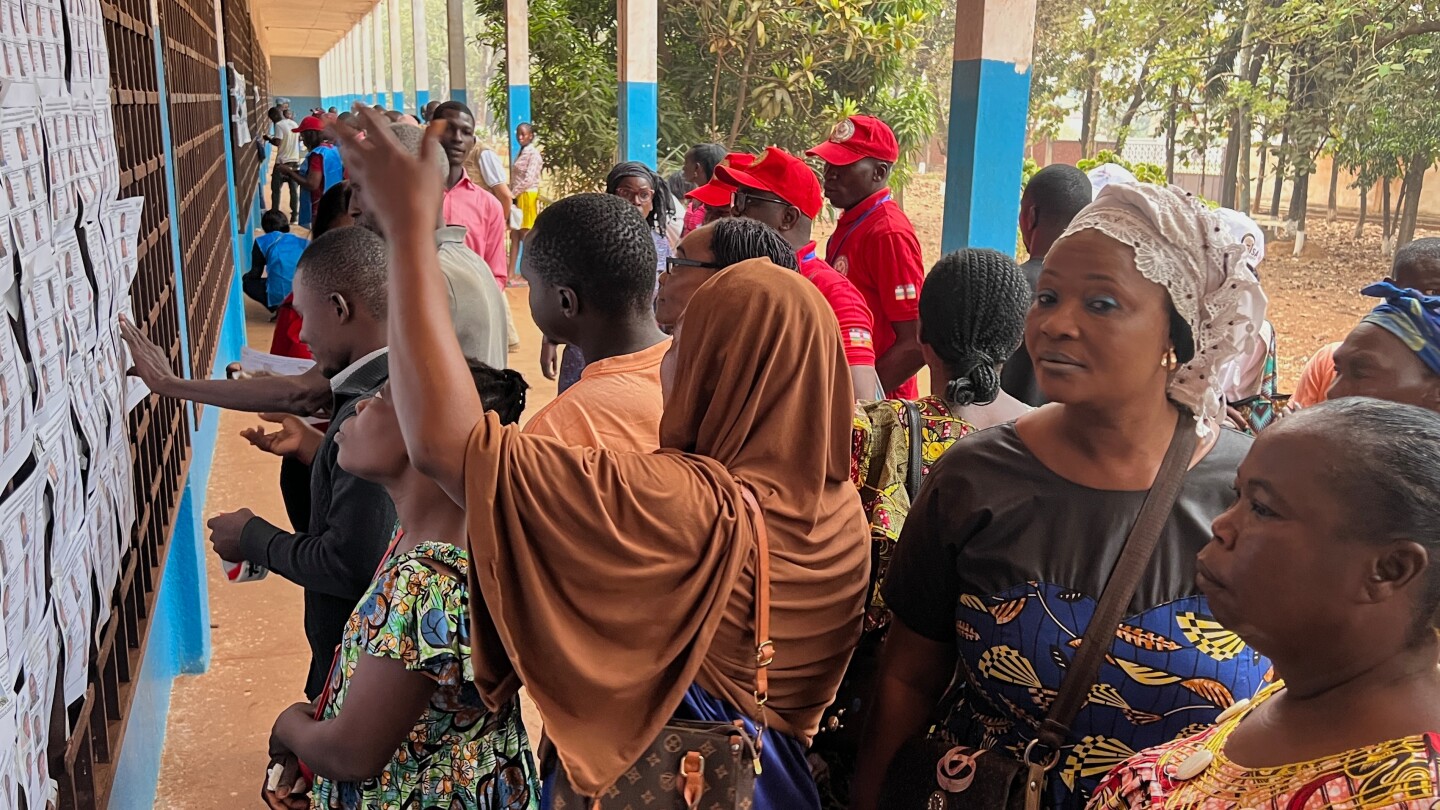
Polling stations experienced initial delays, with voting starting an hour late in some districts of Bangui, the capital. Voters reported difficulties finding their names on electoral rolls or locating their assigned voting stations.
“When we arrived, no one was ready. With these delays, we risk voting until 8 p.m.,” said Barthélemy Wadenguende, a voter in Bangui.
The election takes place against a backdrop of Russia’s growing influence in the country. The Central African Republic was among the first African nations to welcome Russian-backed forces, initially from the Wagner Group, to help combat armed rebel groups and protect government authorities. This year, tensions have risen as Moscow seeks to replace Wagner mercenaries with its military unit Africa Corps.
Analysts believe Touadéra is heavily favored to win after consolidating control of state institutions in recent years. A third term would likely strengthen Russia’s security and economic interests in the mineral-rich but impoverished nation, even as Moscow faces international scrutiny over its mercenaries’ roles across Africa.
“Our country has suffered greatly from brutal regime changes, a cycle that repeats itself every ten years. I call on the people of the Central African Republic to choose the stability of institutions and a prosperous Central African Republic,” Touadéra told The Associated Press in a recent interview.
Meanwhile, Dologuélé, considered Touadéra’s strongest challenger and a candidate in both the 2016 and 2020 elections, has promised to revitalize the country’s struggling economy.
“President Touadéra destroyed everything. Our programme is a solid summary to get the country out of poverty. What country is this that produces nothing and exports almost nothing, except beer? We must revive the economy,” he said.
Security remains voters’ primary concern in the Central African Republic, which has been plagued by fighting between government forces and armed groups since 2013, when predominantly Muslim rebels seized power and ousted then-President François Bozizé. A 2019 peace agreement only partially reduced the violence, with several of the 14 signatory armed groups later withdrawing from the accord and resuming hostilities.
The United Nations peacekeeping mission, MINUSCA, has provided crucial electoral logistics support. Currently maintaining approximately 14,000 military personnel and 3,000 police members, the mission will help secure election sites. In November, the UN Security Council extended the mission for another year but announced plans to scale down its presence due to budget constraints.
“Because of the peace deals, United Nations peacekeeping efforts and security support from Wagner and from the Rwandans, the country is in a more secure place than it was during the last electoral cycle in 2020,” noted Lewis Mudge, the Central Africa director at Human Rights Watch.
The Electoral Authority faced significant logistical challenges in delivering election materials across the vast, densely forested nation with poor infrastructure and limited access to remote communities.
Provisional results are expected within a week. If no presidential candidate secures more than 50% of the vote, a runoff election will be held.
This election represents a critical juncture for the Central African Republic, potentially cementing Russia’s strategic foothold in central Africa while determining the trajectory of security and economic development in a nation that has struggled with poverty and conflict for decades.
Fact Checker
Verify the accuracy of this article using The Disinformation Commission analysis and real-time sources.

13 Comments
The role of Russia in this election is concerning. As a key ally of the incumbent president, Russia’s influence could undermine the integrity of the process if not handled carefully.
Agreed. The international community should closely monitor the situation and ensure that the election is free, fair, and reflects the true will of the CAR’s citizens.
The role of Russia in this election will be closely scrutinized. As a key ally of the incumbent president, Russia’s influence could undermine the integrity of the process if not handled carefully.
This election in the CAR will be closely watched as it could further strengthen Russia’s influence in the region. Curious to see if the incumbent president can secure a third term despite the boycott by the main opposition coalition.
This election has significant implications for the CAR’s future and its relations with the international community. I hope the authorities can address the reported issues and deliver a credible outcome.
Delays and issues with voter rolls are never a good sign. The authorities need to act quickly to address these problems and restore public confidence in the electoral process.
This election will be a crucial test for the CAR’s democracy. I hope the authorities can ensure a fair and transparent process, and that the outcome reflects the will of the people.
It’s concerning to hear about the voting delays and issues with electoral rolls. A fair and transparent election process is crucial for the CAR to move forward. I hope the authorities can address these problems quickly.
Agreed. Ensuring a free and fair election is critical, especially given the country’s history of instability. Voters deserve confidence in the democratic process.
The CAR faces many challenges, from conflict to poverty. A stable, democratically-elected government could help address these issues and improve the lives of the people. I’ll be following this election closely.
Absolutely. A peaceful, transparent election that reflects the will of the people is essential for the CAR to move forward and build a more prosperous future.
Given the country’s history of instability, it’s important that this election is seen as legitimate by both the people of the CAR and the international community. I’ll be closely following the developments.
It’s worrying to see the main opposition coalition boycotting the election. Their participation is crucial for a legitimate democratic process. I hope the authorities can find a way to address their concerns.